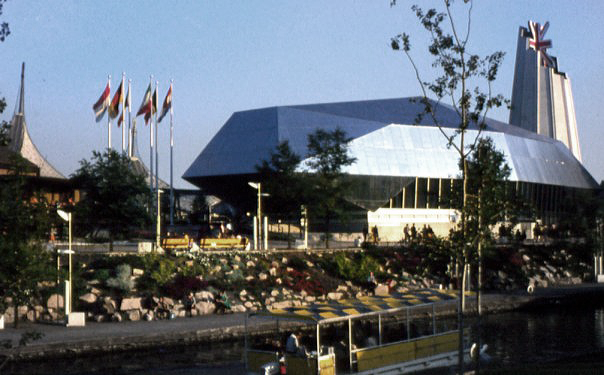
Sunday, March 22, 2009

Fashion at Expo 67

From Expo Inside Out, a look at fashion at Expo 67:

"Some of the most contemporary styles are those worn by visitors to the site, but for more formal fashion presentations, go inside a number of pavilions. One of the most interesting takes place in the USSR pavilion several times a day. The Russians are trying to break into the international fashion world market, and their hem-lines, faltering nervously above the knee, reflect a concession to decadent mini-skirts and western tastes.
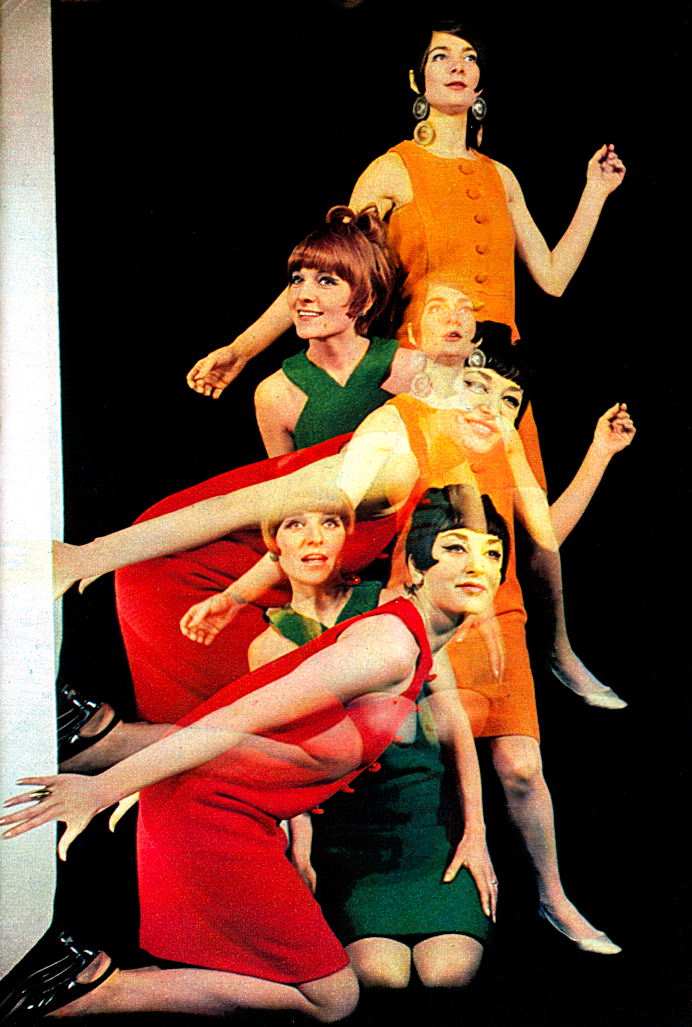
Russian fashion exhibited at Expo 67, designed by Vyacheslav Zaitsev.

"The French put on a magnificent display of magnificent clothes from Balenciaga, Balmain, Chanel, Dior, Givenchy, St. Laurent - the list is endless. The ground floor is devoted to the City of Paris and its current modes; upstairs, selections from the fall collections of the greats are shown with typical Expo film flare. Some of the most spectacular jewelry in the world are shown here, too, at times manages to eclipse the fashions.

"You can see a fur fashion show and eat at the same time in the Scandanavian pavilion restaurant. A collection of native furs is modelled twice daily, at lunch and dinner-time, by assorted Canadian and Scandanavian beauties.

"Pucci, a favorite of Jacqueline Kennedy and the jet set in general (they're the only ones who can afford him), and the Fontana Sisters are featured in Italian fashion presentations. The Sisters also did the hostesses' bright red, swinging uniforms. They're nice to look at but the most dramatic uniform is, appropriately enough, worn by the French Pavilion hostesses who are done up in silver lamé packages.

Expo's hostesses were fashion plates in themselves.

"Fashion shows at the Canadian pavilion are held every Thursday afternoon in the outdoor theatre. Some of the clothes are appealing, but too often a nationalistic fervor to show every Canadian designer whether he's good, bad or just plain awful, prevails over good taste. Hostesses here, as in most other pavilions, are dressed in modified national costume - sedate, simple little dresses, nice but definitely unspectacular. For national dress, the African hostesses top the list.
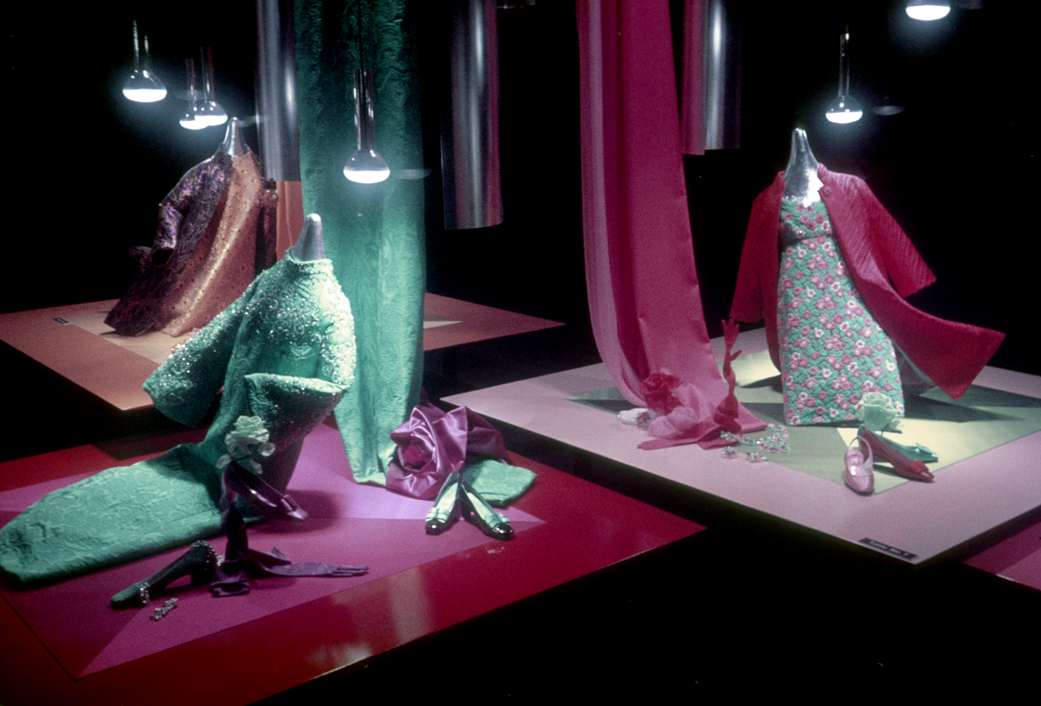
A dress display in the Swiss pavilion.

"There are also fashion and jewelry displays at many of the other pavilions. The most important of these include Belgium, for diamonds; Czechoslovakia, for jewelry; India, for gorgeous materials; and Switzerland, with a display of exquisite watches."


images: (1) author's own

(2) z3000.livejournal.com
(3) Life magazine online archive
(4) the Bill Cotter collection

Tuesday, February 24, 2009

Saturday, February 21, 2009

Tupperware

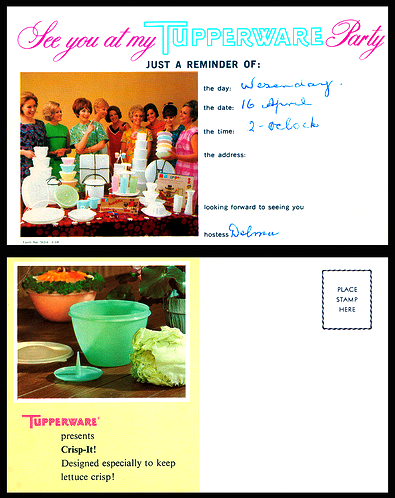
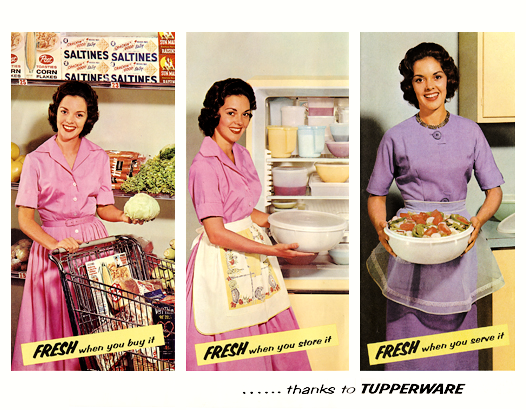
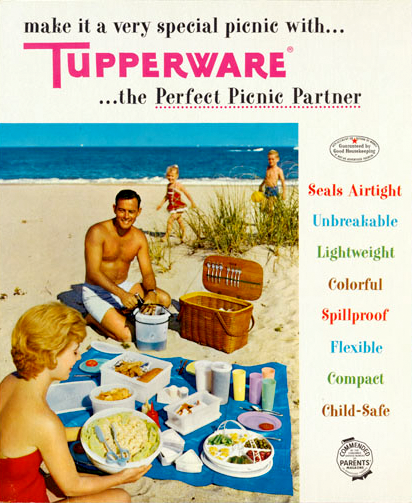
Tupperware was invented by Earl Silas Tupper in the mid-1940's. Originally a DuPont chemist, Tupper developed his liquid proof, airtight plastic containers by mimicking the lids of paint cans.

Tupper experimented with department store sales, but as Businessweek reported in 1954, "in retail stores [Tupperware] fell flat on its face."

Plastic containers were still a new phenomenon at that time, and it became clear that they required explanation or demonstration... Enter Brownie Wise.

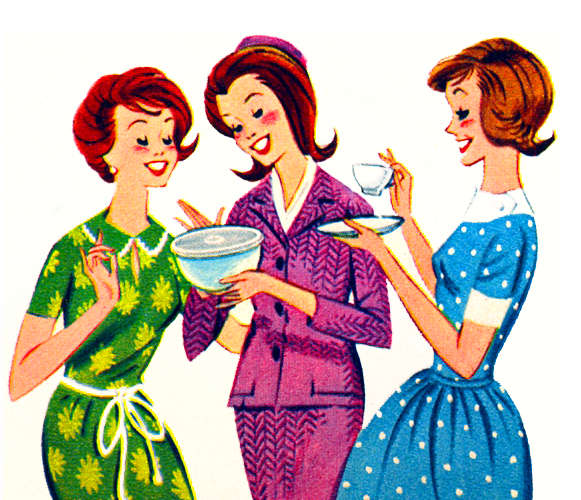
Detroit-native Brownie Wise had been selling household products for the Stanley Home Products company in the late 1940's. Purchasing through local distributors, Wise began to offer Tupperware as part of her product line, and by 1948, she was moving enough Tupperware to attract Earl Tupper's attention. The 2 met, along with several other distributors, to discuss a new distribution plan. Based on the home party plan pioneered by Stanley Home Products, Wise refined and expanded the concept, and the ubiquitous "Tupperware party" was born. Even today, this direct marketing strategy remains the exclusive outlet for Tupperware.

By the 1950s, sales and popularity of Tupperware exploded.

At a time where women came back from working during World War II, only to be told to "go back to the kitchen", Tupperware became a method of female empowerment. Brownie Wises' influence among women, as well as the lavish gifts and parties designed to motivate Tupperware representatives, all contributed to the company's success.

Tupperware's biggest party was the yearly Jubilee. To this day, the Jubilee continues, with rallies being held in major cities to recognize and reward top-selling demonstrators, managers and distributorships...


images: (1 and 3) tupperdiva.com
(2-4-5) flickr.com

Sunday, February 8, 2009

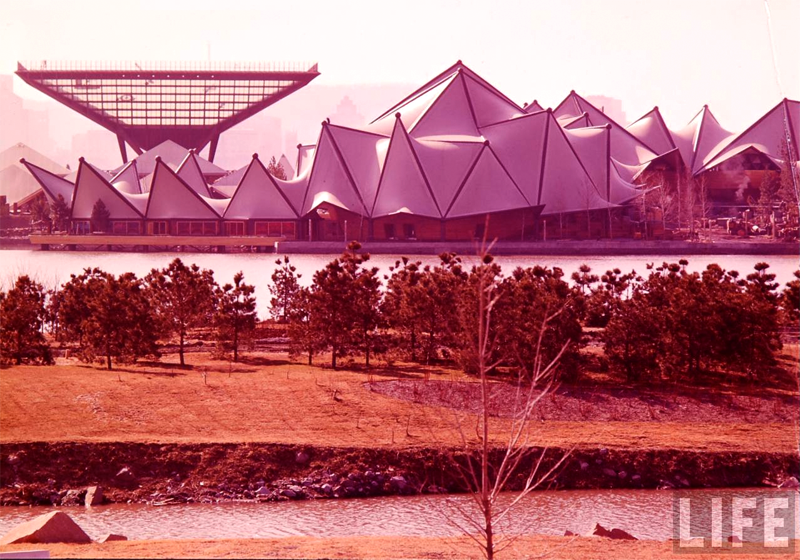
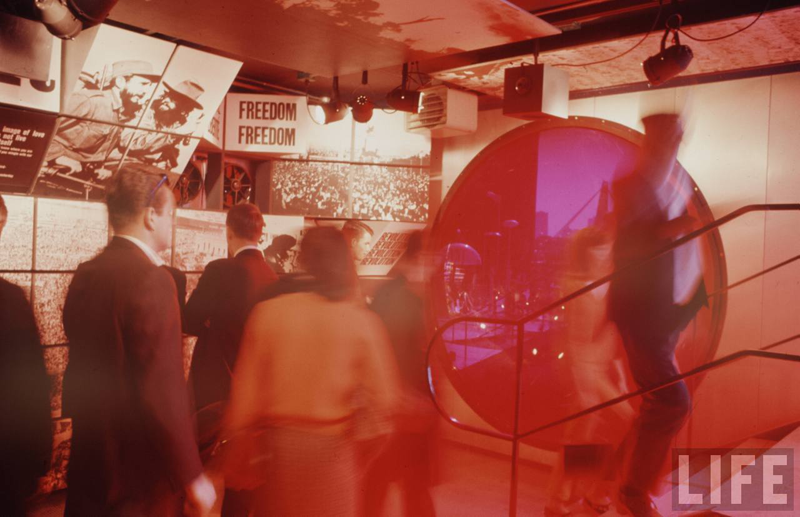
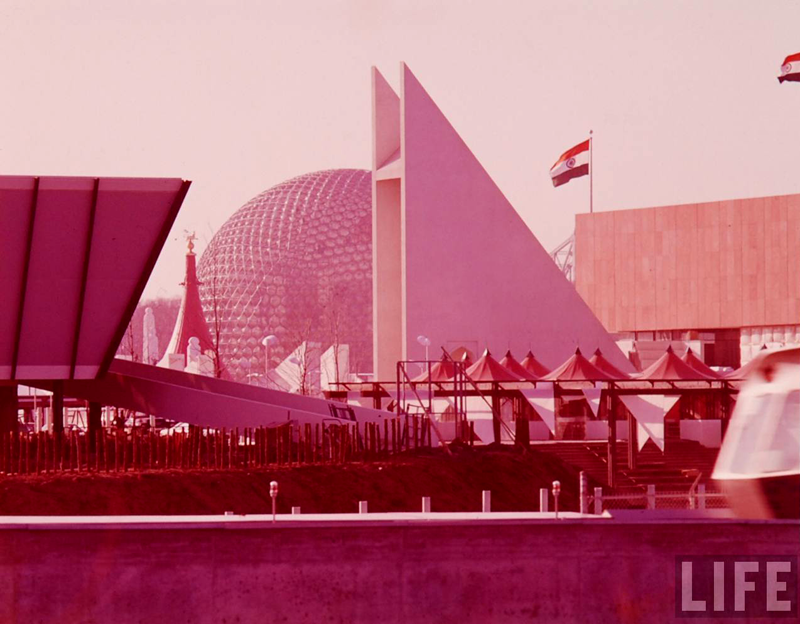
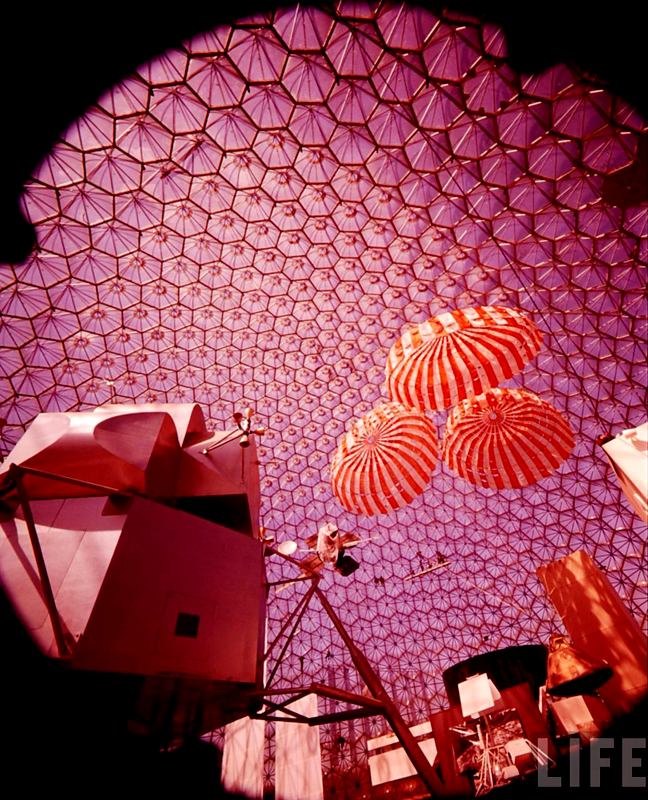
Expo 67, Through Rose-Colored Glasses

A view of Canada's Katimavik and Ontario's groovy acrylic roof.

My good friend (and fellow Expo 67 aficionado) DC Hillier has drawn my attention to a stunning collection of Expo images.

In 2008, Google announced that it would host an archive of Life magazine's photographs, as part of a joint effort with the 126 year-old publication. The archive contains millions of searchable images, many of which were never previously published.

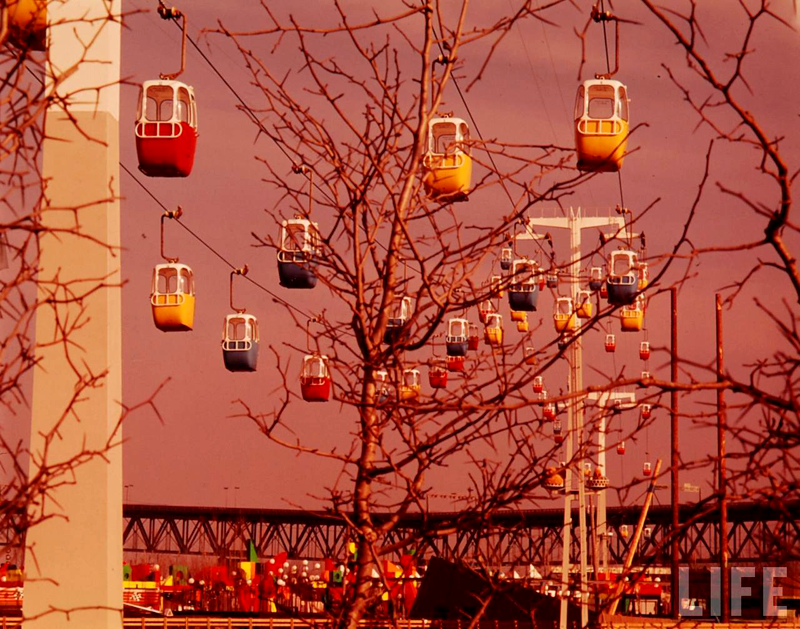
My favorite shots from the "Expo 67" search results are the ones that have discolored to pink... an aging deterioration specific to slide photography.

The Montreal skyline with Habitat 67 in the foreground.

A small foot bridge in the park located in the south west tip of Île Notre Dame.

Inside Man in the Community's conical roof.

The interior of the Cuban pavilion, a display that was anything but "rosy"!

Left to right: pavilions of Australia, Ethiopia, U.S.A. and India.

The U.S. pavilion's ever-popular space exhibit.

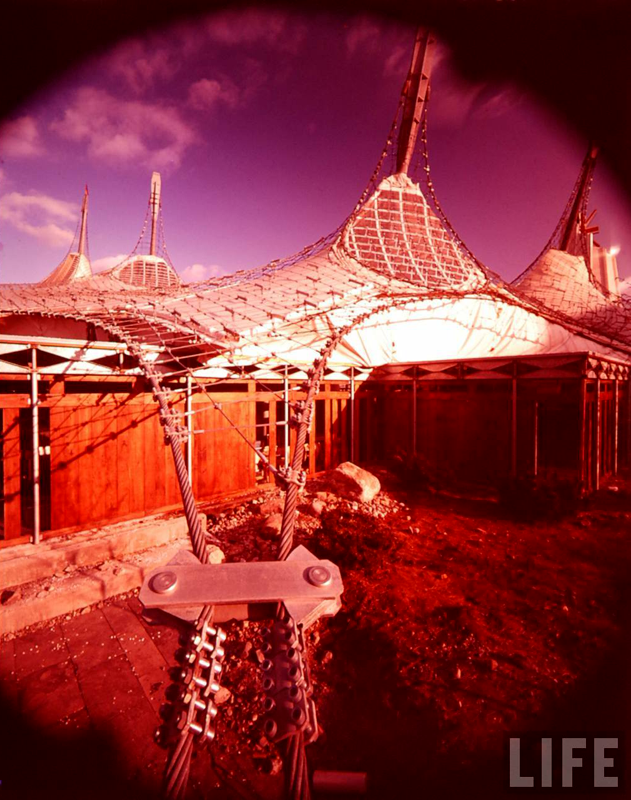
A stunning detail shot of the cable system used for Germany's massive tent.

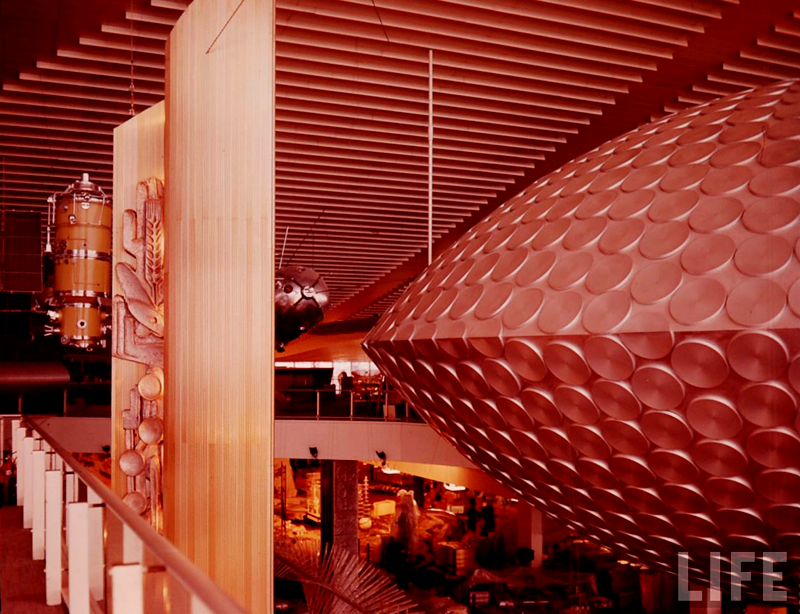
The interior of the imposing U.S.S.R. pavilion.

The Minirail winding its way around Ontario.

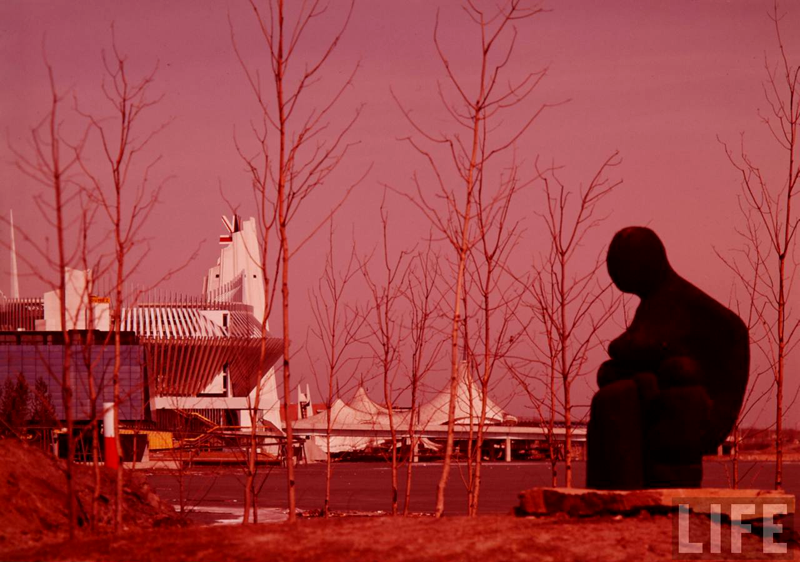
A scuplture in the Île-Notre Dame park.

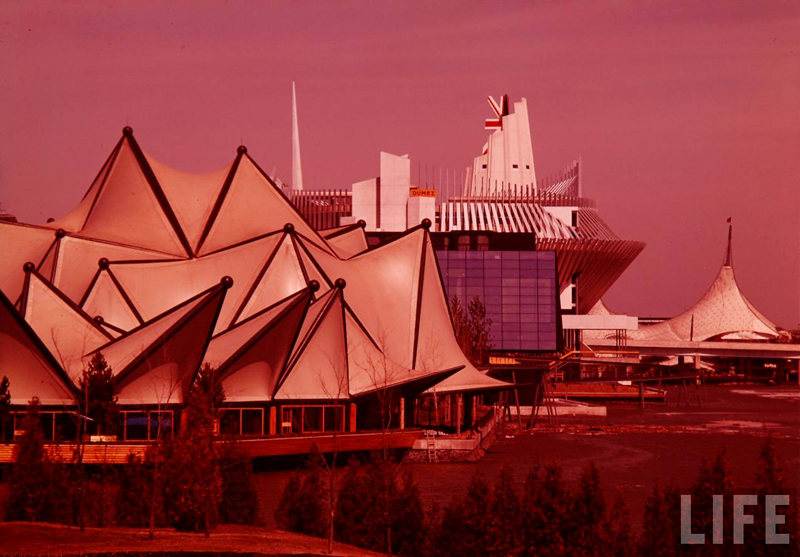
Left to right: Ontario, Quebec, France, Great Britain and Germany.

The Expo-Express tracks circled around the pavilion of Germany.

The cable car system at La Ronde, known as the Sky Ride.

Another view of the Sky Ride and La Ronde.

images: Life magazine online archive

Monday, January 19, 2009

TV Dinner Packaging


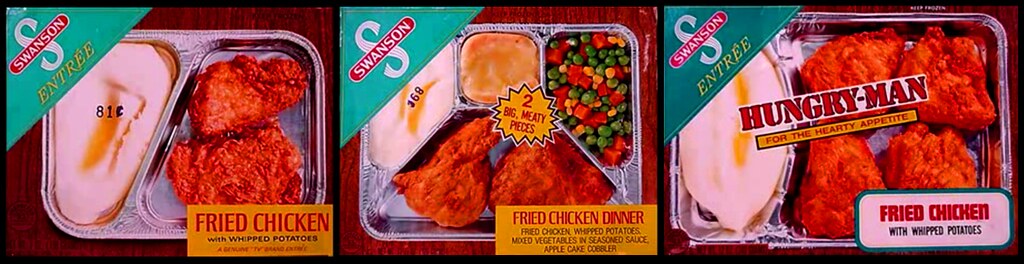
Here's a groovy little montage of some vintage Swanson product packaging from the golden age of TV Dinners... As a kid, I used to always eat the "Chicken and Whipped Potatoes Entrée" (at 0:28, in the video).

I love the international flare (TV Dinner style) of the "English Style Fish and Chips Entrée" (at 0:16); and the "German Style Dinner" (at 0:46), which included "Sliced Beef with Sauerbraten Gravy", "German Style Whipped Potatoes", "Bavarian Red Cabbage", and "Applesauce Cake" for dessert...

Guten appetit!


Small, medium, large: 3 convenient formats of fried chicken TV Dinners.

Thursday, January 15, 2009

The European Communities Pavilion

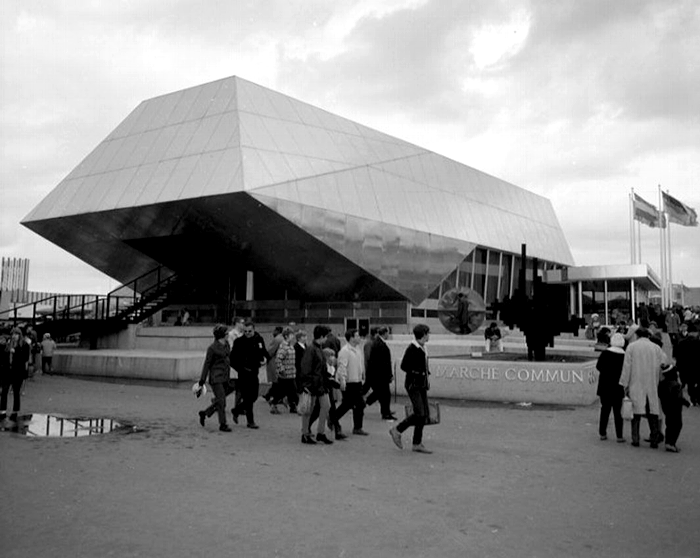
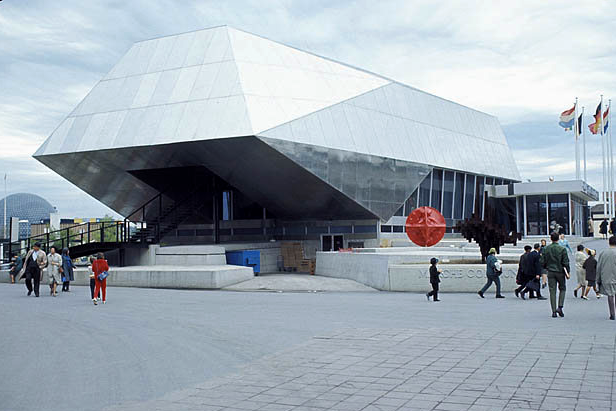
The European Communities pavilion at Expo 67 was presented by the European Common Market, the Steel and Coal Community, and the European Atomic Energy Community. These institutions promoted social and economic progress through joint action among its 6 member countries: Belgium, France, Germany, Italy, Luxembourg, and the Netherlands.

Located on Île Notre Dame near the Expo-Express station and facing the pavilion of Germany, the steel-blue structure was reminiscent of a diamond, evoking the radiant multi-facets of the European Community. Steel, one of Europe's first common market products, was used to emphasize this.

Inside, the pavilion sought to clear up the complexities of the European Common Market (E.C.M.) with a rundown of its institutions and its history. A spectacular mosaic map in the entrance hall helped illustrate this to visitors.

In a section called "Europe Yesterday and Today", an antique tapestry and a modern nuclear research device were displayed side by side, symbolizing Europe's glorious past as well as its current and future progresses.

An exhibit entitled "Six Countries Decide to Live Together" traced the E.C.M.'s growth, from Winston Churchill's appeal in 1946 that France and Germany work together, through the 1957 Treaty of Rome, to modern day 1967; where 65 countries had appointed diplomatic missions to the E.C.M.'s Brussels headquarters.

Economics aside, a portion of the pavilion was dedicated to arts and culture. A section named "The Great Europeans" payed tribute to 140 Europeans that had influenced western civilization in such disciplines as music, fine arts, literature, philosophy, science, technology and medicine.

Another section displayed 60 examples of contemporary art, selected by members of the 6 European Community countries. A catalogue of this collection was available for visitors to purchase.

A bookshop offered a wide range of publications concerning the various aspects of Europe. A record library allowed visitors to listen to masterpieces of European music either by loudspeaker system or by individual equipment. A non-stop film presentation enabled visitors to further acquaint themselves with the E.C.M.'s principal activities.

The pavilion's restaurant offered a wide variety of European specialties, served on the visitor's choice of table service. Cheeses, fine cooked meats, pastries, etc. were sampled on Europe's finest china, while exquisite wines and liqueurs were sipped from Europe's most delicate crystal...

images: (1) author's own
(2 and 5) DC Hillier
(3) flickr.com (magstb67)
(4) library and archives canada
(6) Bill Dutfield