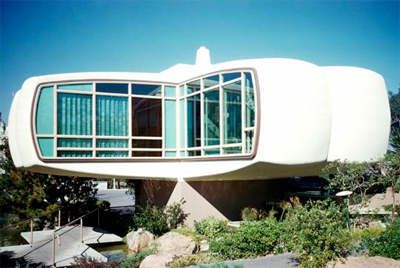
 The House of the Future was an attraction that debuted in 1957 at the Disneyland theme park in Anaheim, California. Sponsored by the Monsanto Chemical Company, the ultra-modern house was almost entirely synthetic.
Set in the year 1986, the House of the Future's 4 equal wings seemed to float above its beautifully landscaped grounds and waterfalls.
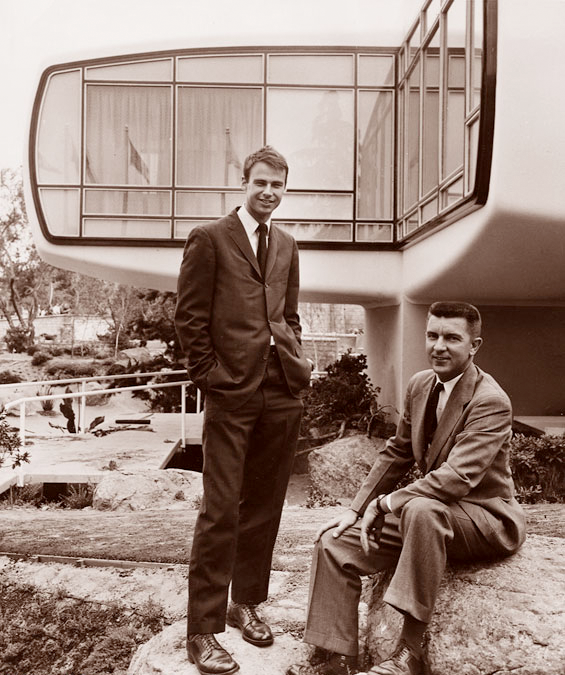 The house's designers, Marvin Goody and Richard Hamilton.
Designed by Marvin Goody and Richard Hamilton of the Goody Clancy firm in Boston, Massachusetts, the 1280 square foot structure took 2 years to develop. Originally members of the faculty or architecture at the Massachusetts Institute of Technology, Goody and Hamilton were hired by Monsanto to find new markets for plastic products. They eventually formed their own private firm to take over the commercial planning of the project.
 A 1966 magazine article describing Monsanto's futuristic plastic house.
The House of the Future was made from 8 prefabricated plastic modules, placed one on top of the other, forming the ceiling, floor, and wall (the remaining walls were windows). When the modules originally arrived at Disneyland for assembly, receiving clerks thought they were part of a boat!
The central core of the house contained the kitchen and bathrooms, while the four wings each contained one room. The entire structure was solidly anchored to an earthquake rated concrete foundation.
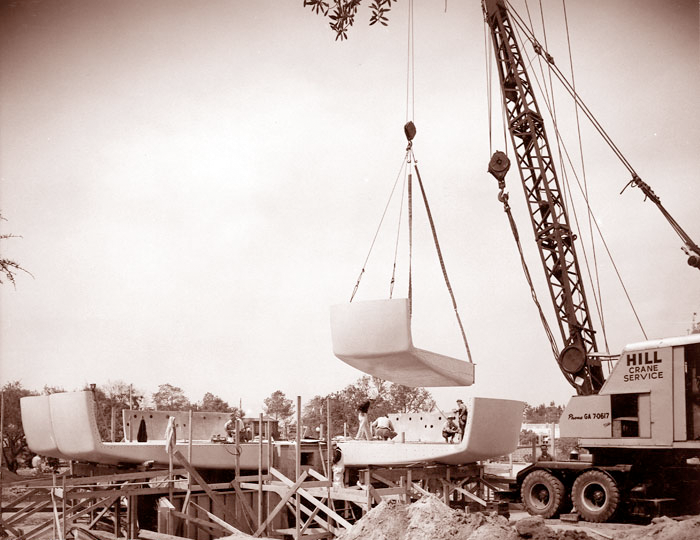 The House of the Future under construction, in early 1957.
Construction at Disneyland began on January 7, 1957, and was completed by early June. A special preview day was held on June 11, 1957, while the official public opening of the House of the Future was held the next day.
 An estimated 60,000 visitors toured the House of the Future each week.
Upon entering, visitors found themselves in the dining and family room, a place where the family of the future would play, rest, and dine on stylish plastic furniture. Nearby, the Atoms for Living Kitchen awed guests with futuristic amenities such as the microwave oven.
The 2 children’s bedrooms followed, one for the boy of the future and one for the girl of the future, as well as the shared kids’ bathroom. The master bedroom and the main bathroom were next on the tour, which concluded itself in the sleek living room, featuring a giant, wall-mounted television and built-in high fidelity equipment.
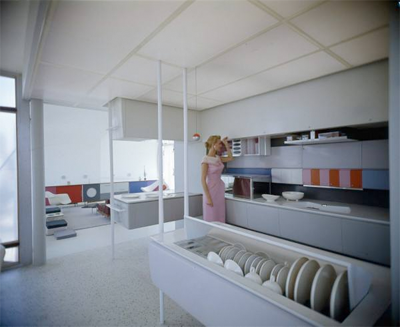 The futuristic kitchen featured an ultra-sonic dishwasher.
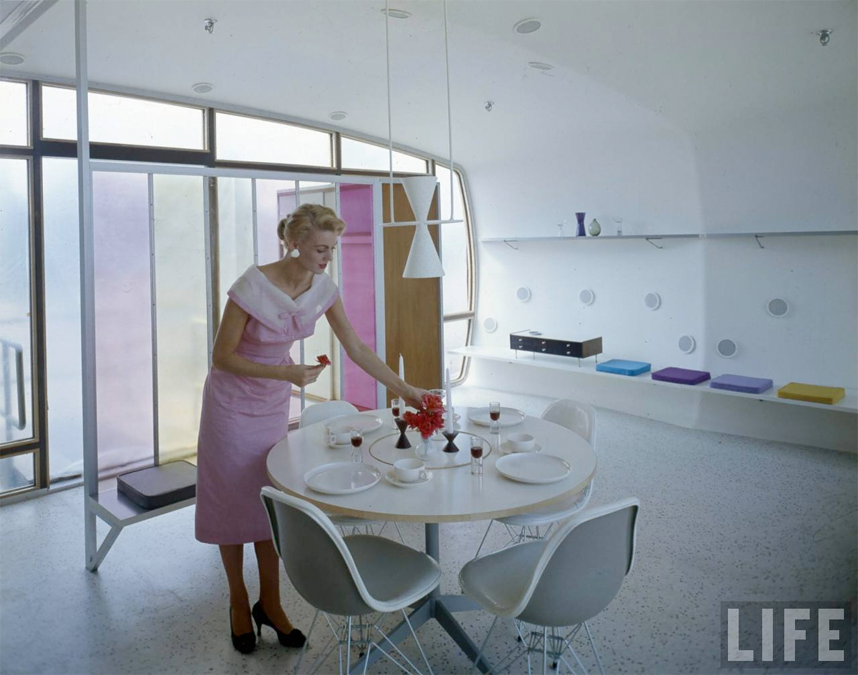 The dining room of the future... with plastic dishes, of course!
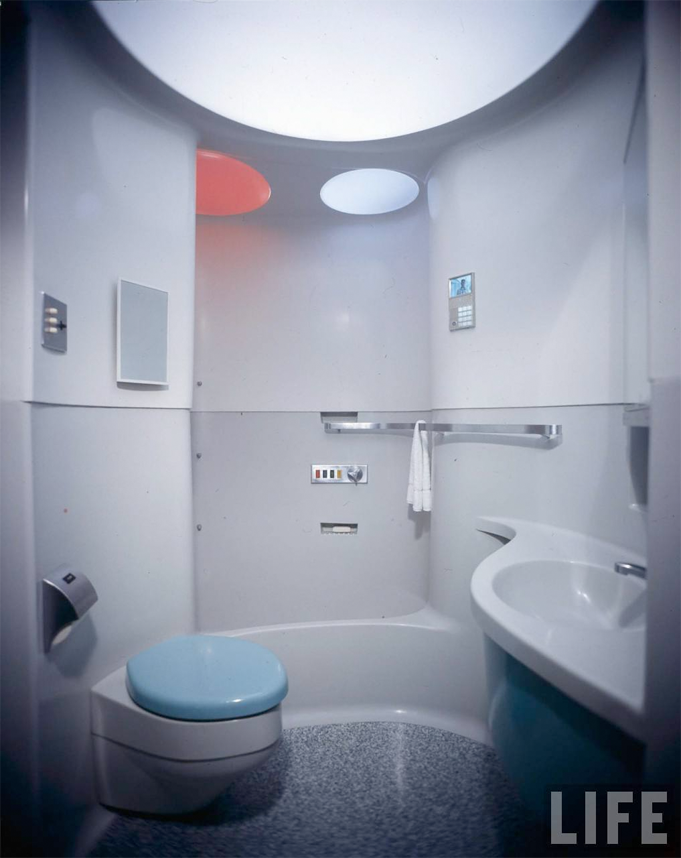 The ultra-modern bathrooms were completely molded in plastic.
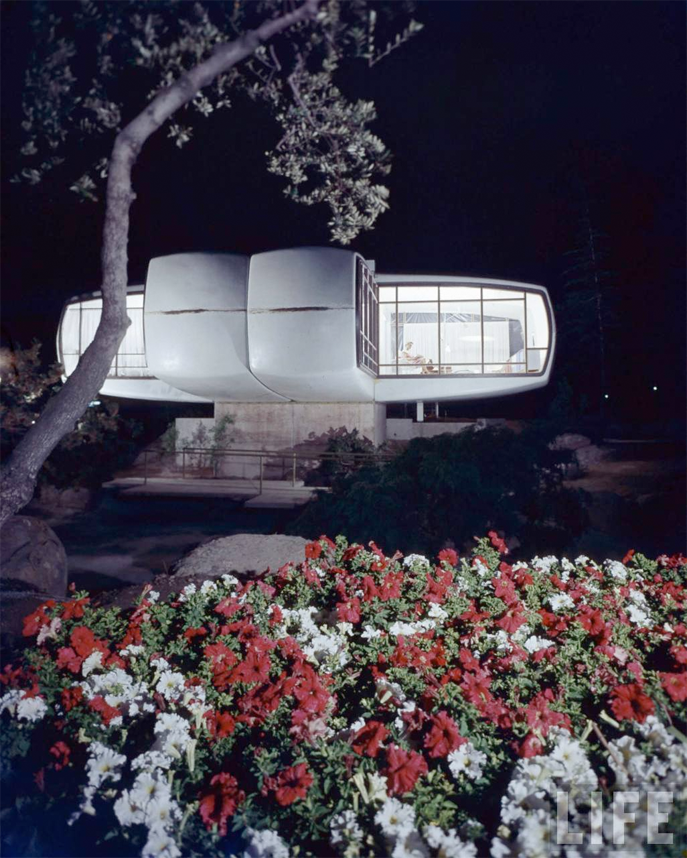 A night view of the House of the Future.
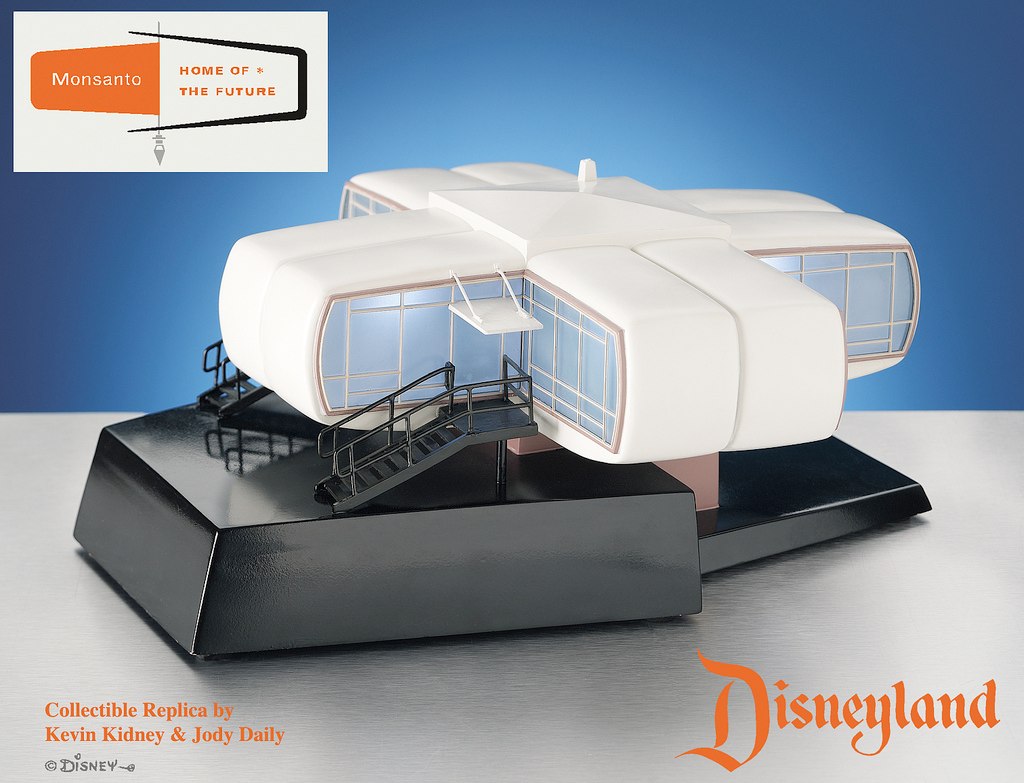 An illuminated replica, in a limited edition of 1000, produced in 1996.
The House of the Future is yet another example of the retro-futuristic aesthetic that I adore, reminding me a bit of Jacque Fresco's designs...
Vanished today, there continues to be subtle tributes to the House of the Future both at Disneyland and Walt Disney World...

images: (1) yesterland.com
(2, 4 & 11) flickr.com
(3, 5 & 6) davelandweb.com
(7, 8, 9, 10 & 12) LIFE photo archive