Monday, April 27, 2009

Expo 67 Opening Ceremonies

Expo 67's official opening ceremonies were held exactly 42 years ago today.

The invitation-only ceremonies were held at Place des Nations on the sunny Thursday afternoon of April 27, 1967. Expo was officially inaugurated by Governor General Roland Michener, with over 7,000 guests in attendance, including 53 heads of state.

Over 1000 reporters covered the event, which was broadcast in color, live via satellite, to a world-wide audience of over 700,000,000.

The Governor General of Canada, Roland Michener.

12 cadets from the Collège militaire royal de Saint-Jean carried in a torch that was lit in a ceremony 2 years prior. The torch bearer was Joseph Philip Lonuel, who passed it on in order of hierarchy of governance. It was passed to the Commissioner General of Expo 67, Pierre Dupuy; who passed it to the Mayor of Montreal, Jean Drapeau; who passed it to the Premier of Quebec, Daniel Johnson, Senior; who finally passed it to the Prime Minister of Canada, Lester B. Pearson.

The Prime Minister used the torch to light the Expo Flame, which would burn the entire duration of Expo 67.

The Prime Minister of Canada, Lester B. Pearson, lighting the Expo Flame.

The Golden Centennaires, the forerunners of the Snowbirds, closed the opening ceremonies with an aerobatic performance over the Expo 67 site and the Montreal harbour...

From left: Lester B. Pearson, Roland Michener, Daniel Johnson, Sr., Jean Drapeau


images: (1-2-3) expo67.ncf.ca

(4) wikipedia

Tuesday, April 21, 2009

Labatt 50

The Labatt Brewing Company was founded by John Kinder Labatt in 1847 in London, Ontario.

In March 1950, Labatt introduced its 50th anniversary ale, commemorating a half-century of business under the leadership of the founder's grandsons, John S. and Hugh Labatt.

The first “light” ale was called "Annie", and later "50". It quickly gained a dedicated following and eventually became Canada’s most popular beer.

Labatt 50 was the working man's beer of the 1960's. From 1968 to 1979, it was the country's best seller.

50's distinctive label, a red 5-0 with green and white background, has remained relatively unchanged over the decades.

A Labatt 50 ad for Expo 67.

In the late 70's, popular taste shifted towards lagers, and 50 fell out of favor. In 1979, Labatt Blue became the company's best-seller, and has been ever since. To this day, the top selling beers in Canada are all lagers (Labatt Blue, Molson Canadian, Coors Lite, Budweiser)...

An ad from 1977, featuring both Labatt 50 and Labatt Blue.

In the early 80's, Canadian brewers started to phase out the iconic stubby in favor of the long-neck beer bottle. By the mid 1980's, 50's reign was over.

Nowadays, Labatt 50 is the has-been of the beer world. While Molson Breweries successfully revived it's classic ale, Molson Export, Labatt 50 has yet to make a true comeback. Loved by some and loathed by others, it's nevertheless a beer that evokes strong emotions... Here in Quebec, "Cinquante" remains popular, and available at any fine dépanneur!

I have very fond childhood memories of my grandfather and his Labatt 50. Whether it was habit or what he actually preferred, the ubiquitous green and red logo will always remind me of him.

The 1976 Canadian Grand Prix, held in Ottawa, and sponsored by Labatt 50.


images: (1) canadiandesignresource.ca

(2 and 4) stubby.ca
(3) author's own
(5 and 6) ebay.com

Sunday, March 22, 2009

Fashion at Expo 67

From Expo Inside Out, a look at fashion at Expo 67:

"Some of the most contemporary styles are those worn by visitors to the site, but for more formal fashion presentations, go inside a number of pavilions. One of the most interesting takes place in the USSR pavilion several times a day. The Russians are trying to break into the international fashion world market, and their hem-lines, faltering nervously above the knee, reflect a concession to decadent mini-skirts and western tastes.

Russian fashion exhibited at Expo 67, designed by Vyacheslav Zaitsev.

"The French put on a magnificent display of magnificent clothes from Balenciaga, Balmain, Chanel, Dior, Givenchy, St. Laurent - the list is endless. The ground floor is devoted to the City of Paris and its current modes; upstairs, selections from the fall collections of the greats are shown with typical Expo film flare. Some of the most spectacular jewelry in the world are shown here, too, at times manages to eclipse the fashions.

"You can see a fur fashion show and eat at the same time in the Scandanavian pavilion restaurant. A collection of native furs is modelled twice daily, at lunch and dinner-time, by assorted Canadian and Scandanavian beauties.

"Pucci, a favorite of Jacqueline Kennedy and the jet set in general (they're the only ones who can afford him), and the Fontana Sisters are featured in Italian fashion presentations. The Sisters also did the hostesses' bright red, swinging uniforms. They're nice to look at but the most dramatic uniform is, appropriately enough, worn by the French Pavilion hostesses who are done up in silver lamé packages.

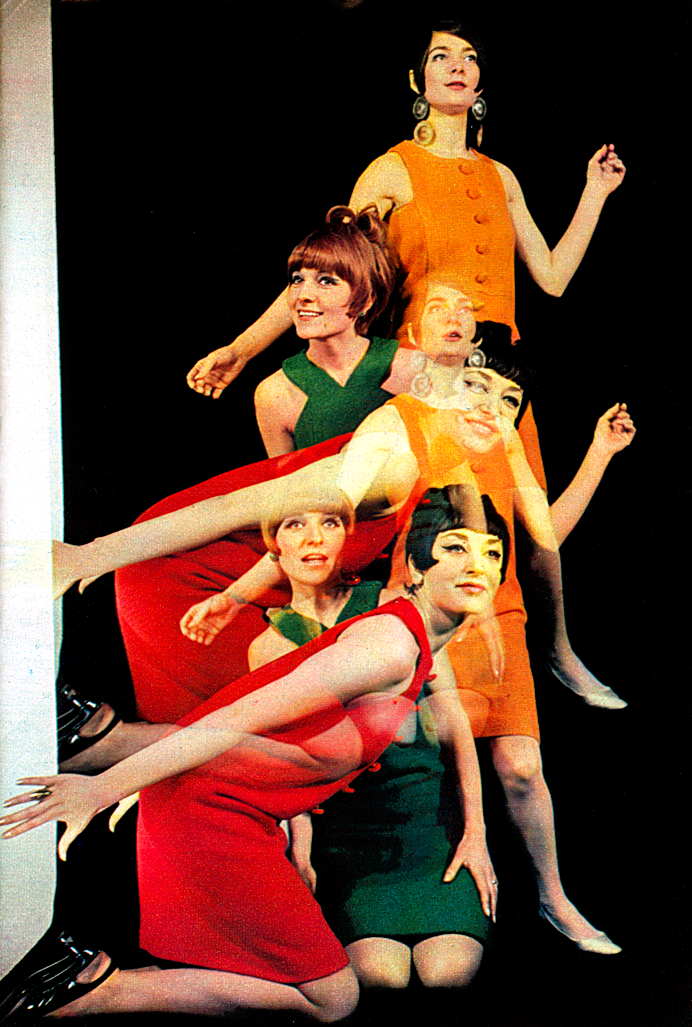
Expo's hostesses were fashion plates in themselves.

"Fashion shows at the Canadian pavilion are held every Thursday afternoon in the outdoor theatre. Some of the clothes are appealing, but too often a nationalistic fervor to show every Canadian designer whether he's good, bad or just plain awful, prevails over good taste. Hostesses here, as in most other pavilions, are dressed in modified national costume - sedate, simple little dresses, nice but definitely unspectacular. For national dress, the African hostesses top the list.

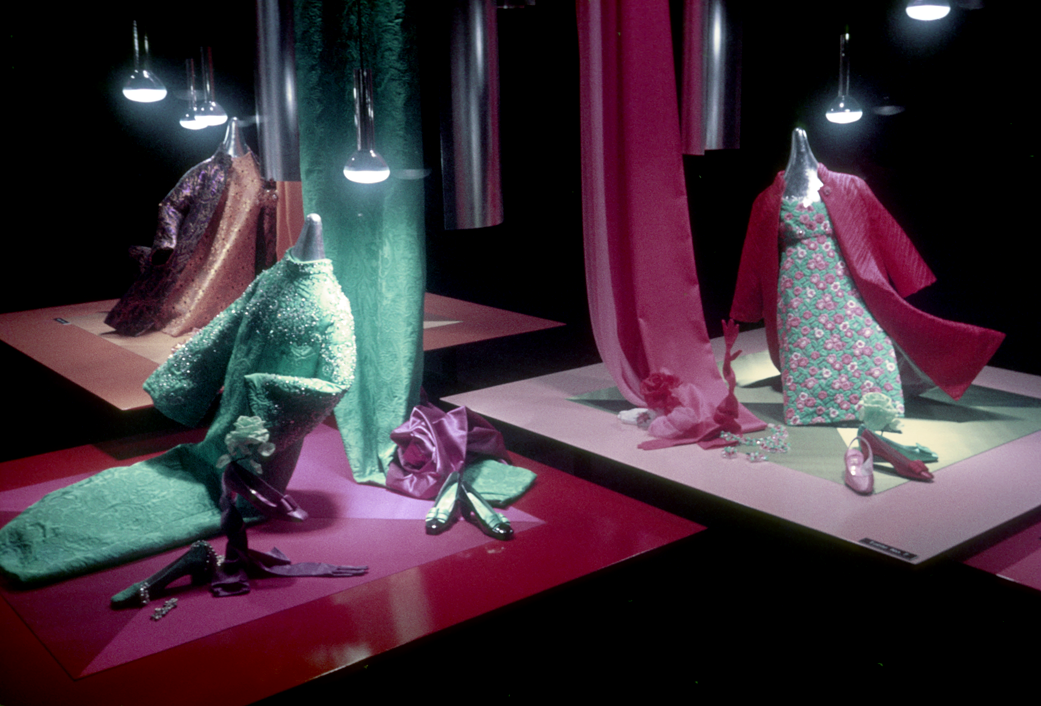
A dress display in the Swiss pavilion.

"There are also fashion and jewelry displays at many of the other pavilions. The most important of these include Belgium, for diamonds; Czechoslovakia, for jewelry; India, for gorgeous materials; and Switzerland, with a display of exquisite watches."


images: (1) author's own

(2) z3000.livejournal.com
(3) Life magazine online archive
(4) the Bill Cotter collection

Tuesday, February 24, 2009

Saturday, February 21, 2009

Tupperware

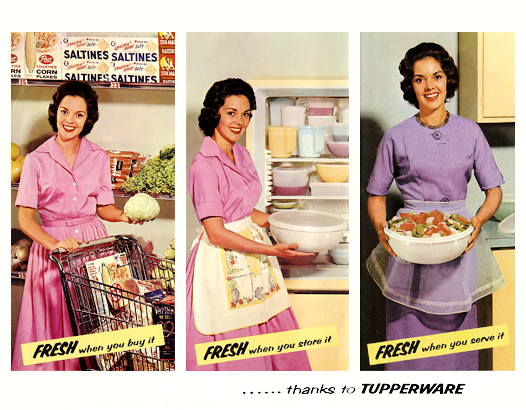
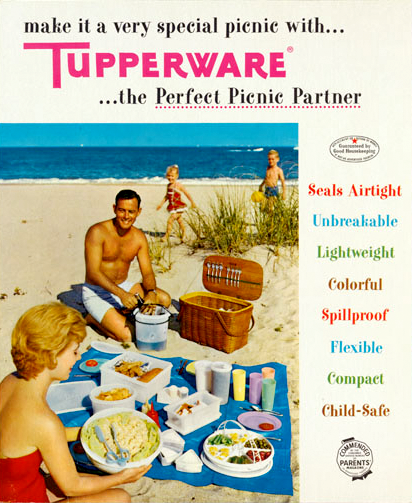
Tupperware was invented by Earl Silas Tupper in the mid-1940's. Originally a DuPont chemist, Tupper developed his liquid proof, airtight plastic containers by mimicking the lids of paint cans.

Tupper experimented with department store sales, but as Businessweek reported in 1954, "in retail stores [Tupperware] fell flat on its face."

Plastic containers were still a new phenomenon at that time, and it became clear that they required explanation or demonstration... Enter Brownie Wise.

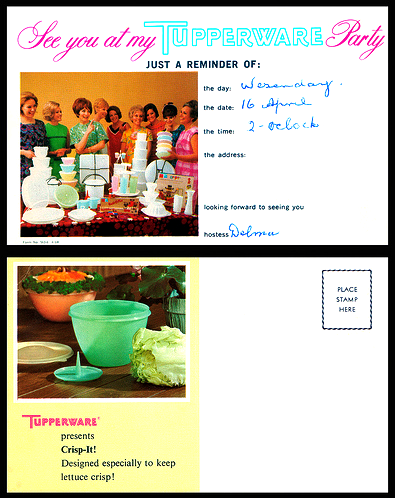
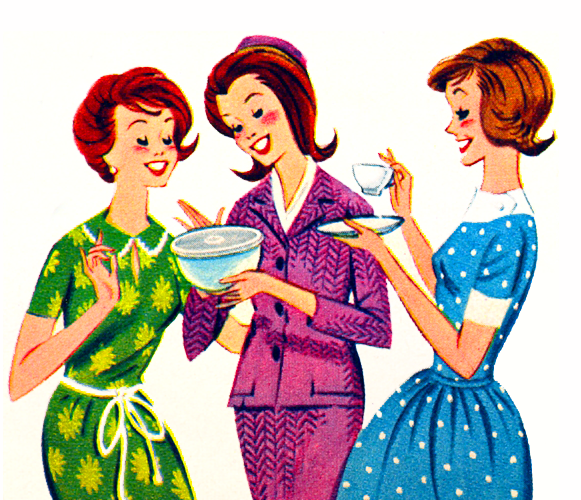
Detroit-native Brownie Wise had been selling household products for the Stanley Home Products company in the late 1940's. Purchasing through local distributors, Wise began to offer Tupperware as part of her product line, and by 1948, she was moving enough Tupperware to attract Earl Tupper's attention. The 2 met, along with several other distributors, to discuss a new distribution plan. Based on the home party plan pioneered by Stanley Home Products, Wise refined and expanded the concept, and the ubiquitous "Tupperware party" was born. Even today, this direct marketing strategy remains the exclusive outlet for Tupperware.

By the 1950s, sales and popularity of Tupperware exploded.

At a time where women came back from working during World War II, only to be told to "go back to the kitchen", Tupperware became a method of female empowerment. Brownie Wises' influence among women, as well as the lavish gifts and parties designed to motivate Tupperware representatives, all contributed to the company's success.

Tupperware's biggest party was the yearly Jubilee. To this day, the Jubilee continues, with rallies being held in major cities to recognize and reward top-selling demonstrators, managers and distributorships...


images: (1 and 3) tupperdiva.com
(2-4-5) flickr.com

Sunday, February 8, 2009

Expo 67, Through Rose-Colored Glasses

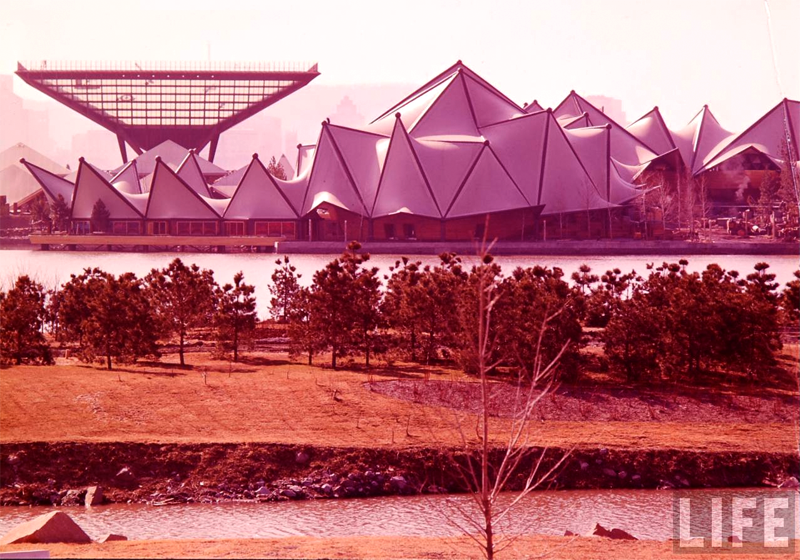
A view of Canada's Katimavik and Ontario's groovy acrylic roof.

My good friend (and fellow Expo 67 aficionado) DC Hillier has drawn my attention to a stunning collection of Expo images.

In 2008, Google announced that it would host an archive of Life magazine's photographs, as part of a joint effort with the 126 year-old publication. The archive contains millions of searchable images, many of which were never previously published.

My favorite shots from the "Expo 67" search results are the ones that have discolored to pink... an aging deterioration specific to slide photography.

The Montreal skyline with Habitat 67 in the foreground.

A small foot bridge in the park located in the south west tip of Île Notre Dame.

Inside Man in the Community's conical roof.

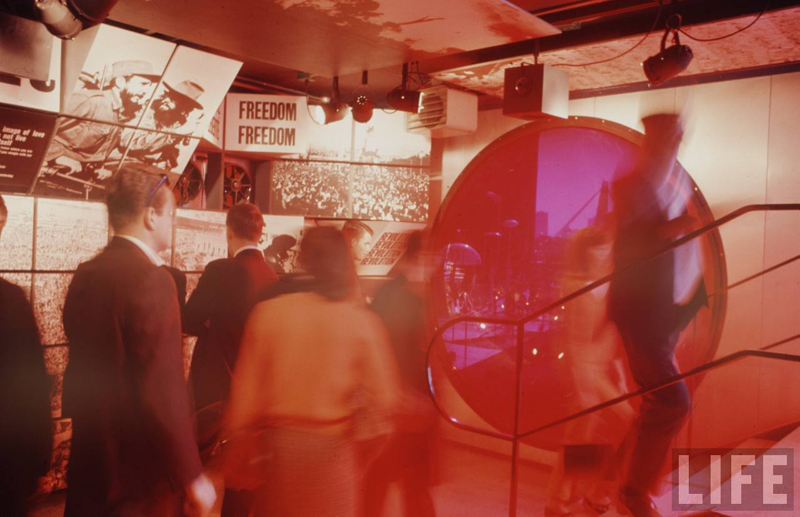
The interior of the Cuban pavilion, a display that was anything but "rosy"!

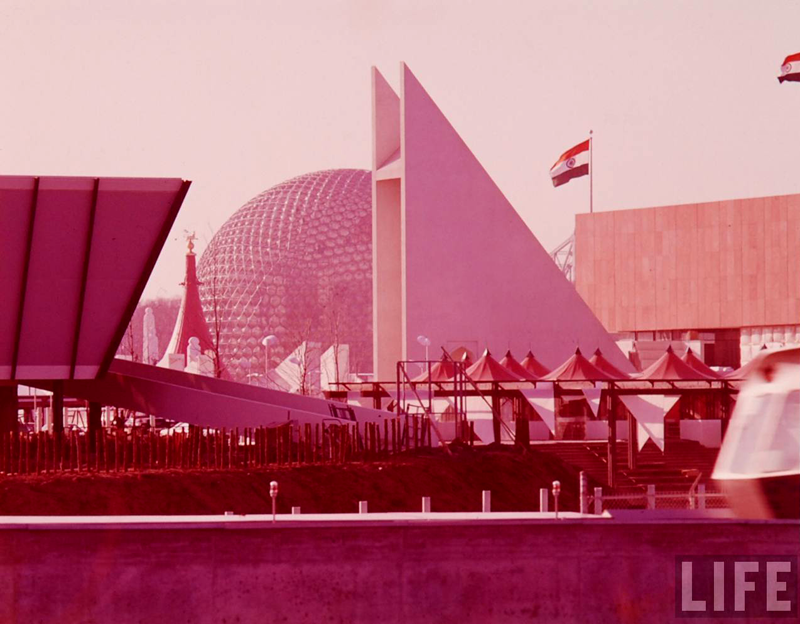
Left to right: pavilions of Australia, Ethiopia, U.S.A. and India.

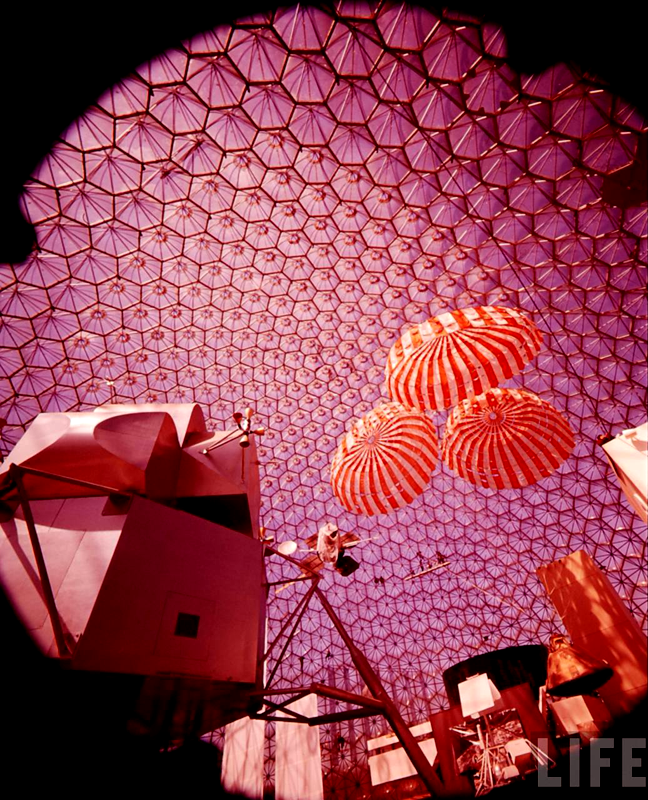
The U.S. pavilion's ever-popular space exhibit.

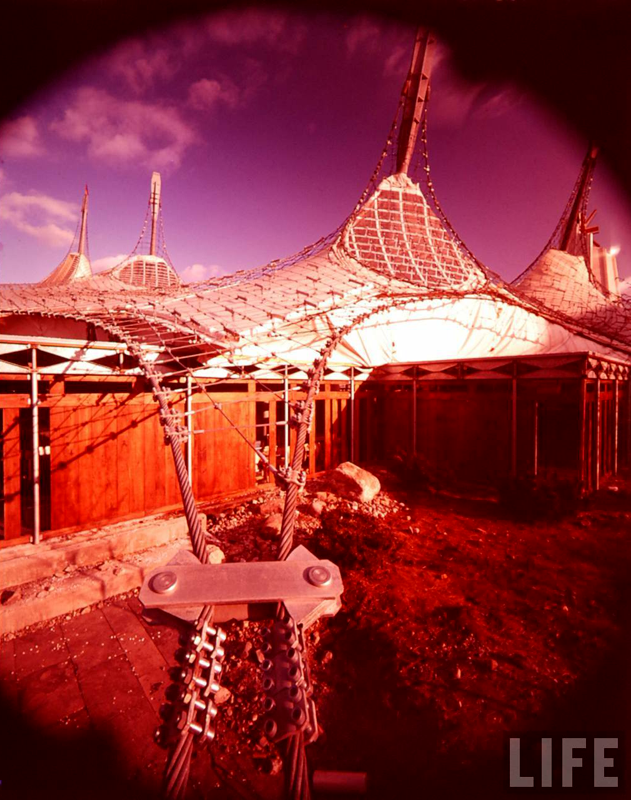
A stunning detail shot of the cable system used for Germany's massive tent.

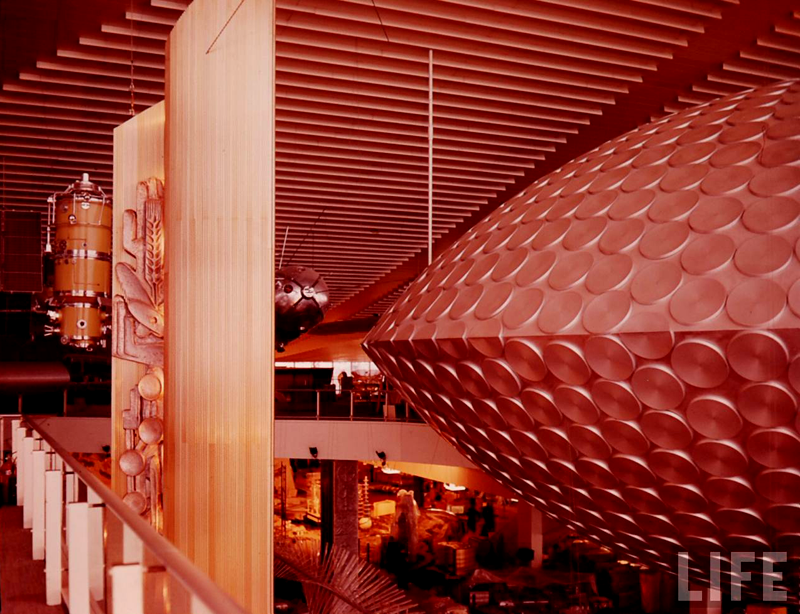
The interior of the imposing U.S.S.R. pavilion.

The Minirail winding its way around Ontario.

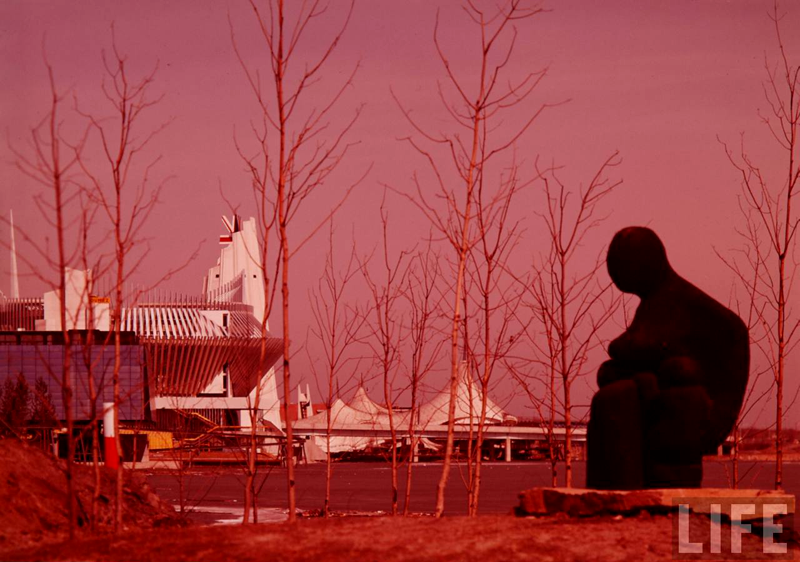
A scuplture in the Île-Notre Dame park.

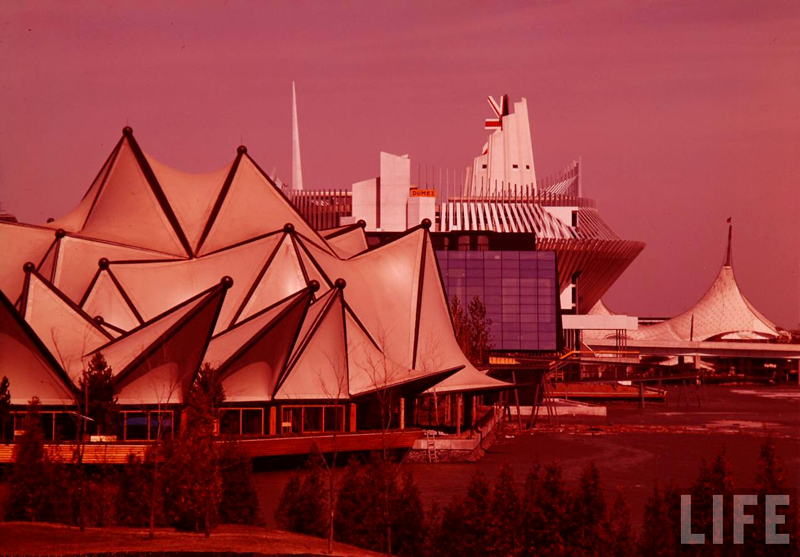
Left to right: Ontario, Quebec, France, Great Britain and Germany.

The Expo-Express tracks circled around the pavilion of Germany.

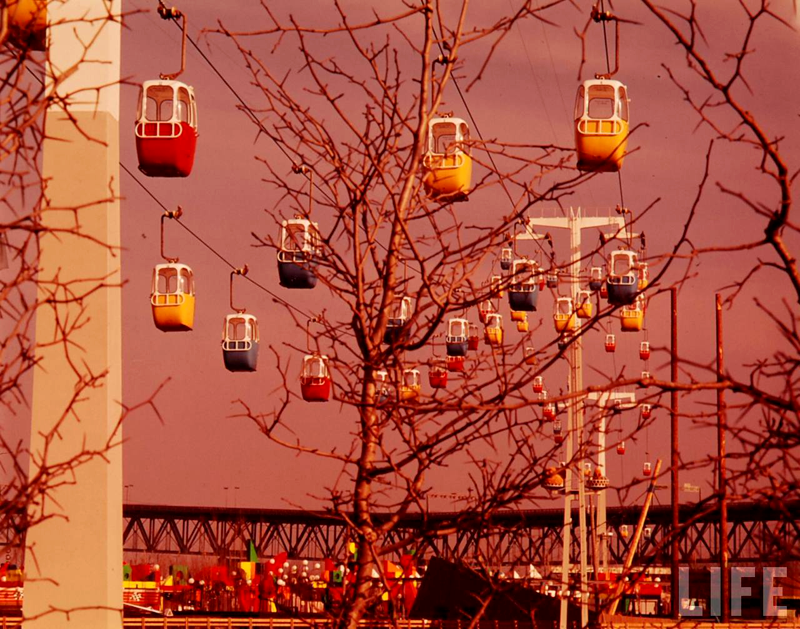
The cable car system at La Ronde, known as the Sky Ride.

Another view of the Sky Ride and La Ronde.

images: Life magazine online archive