Showing posts with label tv-topia. Show all posts

Friday, May 4, 2012

Mike Wallace

Mike Wallace
"I'm Mike Wallace, and this is 60 Minutes..."

Mike Wallace was born Myron Leon Wallace on May 9, 1918, in Brookline Massachussets.

Wallace began his acting and announcing career in 1939, after studying broadcasting at the University of Michigan.  Throughout the 1940's, he performed in various different radio show genres – quiz shows, talk shows, commercials, serials, and news reading.  It was in 1951, at age 33, that Mike Wallace moved to New York City and began what would become a 6-decade television career.

Mike Wallace
Mike Wallace and Buff Cobb on the set of "Mike & Buff", 1951.

Mike Wallace's first foray into interviewing was during the husband-and-wife talk show "Mike and Buff", which aired weekday afternoons on CBS. Co-hosted with then-wife Buff Cobb, Wallace conducted live interviews with celebrities and passers-by in various New York locations. The talk show (and their marriage) ended in 1954.

Other early television work included announcing and game show hosting for programs such as "What's in a Word?", as well as acting in shows such as the "Stand by for Crime" police drama and the "Studio One" anthology series.  In 1954, Wallace even had a brief stint on Broadway, acting in the play "Reclining Figure", directed by Abe Burrows.

During this time, Mike Wallace also did television commercials for a variety of products, including Procter & Gamble's "Golden Fluffo" brand shortening, and Philip Morris cigarettes...

Mike Wallace
Promotional shots for "The Mike Wallace Interview", 1957.

In 1956, the vehicle that brought Mike Wallace's unique interviewing style to prominence was created. "Night Beat" was a live, late night hour talk show where Wallace grilled celebrity guests on controversial topics, developing a hard edge that was lacking in television at the time. Armed with solid research and provocative questions, Wallace made guests squirm.  Using only a black backdrop and harsh lighting (with cigarette smoke for atmosphere), the interviews were framed in tight close-ups, revealing the sweat elicited by Wallace's grilling.

Only airing locally, "Night Beat" later developed into the nationally televised prime-time program "The Mike Wallace Interview" which ran until 1960.


60 Minutes

Mike Wallace
"Tick, tick, tick, tick, tick..."

"The Mike Wallace Interview" may have made him a star, but "60 Minutes" is what made Mike Wallace a legend.

On September 24, 1968, "60 Minutes" debuted on CBS.  Initially, the show was aired bi-weekly on Tuesday evenings at 10pm, with Mike Wallace and Harry Reasoner as the show's only 2 hosts. The contrast was intentional: Wallace as the abrasive, crusading detective-type opposite Reasoner's mild-mannered, analytical persona.

"60 Minutes" quickly became known for its in-depth investigations and hard-hitting exposés, thanks in part to Mike Wallace's tough journalistic style. As the show progressed, he perfected his trademark "ambush" interview technique: after secretly filming scam artists and wrong-doers in action, Wallace confronted them without warning in parking lots, hallways, wherever a comment (or a stricken expression) might be harvested.

Mike Wallace's ability to uncover corruption, greed and deceit generally garnered him praise – and numerous awards – but some critics deemed his methods unfair, underhanded and too sensational.

Ambushes aside, Mike Wallace was also known for his high-profile interviews, sitting down with some of the most iconic figures of the 20th century.  A brilliant interviewer, Wallace always did his homework, delivering his questions with a smooth combination of toughness and grace...

Mike Wallace
Mike Wallace and Harry Reasoner in 1968.

Growing up, Sunday nights were marked in our house by "60 Minutes".  The handsome, baritone-voiced Mike Wallace was always my favorite, especially when he nabbed the "bad guys" in those iconic ambush interviews...!

Even though the subject matter was often too 'adult' for me to follow (and I never understood Andy Rooney), the tick-ticking of the "60 Minutes" stopwatch has always been, to me, as comforting as a glass of warm milk...

Below is an excerpt of the first ever "60 Minutes" from 1968, where Harry Reasoner introduces it as a "kind of a magazine for television"...


images: (1) cbsnews.com
(2) mtv.com
(3) wikipedia
(4) entertainment.time.com
(5) unknown source

Sunday, September 4, 2011

Star Trek's Balok

Star Trek's Balok 
Balok was one of Star Trek's most iconic aliens.

Designed by noted sculptor and special effects master Wah Ming Chang, the sinister effigy appeared in the first season episode The Corbomite Maneuver.

Star Trek's Balok 
Wah Chang was responsible for many of Star Trek's most memorable creatures - the Salt Vampire, the Gorn, Tribbles - as well as some of the series' iconic props: the Communicator, the Tricorder, the Vulcan Lute. The design of the Romulan Bird of Prey warship was also his creation.

Trek aside, Chang worked on a host of motion pictures during his career:

At Walt Disney, he created sculptures that were used as references by the studio's animators: articulated deer models for Bambi, and a maquette of the Pinocchio puppet. The spectacular headdress worn by Elizabeth Taylor in the 1963 feature film Cleopatra was designed by Chang as well, as was one of advertising's most famous mascots: the Pillsbury Doughboy.

Star Trek's Balok 
The vocalizations of Balok were done by Ted Cassidy, the actor most known for his role as Lurch in the Addams Family television series. Cassidy had been hired to play in the Star Trek episode What are Little Girls Made Of and producers asked him to record Balok's threatening lines with his deep voice.

Star Trek's Balok 
Throughout the years, the image of Balok has remained legendary in the hearts and imaginations of Star Trek fans and a symbol of one of the most influential television shows of all time. Balok enthusiasts can buy t-shirts, wall graphics... even a Halloween mask...!

The ultimate souvenir, the original Balok head was recently unearthed and put up for auction. It sold for 70,000$...!

Star Trek's Balok 
The most memorable image of Balok for me was the one that appeared during Star Trek's final credits (above). I just loved that image of the bluish, cat-eyed alien in the eerily-lit control center...


images: (1-3-4) anonymousworks.blogspot.com
(2) google image search
(5) montage by author

Saturday, March 12, 2011

Mad Men Barbie Dolls

Mad Men Barbie Dolls
The TV series Mad Men premiered on July 19th, 2007.

Set in 1960's Manhattan, the show chronicles the lives of the men and women of a fictitious Madison Avenue advertising agency. The first season was set in 1960, and each successive season maintains a realistic progression of time.

Mad Men is acclaimed for its historically accurate visual style. Costume designer Janie Bryant looks to old catalogs, sewing patterns, and women's magazines such as Vogue and Good Housekeeping for inspiration. She uses a combination of original designs, vintage items and outfits rented from costume houses for the show.

Mad Men Barbie Dolls
The summer 2010 issue of Mattel's own Barbie Collector Magazine.

In the spring of 2010, Mattel released a series of limited-edition collectible Mad Men Barbie and Ken dolls. The dolls are based on Don Draper, the show's leading man; his wife, Betty; one of his colleagues, Roger Sterling; and Joan Holloway, the agency's office manager.

Designed by Mattel doll designer Robert Best, the dolls embody the show's iconic 1960's aesthetic. Molded of Silkstone, a material that resembles the look and weight of porcelain, each doll comes with accessories true to their show counterparts.

Mad Men Barbie Dolls
The Betty Draper doll embodies the character's Grace Kelly-like glamour. In a Vanity Fair interview, Janie Bryant describes her vision of Betty:

"Betty is sort of a combination of my grandmother and Grace Kelly. And for her, it’s about always presenting that image of perfection. She’s changed, though. The first season her palette was very pale—the grays and the cool blues and pale yellows and all the creams and the whites. But then, for season two, I felt like her character was really transitioning and getting stronger and so you can see there are times when the palette is a lot brighter and stronger, like she’s wearing hot pink and the bright blue..."

Mad Men Barbie Dolls
Buxom bombshell Joan Holloway has an equally ravishing doll, though she's a contrast to Betty's glacial glamour. Says Bryant of Joan's wardrobe:

"I always design things for her that are very strong in palette because I feel like her character is very strong. She really commands that whole office. And so I really like using bold tones for that character. And I think her silhouette is about knowing that that looks great on her body and knowing where all of her assets are, which she uses to her advantage."

Barbie designer Robert Best's original sketches for the Mad Men dolls.


Haute Doll Magazine Photo Shoot

Mad Men Barbie Dolls
Prior to the release of the Mattel collection, the now-defunct Haute Doll magazine created their own "Mad-Men-meets-Barbie" photo spread for their March/April 2010 issue.

Not authorized by Mattel, these one-of-a-kind dolls were styled based on outfits from the show, and set in a miniature version of Don Draper's office... complete with cocktails and cigarettes!

Note the Pete Campbell and Peggy Olson dolls, 2 characters that were not produced for the Mattel line...

Mad Men Barbie Dolls
Prim Peggy Olson presenting her Popsicle ad campaign.

Mad Men Barbie Dolls
Peggy Olson and Pete Campbell.

Mad Men Barbie Dolls
Joan Holloway, the office vamp, in a signature jewel-toned dress.

Mad Men Barbie Dolls
From left: Mini Joan Holloway, Betty Draper, Peggy Olson.

images: (1 to 4) barbiecollector.com
(5 to 13) flickr.com

"Haute Doll" photoshoot:
diorama by Carloyn Allen
fashions by Natalia Sheppard
Barbie repaints by Vin Trapani
photos by Michael Williams

Sunday, September 26, 2010

Star Trek's Nurse Chapel

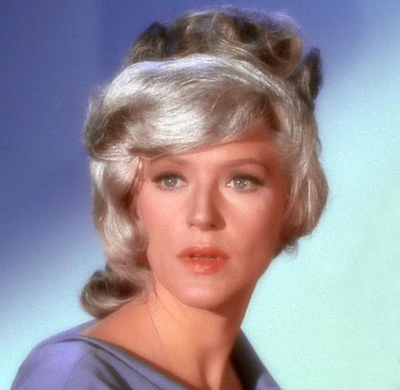
The soft-focus, platinum blonde loveliness of Nurse Chapel.

One of my favorite Star Trek ladies has always been Nurse Christine Chapel.

Nurse Chapel was played by Majel Barret, born Majel Leigh Hudec in Cleveland, Ohio, in 1932. In the 1950's and 60's, Barrett had secured bit parts in film and television before her stint as the USS Enterprise's competent but compassinate head nurse.

On contract at Lucille Ball's Desilu studios in the early 60's, Barrett had received comedy training from Ball herself, and appeared in The Lucy Show.

It was on the set of The Lieutenant in 1964 that Majel Barrett met Gene Roddenberry, father of the Star Trek franchise. The two became romantically involved, while Roddenberry was still married to his first wife.

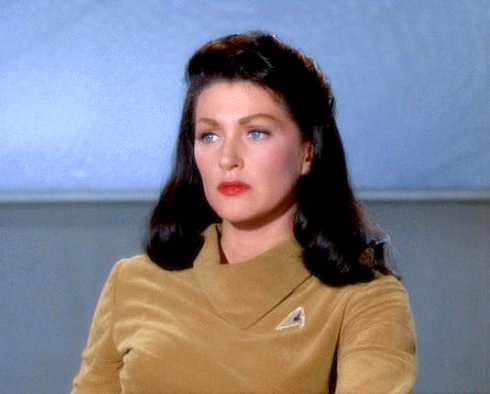
Majel Barrett in her role as Number One.

During this time, Roddenberry was developing a pilot for what was to become Star Trek. Roddenberry chose Barrett (his mistress) to play Number One, the first officer of the Enterprise, in his initial pilot entitled "The Cage".

"The Cage" was initially rejected by NBC, but Roddenberry was given the chance to produce a second pilot. The network asked, however, that the steely Number One character be dropped, citing that audiences would never accept a woman being second-in-command of a ship. (The fact that Majel Barrett was Roddenberry's on-the-sly girlfriend didn't help, either...)

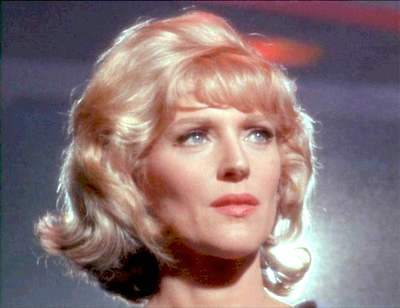
When Star Trek was picked up as a series in 1966, Barrett was given the role of Nurse Chapel. Like early episodes of The Mary Tyler Moore Show, Barrett donned a wig to dissociate herself from her previous role. She also went by the name "Majel Barrett" rather than "M. Leigh Hudec," as she had been credited in "The Cage".

Nurse Chapel appeared in 25 of the 79 original Star Trek episodes. Majel Barret also supplied the voice of the USS Enterprise's on-board computer.

Barrett and Roddenberry were married in August of 1969, two months after the final Star Trek episode was aired.

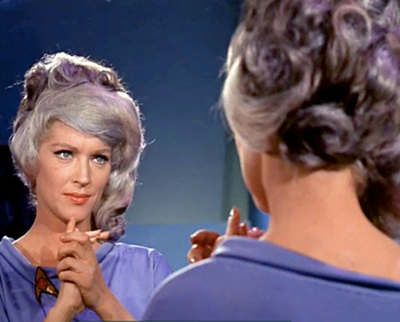
One of my favorite Star Trek episodes featuring Nurse Chapel is "The Naked Time", where a mysterious virus causes the crew to lose their inhibitions.

Afflicted by this illness, Nurse Chapel confesses her unrequited love for Mr. Spock... all while sporting a stunning sideswept, silver bouffant!

Check out the scene below:


images: (1) flickr.com
(2) acavill.com
(3) "The Naked Time" screen capture
(4) elevenfreakinthousand.com

Saturday, June 14, 2008

Charlie's Angels

"Once upon a time there were three little girls
who went to the police academy... and they were
each assigned very hazardous duties. But I took
them away from all that and now they work for me.
My name is Charlie..."

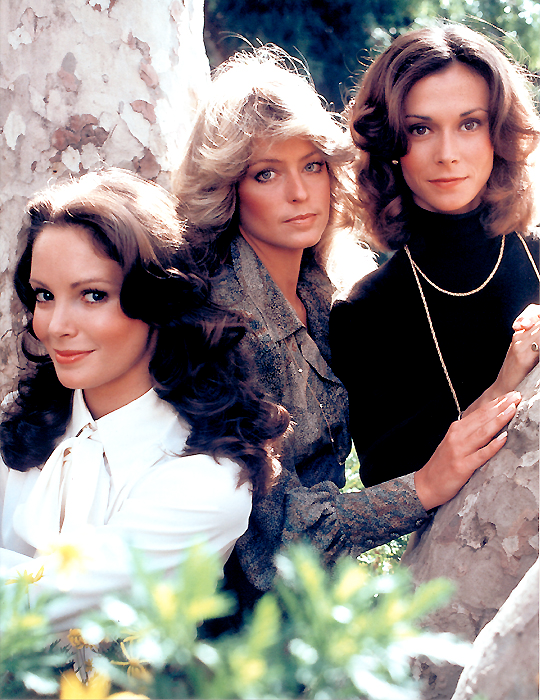
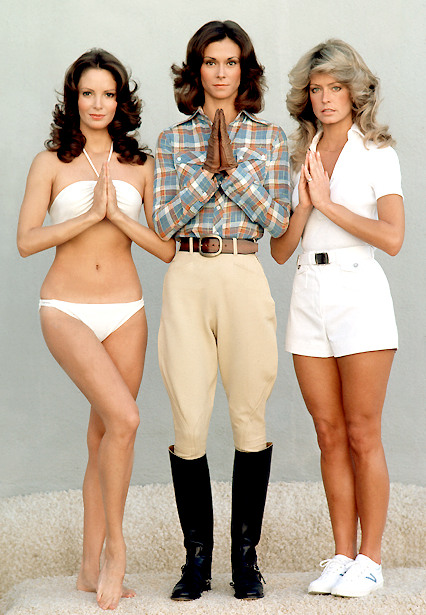
One of my favorite TV shows of all time is Charlie's Angels.

Charlie's Angels aired on ABC from 1976 to 1981. The first program of its kind to showcase an all-female leading cast, Charlie's Angels also ushered in the era of "jiggle TV". Though a smash success from the beginning, critics and feminists ripped it apart, comparing the often scantily-clad girls to glammed-up prostitutes, with the elusive Charlie as their pimp.

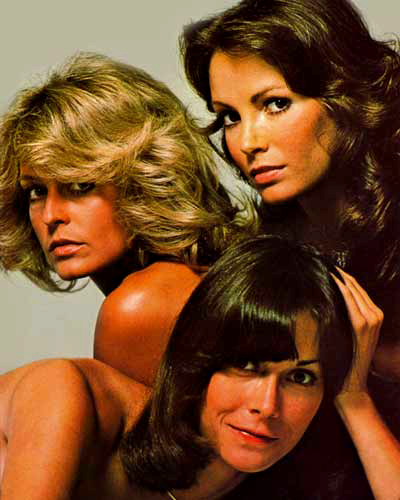
The original cast featured Kate Jackson, Farrah Fawcett, and Jaclyn Smith as smart and sexy private detectives. The girls would become media icons: their faces (and bodies) were plastered on magazine covers, posters, lunch boxes and loads of other toys and related merchandise.

Farrah Fawcett's stint on the show lasted only one season, while Kate Jackson left after the third. Cheryl Ladd successfully picked up where Fawcett left off (she became one of Charlie's most popular angels), but Jackson's departure proved to be the beginning of the end of the series...

Whether Charlie's Angels ultimately helped or hurt female portrayals on TV remains debatable. But as pure camp, the show is a cult classic.

As Charlie, himself, would say: "Good work, Angels"...


images: (1) image montage by author
(2-3) charliesangels.gr
(4) libreopinion.com

Sunday, June 8, 2008

The Nature of Things Intro, 1983


Just over 30 seconds of footage, but, what a wave of childhood memories!

Thursday, January 24, 2008

The CBC Gem Logo

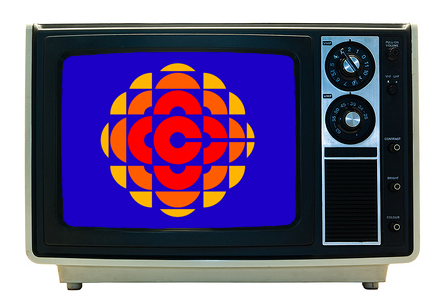
The "C" stands for Canada, while the radiating parts symbolize broadcasting.

Of all the CBC logos throughout the years, my favorite is the Gem logo.

Designed for the CBC by legendary graphic artist Burton Kramer in 1974, the iconic Gem is the most widely recognized logo of the corporation, and arguably the most recognized symbol in Canada...

It instantly brings me back to childhood mornings watching Mr. Dressup...

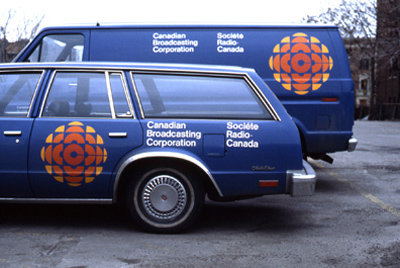
I want a car like this! CBC identity vehicle fleet, 1975.

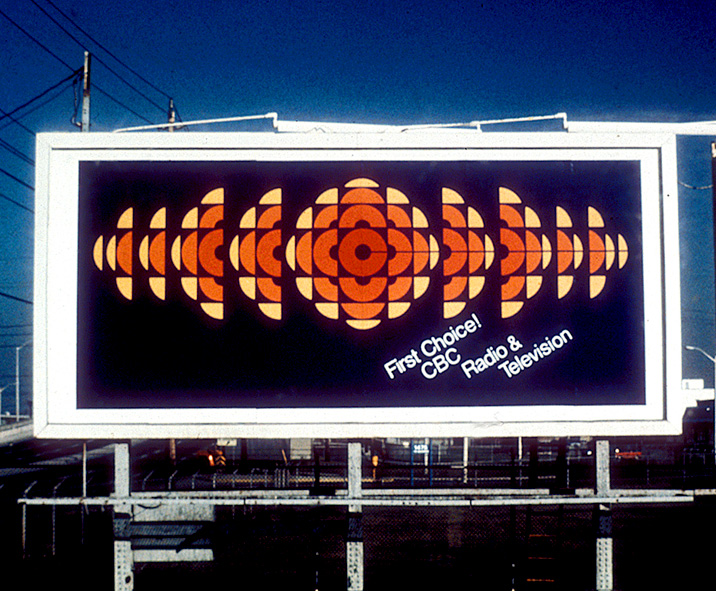
A gorgeous billboard from the CBC visual identity program, 1975.

A storyboard for the animated station identification.

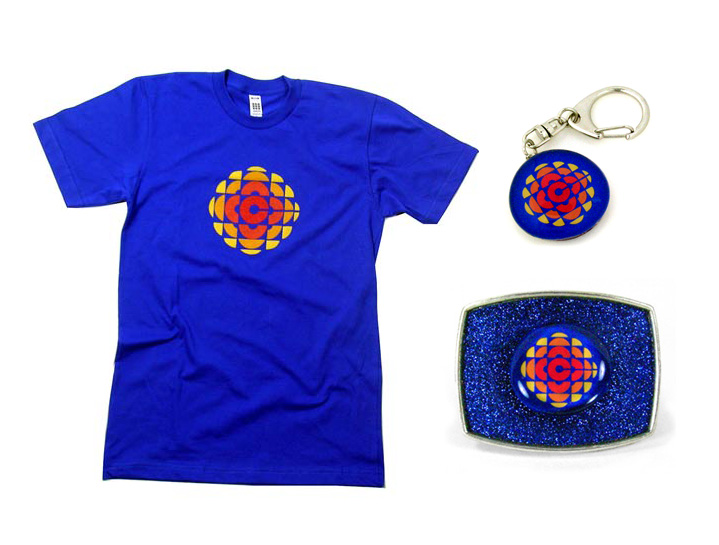
Proof of the Gem's lasting appeal: current merchandise from cbcshop.ca.


images: (1) author's own

(2-3-4) ccca.ca
(5) cbcshop.ca

Monday, April 9, 2007

Bob Ross

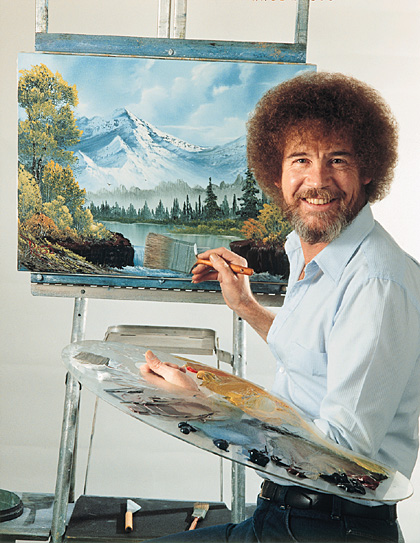
When I was a kid, I used to love watching The Joy of Painting.

The Joy of Painting was hosted by Bob Ross and ran on PBS from 1983 to 1995. During each half-hour segment, Ross would instruct viewers in the art of oil painting by creating an entire landscape.

With a soothing voice, he would describe the subjects of his paintings in such terms as "happy little trees" and "pretty little mountains". He believed that everyone had inherent artistic talent and the potential of becoming an accomplished artist given time, practice, and encouragement.

Bob was fond of saying, "We don't make mistakes, we just have happy little accidents."


image: wikipedia.org

Saturday, March 10, 2007

Mr. Dressup

Ernest Arthur Coombs was born in Lewiston, Maine, on November 26, 1927. Initially trained as a commercial artist, Coombs later graduated from the Pittsburgh Miniature Theatre. Among his classmates was Fred Rogers, of Mr. Rogers' Neighborhood fame.

In 1963, Ernie Coombs came to Canada to work as a puppeteer on Fred Rogers' children's series Misterogers, broadcast on CBC television. Within 1 year, Rogers returned to the U.S. and Ernie Coombs got his own show. (History tells us that Fred Rogers went on to great success as the host of the beloved PBS children's program Mr. Rogers' Neighborhood.)

Ernie Coombs starred in Butternut Square from 1964-1967, and upon it's cancellation, he presented an improved version called Mr. Dressup. On February 13, 1967, Mr. Dressup premiered on CBC and enchanted children with it's magical world of make-believe.

Through Mr. Dressup, Ernie Coombs developed an intimate connection with his audience by talking directly to the camera. Children watching were encouraged to use their imagination as Mr. Dressup pulled colorful costumes from his Tickle Trunk and showed them how to make crafts from ordinary household items. (I remember making stuff inspired by Mr. Dressup.)

Throughout my early childhood, I had a standing 10:30 am appointment with Mr. Dressup and his puppets Casey, Finnegan, Alligator Al, etc. Just the sound of the little piano intro takes me right back...

images: (1) answers.com (2-3) cbc.ca

Monday, February 12, 2007

TV Dinner Party

Last Saturday night, I hosted a very special dinner party. The idea was to re-create the golden days of TV Dinners, in the era of aluminum trays.

Regular Expo Lounge visitors already know how much I used to love eating TV Dinners as a child, with my mom. This made the TV Dinner Party concept just perfect for an evening with my mother and her new guy...

Deluxe TV Dinners, à la Jason...

I decided to make Martha Stewart's Perfect Fried Chicken, a recipe which I'll start 2 nights prior to a party. Along with that, I made the traditional TV Dinner mashed potatoes (full of butter and cream), but with a twist: I added sautéed leeks for flavor. And no Swanson replica would be complete without yellow corn in a luscious butter sauce.

All of this was served in rectangular aluminum trays, of course.

The soundtrack for the evening consisted of Music for TV Dinners, mixed with actual vintage TV themes: I Love Lucy, Batman, Charlie's Angels, etc.

No TV Dinner Party would be complete without watching an actual TV show. So after dinner, we sat down to The Doomsday Machine, a classic episode of the original Star Trek (which is my mom's favorite show).

Death by chocolate: Doomsday Brownies. (Note the CorningWare dish...)

For dessert, I asked my sister to bake brownies, as I recall TV dinners often including them. The concoction she came up with was decadent beyond belief: two layers of dark chocolate fudge that surrounded a hypnotic coconut macaroon center. After an indulgent second helping of this sweet cement, I settled back into my chair, in a sugary delirium.

I renamed her dessert after the show we watched: Doomsday Brownies.

Captain Kirk saves the universe from the Doomsday Machine...

images: photoshop art by author

photographs by Stephanie Stockl

Monday, January 8, 2007

International Broadcasting Centre

The Canadian Broadcasting Company built a completely functioning broadcasting facility for Expo 67. Located in the Cité du Havre section of Expo, the International Broadcasting Centre (IBC) was a rectangular building with Greek-inspired colonnade.

Inaugurated in late 1966, the IBC began operating before Expo 67's opening. It was designed as a permanent structure that would last beyond Expo's 6-month run.

A pedestrian walkway joined the Broadcasting Centre with Place d'Accueil:

The Broadcasting Centre had a vast plaza which featured an exhibit that focussed on radio and it's role in everyday life.

Inside, visitors could wander along an elevated passageway that let them observe actors, technicians and producers at work in the TV studios and controls booths.

As well as servicing the CBC, the International Broadcasting Centre provided all participating nations every televisual and radio service they needed, free of charge. These facilities included 6 radio studios, a tape-recording centre, makeup and dressing rooms, a workroom for sets, and any other amenity needed for radio and television production.

The CBC also operated 5 mobile units for location filming on the Expo site:

Click here to see a photo of the IBC as it appeared in 1997.

images: (1-2-4-5) personal collection
(3) expo67.ncf.ca (6) oldradio.com