Showing posts with label delightful dolls. Show all posts

Sunday, March 4, 2012

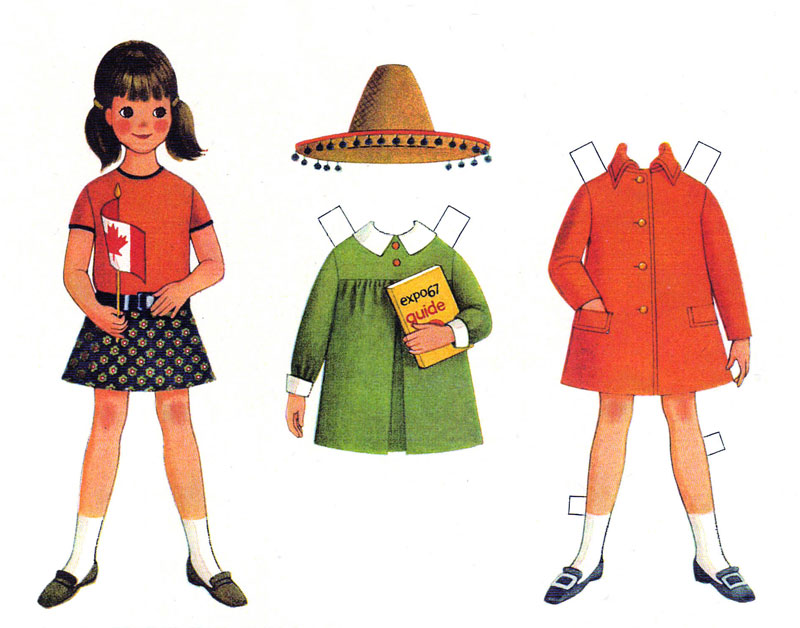
Betsy McCall at Expo 67

Betsy McCall at Expo 67 
In 1951, McCall's women's magazine introduced a paper doll called Betsy McCall; a spunky little girl with a pug nose, brown eyes and a brown bob.

An instant hit, the editors of McCall's had rightly guessed that mothers would be even more inclined to buy their magazine if it contained a nice little extra for their daughters. Each month, little girls across America begged their mothers for the very latest Betsy. Additionally, for a small fee (25¢ in 1967) paper dolls printed on cardboard could be ordered by mail.

Appearing in most issues of the magazine from 1951 to 1995, each Betsy McCall installment came with a set of paper dolls and clothing, as well as a fun little story meant to inspire children as they played. Sometimes Betsy would be helping Mom around the house, working in the yard, or celebrating a holiday.

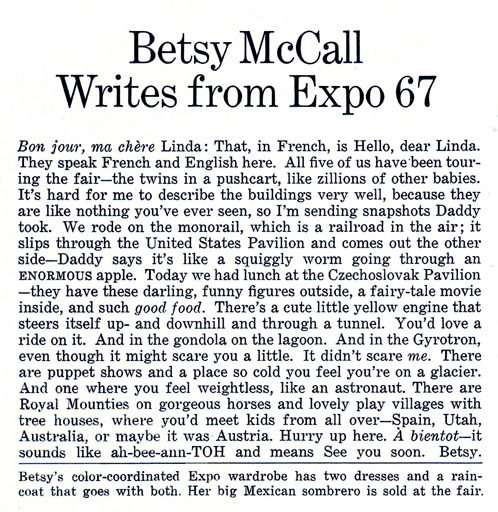
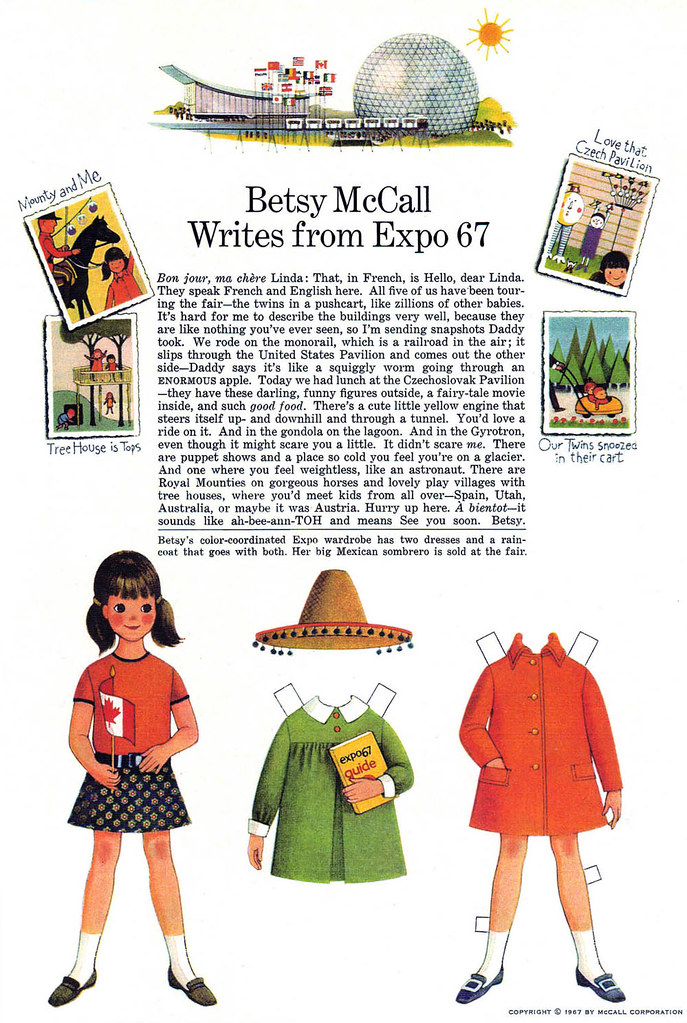
In August of 1967, Betsy and her family visited Expo 67. She wrote to her cousin Linda of her Expo adventures:

Betsy McCall at Expo 67

Betsy McCall at Expo 67 
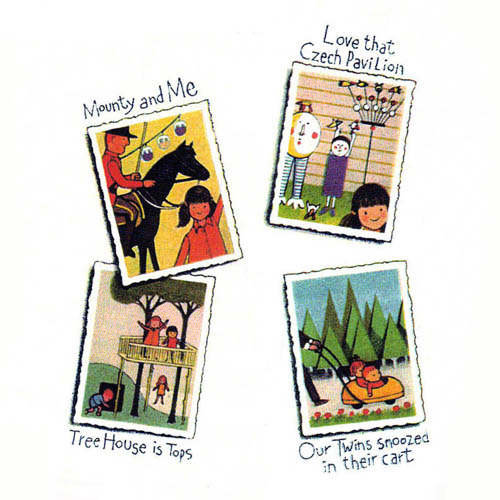
"All five of us have been touring the fair - the twins in a pushcart like zillions of other babies," wrote Betsy. "It's hard for me to describe the buildings very well because they are like nothing you've ever seen, so I'm sending snapshots Daddy took."

Betsy McCall at Expo 67 
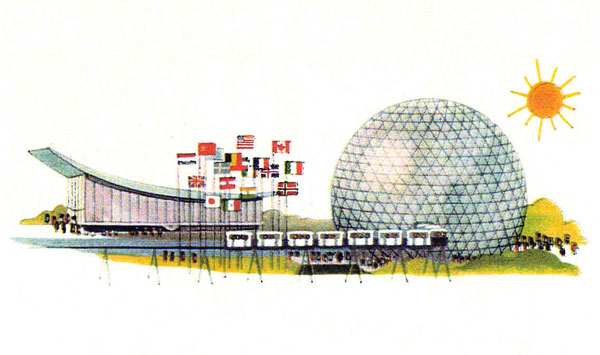
"We rode on the monorail, which is a railroad in the air; it slips through the United States pavilion and comes out the other side - Daddy says it's like a squiggly worm going through an ENOURMOUS apple..."

Betsy McCall at Expo 67
original image source: thebleudoor.com

Saturday, March 12, 2011

Mad Men Barbie Dolls

Mad Men Barbie Dolls
The TV series Mad Men premiered on July 19th, 2007.

Set in 1960's Manhattan, the show chronicles the lives of the men and women of a fictitious Madison Avenue advertising agency. The first season was set in 1960, and each successive season maintains a realistic progression of time.

Mad Men is acclaimed for its historically accurate visual style. Costume designer Janie Bryant looks to old catalogs, sewing patterns, and women's magazines such as Vogue and Good Housekeeping for inspiration. She uses a combination of original designs, vintage items and outfits rented from costume houses for the show.

Mad Men Barbie Dolls
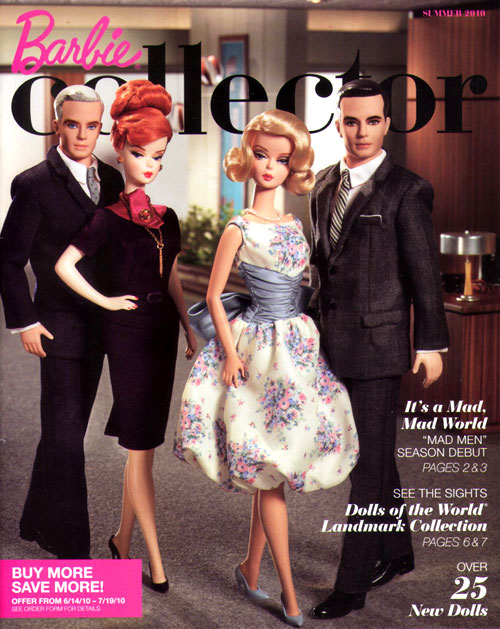
The summer 2010 issue of Mattel's own Barbie Collector Magazine.

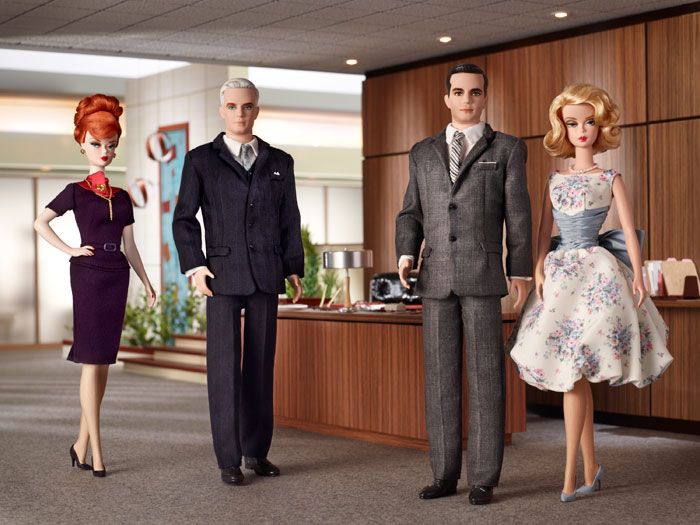
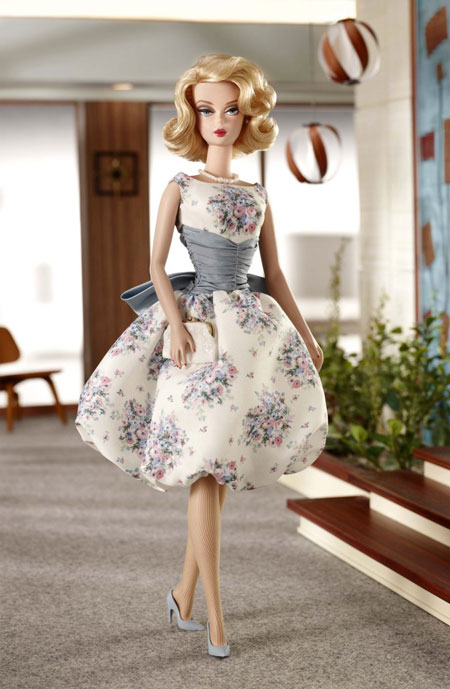
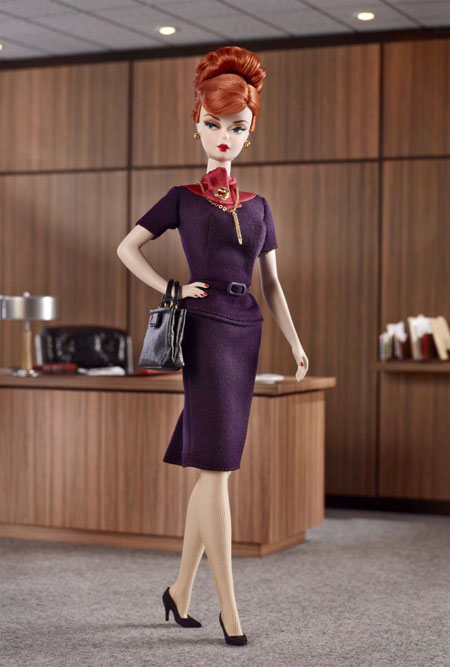
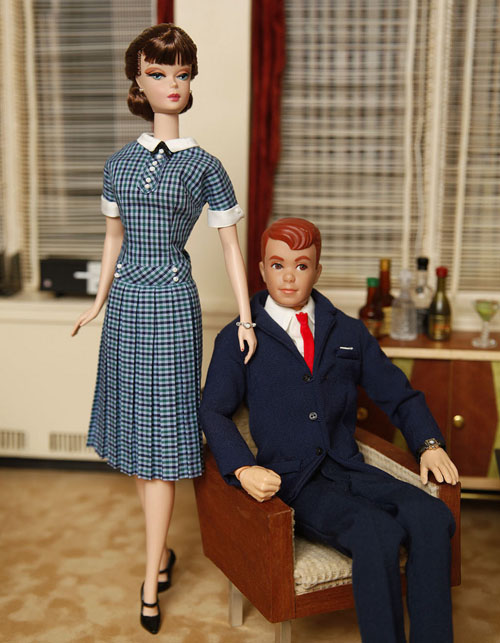
In the spring of 2010, Mattel released a series of limited-edition collectible Mad Men Barbie and Ken dolls. The dolls are based on Don Draper, the show's leading man; his wife, Betty; one of his colleagues, Roger Sterling; and Joan Holloway, the agency's office manager.

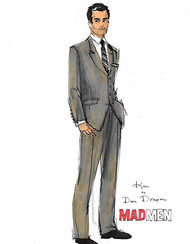
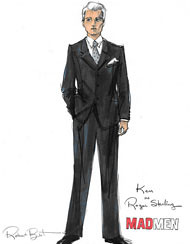
Designed by Mattel doll designer Robert Best, the dolls embody the show's iconic 1960's aesthetic. Molded of Silkstone, a material that resembles the look and weight of porcelain, each doll comes with accessories true to their show counterparts.

Mad Men Barbie Dolls
The Betty Draper doll embodies the character's Grace Kelly-like glamour. In a Vanity Fair interview, Janie Bryant describes her vision of Betty:

"Betty is sort of a combination of my grandmother and Grace Kelly. And for her, it’s about always presenting that image of perfection. She’s changed, though. The first season her palette was very pale—the grays and the cool blues and pale yellows and all the creams and the whites. But then, for season two, I felt like her character was really transitioning and getting stronger and so you can see there are times when the palette is a lot brighter and stronger, like she’s wearing hot pink and the bright blue..."

Mad Men Barbie Dolls
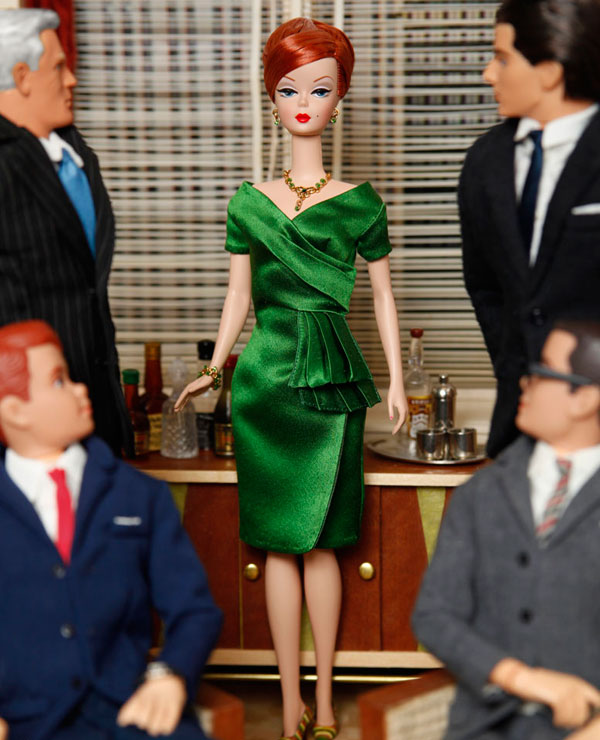
Buxom bombshell Joan Holloway has an equally ravishing doll, though she's a contrast to Betty's glacial glamour. Says Bryant of Joan's wardrobe:

"I always design things for her that are very strong in palette because I feel like her character is very strong. She really commands that whole office. And so I really like using bold tones for that character. And I think her silhouette is about knowing that that looks great on her body and knowing where all of her assets are, which she uses to her advantage."
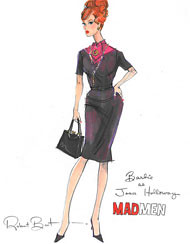
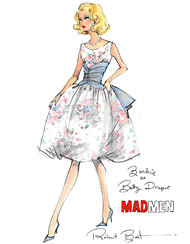
Barbie designer Robert Best's original sketches for the Mad Men dolls.


Haute Doll Magazine Photo Shoot

Mad Men Barbie Dolls
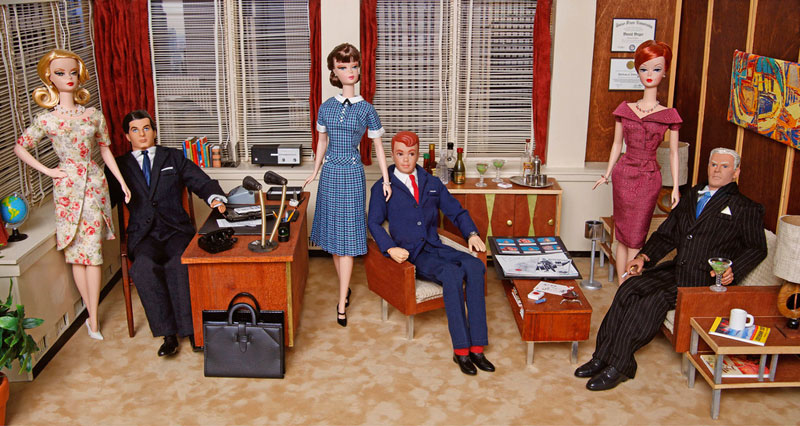
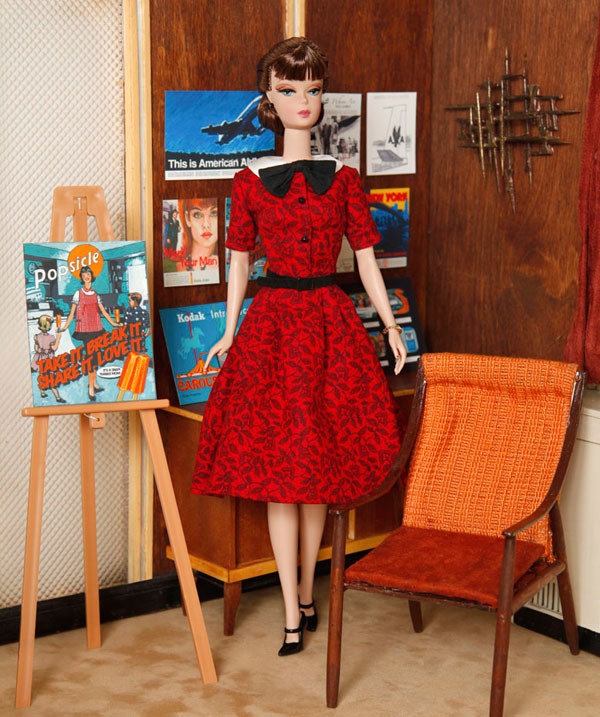
Prior to the release of the Mattel collection, the now-defunct Haute Doll magazine created their own "Mad-Men-meets-Barbie" photo spread for their March/April 2010 issue.

Not authorized by Mattel, these one-of-a-kind dolls were styled based on outfits from the show, and set in a miniature version of Don Draper's office... complete with cocktails and cigarettes!

Note the Pete Campbell and Peggy Olson dolls, 2 characters that were not produced for the Mattel line...

Mad Men Barbie Dolls
Prim Peggy Olson presenting her Popsicle ad campaign.

Mad Men Barbie Dolls
Peggy Olson and Pete Campbell.

Mad Men Barbie Dolls
Joan Holloway, the office vamp, in a signature jewel-toned dress.

Mad Men Barbie Dolls
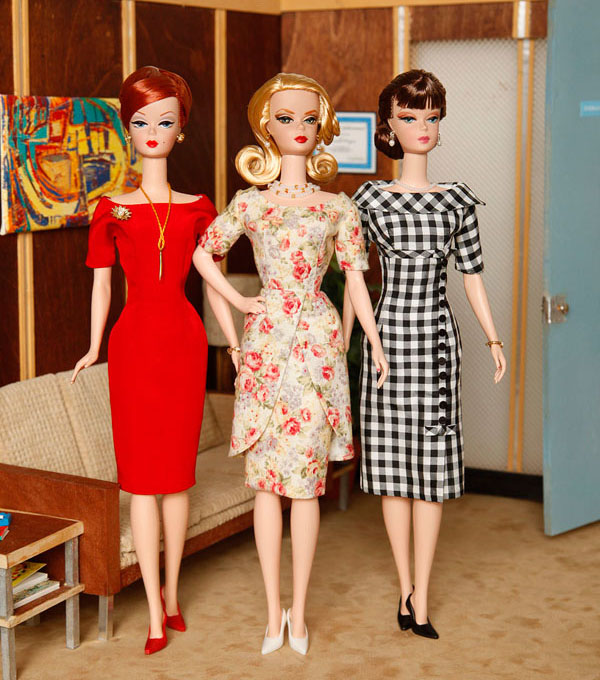
From left: Mini Joan Holloway, Betty Draper, Peggy Olson.

images: (1 to 4) barbiecollector.com
(5 to 13) flickr.com

"Haute Doll" photoshoot:
diorama by Carloyn Allen
fashions by Natalia Sheppard
Barbie repaints by Vin Trapani
photos by Michael Williams
Wednesday, January 13, 2010

Expo 67 Hostess Doll

This is one of those collectibles which holds a special place in my heart.

Like the U.S. pavilion coat or the Michèle Richard record sleeve, I had been waiting to get my hands on this Expo 67 souvenir for years. Ultra-rare, I had only ever seen one of these dolls once before... at an exhibition on Montreal in the 1960's at the CCA in 2004. My luck changed when this beauty appeared on eBay last autumn.

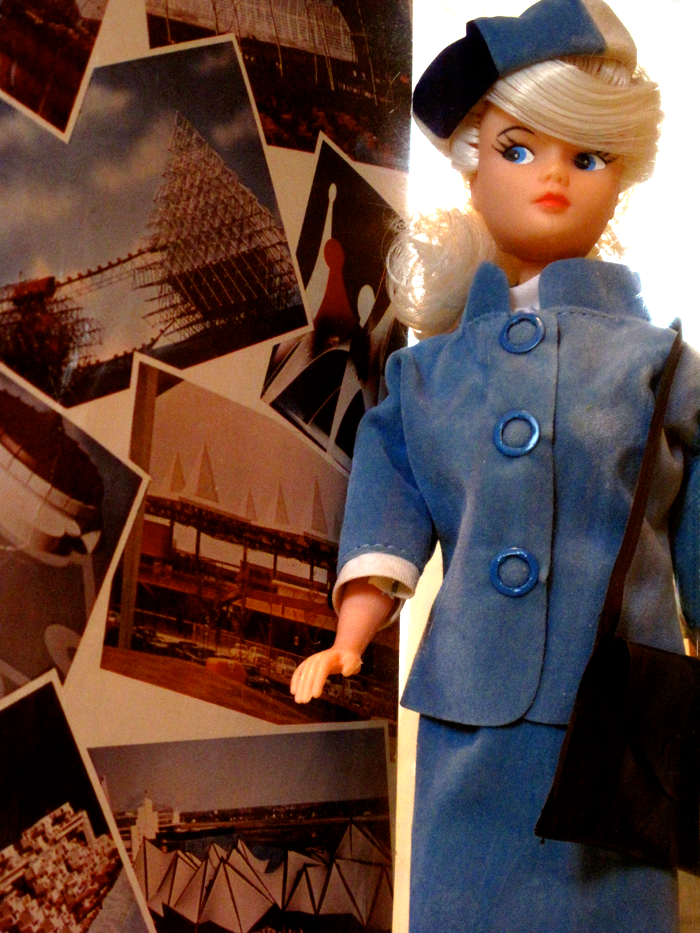
Designed with children in mind, this 11½-inch doll is roughly the same size as Barbie. Impeccably detailed, she wears a tiny replica of the general Expo hostess uniform, designed by Michel Robichaud, complete with purse, shoes, and ubiquitous pillbox hat.

And, this little lady is still sealed in plastic!

The back of the box reads:

THE CHOSEN FEW

Your "Official Expo Hostess" is a very special person. She may come from one of the 70 countries with pavilions at Expo. She speaks several different languages and has an exceptional personality.

The Expo 67 symbol depicts the theme of Expo: "Man and his World". Many years ago, before our alphabet was invented, man was shown by simple drawings called cryptograms, a vertical line with outstretched arms. When these drawings form a circle, it becomes a symbol of all men around the world joined together in friendship.

Your Hostess will direct you to the exciting world of Expo 67, including La Ronde, which is the popular entertainment centre. Here, you can ride in an ostrich-drawn cart or see a zoo with newborn lions, giraffes and elephants.

You will never forget your fascinating, once-in-a-lifetime visit to Expo 67, Montreal, Canada.

images: author's own

Thursday, August 28, 2008

Elvis and Priscilla Barbie Dolls

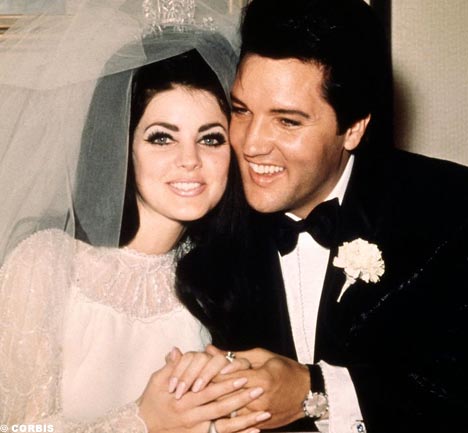
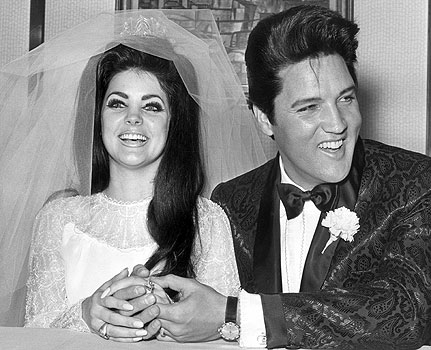
Elvis Presley married Priscilla Beaulieu on May 1, 1967.

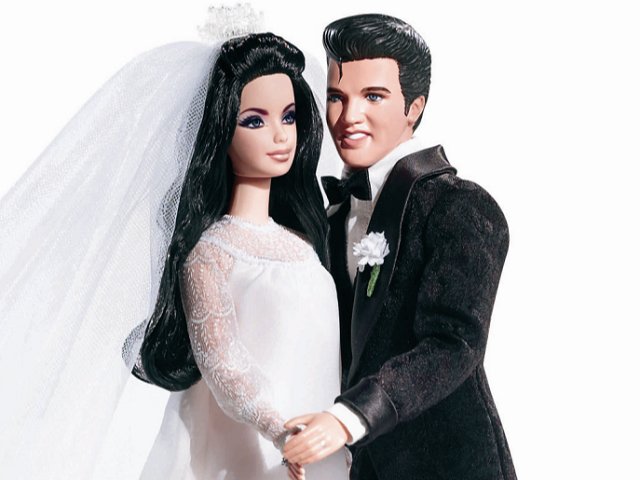
The private ceremony was held in one of the most grandiose suites at the Aladdin Hotel, in Las Vegas. The bride wore a beaded white gown, with a tiara mounted on her (fab) dyed black beehive. Elvis wore a black brocade suit. Priscilla's sister Michelle was her maid of honor, while Memphis Mafia members Marty Lacker and Joe Esposito acted as Elvis' best men.

Upon Elvis' request, the word "obey" was removed from the wedding vows. Despite the couple's notoriety, the ceremony took all of 8 minutes to conclude!

Unfortunately, the marriage didn't last long. The couple were seperated in 1972 and officially divorced in 1973.

Mattel (the makers of the Barbie doll) have just released a Graceland-approved box set to commemorate Elvis and Priscilla's wedding. Earlier this month, select fans gathered for the dolls' unveiling at Elvis' defunct home (now a museum) in Memphis, Tennessee.

These die-hard fans were treated to slices of wedding cake and orange juice served in champagne glasses.

images: (1-2) source unknown
(3) virginmedia.com
(4) source unknown

Saturday, August 25, 2007

Fashion Queen Barbie, 1963

Fashion Queen Barbie, 1963 
In the late 1950's, the designers of the orignal Barbie doll had not anticipated the importance of hair play in the toy's conception. As a result, early Barbies had a stiff, fixed ponytail hairdo, which discouraged children from playing with or restyling the doll's hair.

Within a few years of Barbie's introduction, hairstyling would take on an important role in high fashion and popular culture (think Jackie-O). Competing hair play themed dolls in the early 1960s also pointed to Mattel's mistake. Always innovative, Mattel would strike back in late 1963 with the ultimate Barbie doll: Fashion Queen Barbie.

Fashion Queen Barbie, 1963
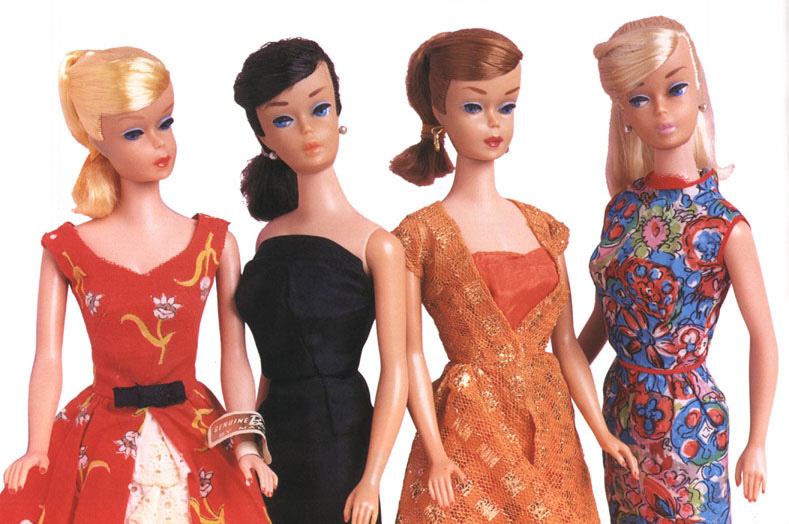
Glamorous, luxurious and expensive, Fashion Queen Barbie's distinctive feature was her molded hair that enabled her to wear wigs. Dressed in an eye catching gold and white striped swimsuit and matching turban, the doll was accompanied by 3 stylish wigs: a platinum bouffant, a brunette pageboy, and an auburn flip.

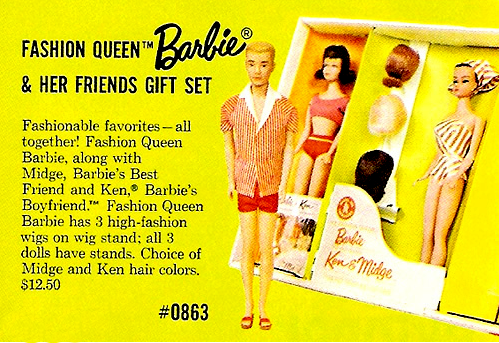
Fashion Queen Barbie was packaged in a large, open front display box, a style normally reserved for gift sets. Her release coincided with an intensive advertising campaign, meaning that despite her $6.00 selling price (twice that of a normal Barbie), she quickly became a must have with children. Two gift sets were also produced, featuring the Fashion Queen doll, accompanied by her best friend Midge, and boyfriend Ken.

Fashion Queen Barbie, 1963 
images: (1) personal collection
(2) barbiecollector.com, montage by author
(3) flickr.com

Wednesday, May 16, 2007

Better Homes & Gardens Dollhouse, 1972

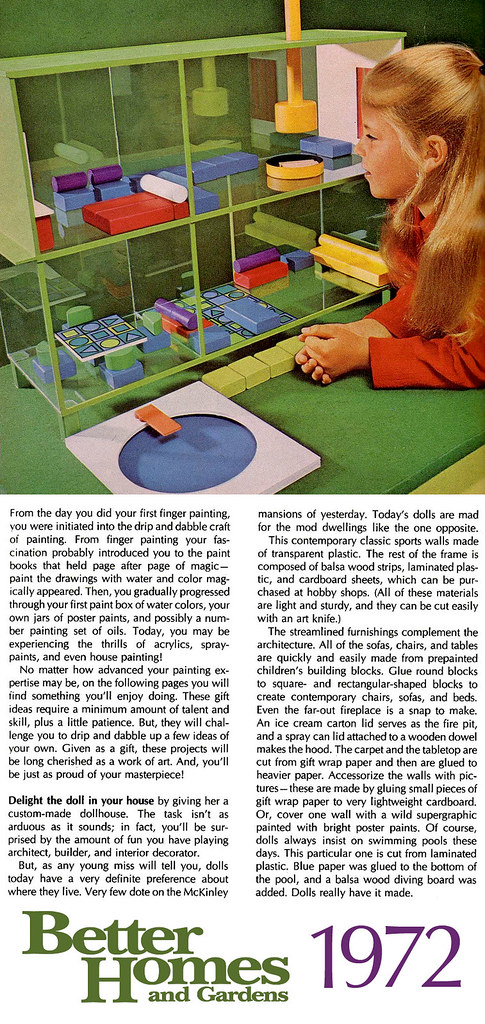
"Delight the doll in your house by giving her a custom-made dollhouse..."

artwork designed by author, based on images from flickr.com

Monday, February 26, 2007

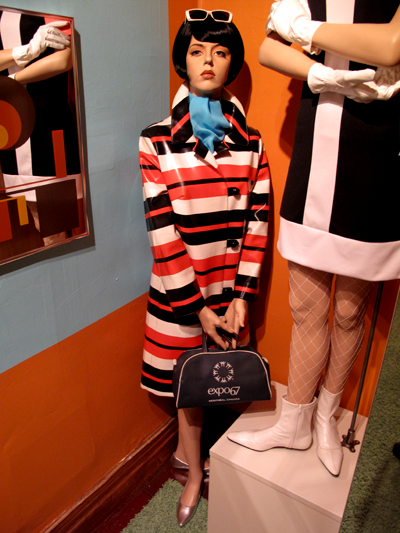
Maxine the Mannequin

Not many people know that display mannequins are based on real people.

Artists employed by mannequin companies sculpt life-sized replicas of human models. This process, which allows for the most realistic figures, was created in the late 1950's by mannequin-mogul Adel Rootstein.

A true visionary, Adel had a keen eye and a intuitive sense of "the next big thing". Among her notable discoveries was a young Twiggy in 1964.

The original Adel Rootstein brochure featured a photo of the real Maxine (left).

For several years, I worked at clothing store Le Château, in the window department. My days were spent surrounded by these life-sized Barbie dolls, and I would've jumped at the chance of eventually owning one.

During the time that I worked there, Le Château was in the process of overhauling their corporate image. They decided to unload my all-time favorite mannequin series: a group called the Snapshots.

Based on ballet dancers, the Snapshot series dated back to the late 70's and early 80's (think early Madonna, legwarmers and Fame). By the late 90's, the Snapshots, essentially a teenage-line, became obsolete.

It was my lucky day...

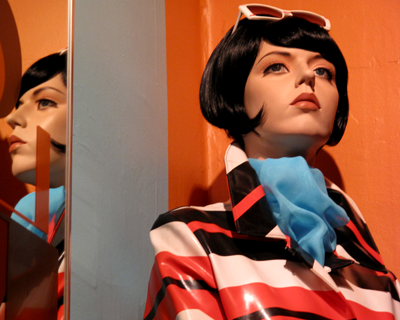
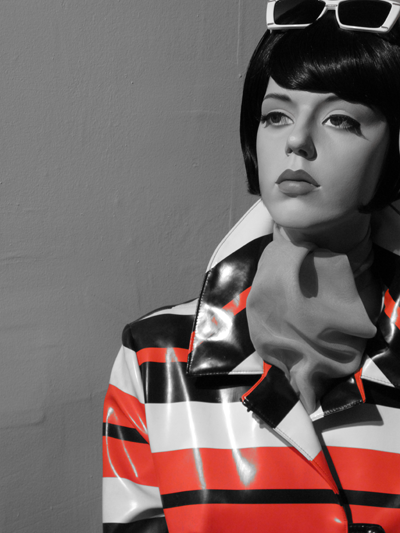
The mannequin that I got was named Maxine, after Maxine Renshall, the real girl that was sculpted. I've had her for about 5 years now, and she resides quietly in the real Expo Lounge, in full miniskirt and go-go boot regalia. Maxine's original Adel Rootstein brochure, laminated, hangs behind her on the wall.

Maxine wears a vintage Expo 67 silk scarf around her neck.

She reads Visitez l'Expo 67 avec Bill Bantey, a guide to the pavilions she'll visit.

Maxine keeps her Expo passport and other souvenirs in her Expo 67 flight bag.

Maxine's mod look is inspired by Michèle Richard, her idol. Don't they look alike?

images: personal collection

Friday, November 10, 2006

The Barbie Doll

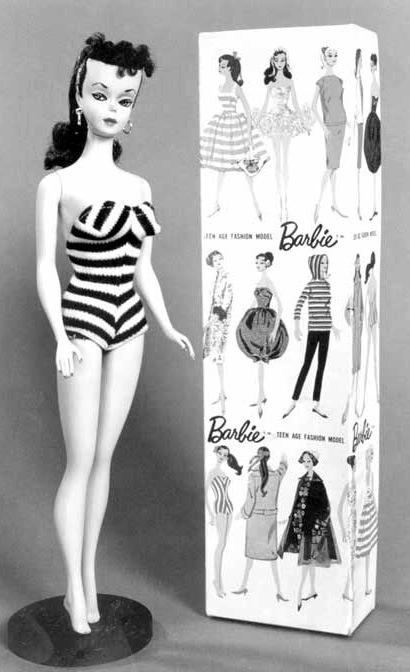
Barbie made her debut at the American International Toy Fair on March 9, 1959.

The doll was the idea of Ruth Handler, the wife of a co-founder of the Mattel toy company. She was inspired by watching her daughter Barbara play with paper dolls, giving them adult roles. It occured to Ruth that the toy market lacked an adult-figured fashion doll. Initially, her husband didn't like the idea and neither did Mattel's board of directors.

On a trip to Germany in 1965, Ruth Handler discovered the Bild Lili doll in a shop window. The adult-fugured Lili was exactly what Ruth had in mind. Lili was modeled after a sassy comic strip character in a daily German newspaper. Interestingly, the original Lili dolls were cigar store items aimed at an adult male audience.
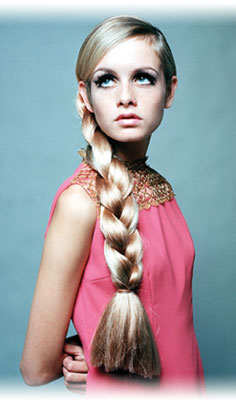
Ruth Handler brought 3 Lili dolls back with her to the United States. She reworked the doll's design and named her after her daughter Barbara.

Barbie, the teenage fashion model, was born.

The late 50's and early 60's is my favorite era of the Barbie doll. The dolls and clothes of this time were of superior quality, with tiny buttons, zippers and an amazing attention to detail. In fashion, this was the Jackie-O era, and this look is reflected in the Barbie dolls of that period.


images: (top) morganhilltimes.com
(bottom) personal collection

Wednesday, May 17, 2006

Twiggy

Twiggy (née Lesley Hornby) was a young British girl who became a worldwide sensation in the late 1960's.

With an impossibly thin figure, boyish cut hair and huge, striking eyes, she represented the free-spirited, youthful look that was very in vogue at that time.

Twiggy is considered the world's first supermodel, and the first person to be immortalized as her own Barbie doll by Mattel, in 1967.

What is less known is that Mattel wasn't the first company to immortalize Twiggy as a "doll". There was also a Twiggy mannequin.

Adel Rootstein was founder of her own mannequin company in the late 1950's. What set Rootstein mannequins apart was that their figures were sculpted by artists, based on real people. This ensured that the mannequins would appear as realistic as possible.

To this day, the Rootstein company uses real people to create their mannequins, which are considered the best in the world.

Adel Rootstein discovered Twiggy right before she became a household name. By the time Twiggy, herself, first visited New York in 1967, her mannequins were already in the windows of the finest shops in the city!

images: (top) linda-project.com
(middle) source unknown
(bottom): rootstein.com