Friday, July 14, 2006

The British Pavilion

Britain's pavilion was a large, white, windowless one, featuring a 200-foot tower with a 3D Union Jack jutting out of the summit. The tower's design was purposely unfinished, to symbolize Britain's "unfinished business" in the world.

The pavilion's exhibit was split into several different sections:

Shaping Britain dealt with Britain's earliest history, through a presentation of film and light effects.
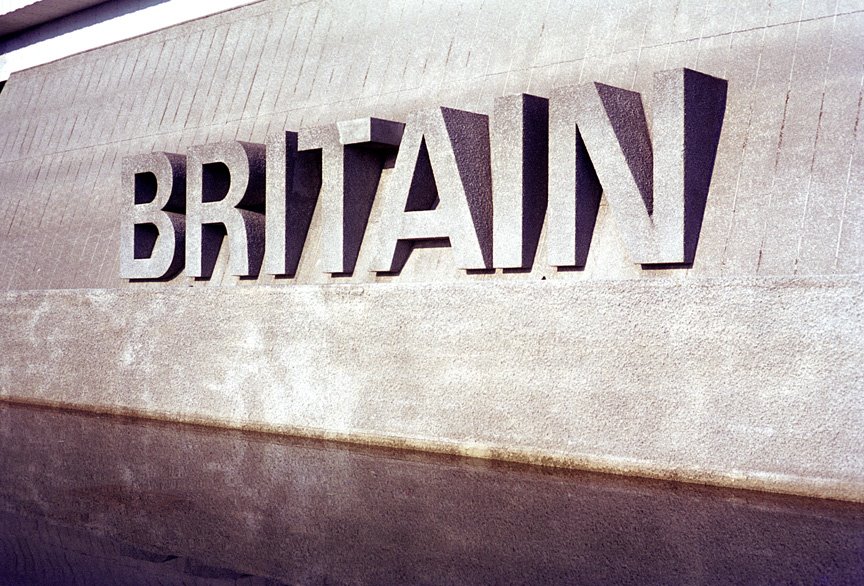
The Genius of Britain used a 3 dimensional mural to display great figures of Britain's past.

Britain Today was a series of tableaux which depicted modern Britain of 1967.
Britain's technological achievements were highlighted in the section Industrial Britain.

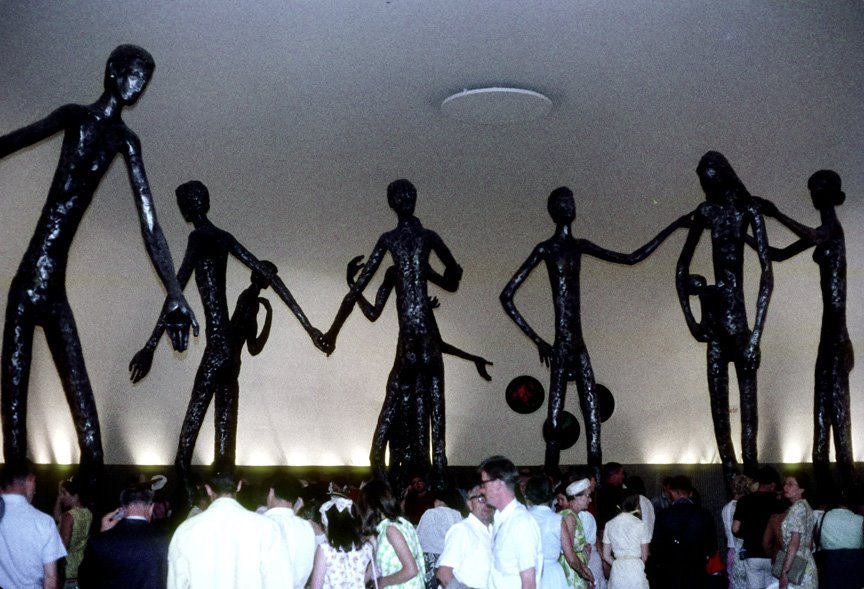
Britain in the World was a message of peace, depicted by giant metal sculptures which expressed goodwill and fellowship of man.

I love the Britain Today section, it was totally cool! Being a window dresser, I dig the displays that were set up like store windows, using mannequins and props to convey the feeling of Britain in the 60's...

Britain was most certainly at it's high during the 1960's, with innovators like the Beatles, Mary Quant and Vidal Sassoon shaping pop culture and influencing the world...

photos: (top) naid.sppsr.ucla.edu/expo67/
(middle) FOS productions
(bottom) expo67.ncf.ca

Saturday, July 8, 2006

Expo Architecture: Theme Pavilions

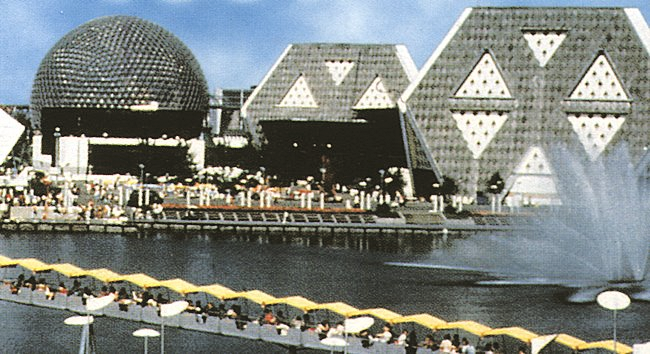
During the planning stages of Expo 67, most of the pavilions were designed before the actual content of these pavilions was decided.

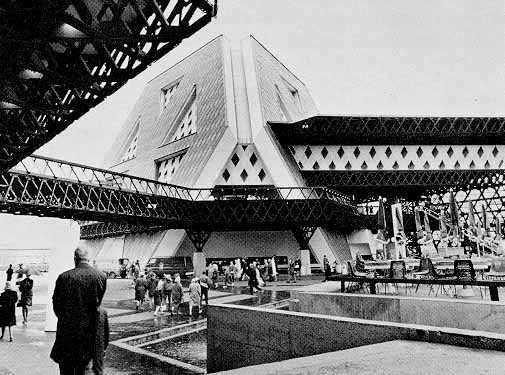
The architects of the Man the Explorer and Man the Producer theme pavilions were faced with a problem: how to quickly and inexpensively put up large buildings, with polyvalent spaces adaptable to either small exhibits or enormous displays?

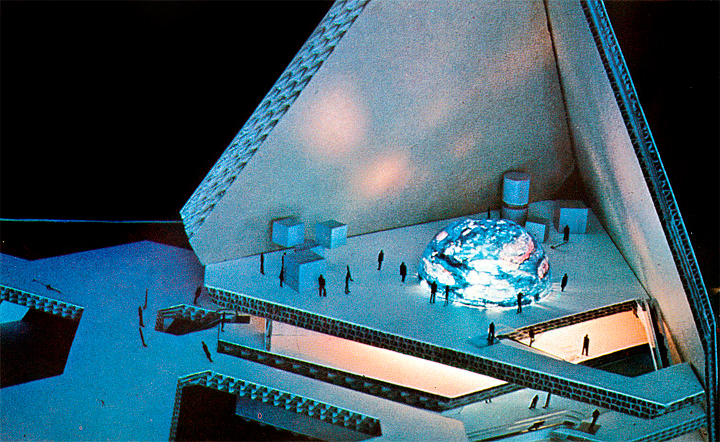
A model of the Man the Explorer pavilion.

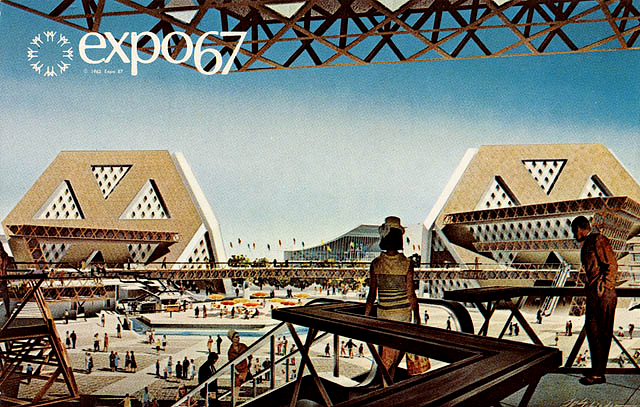
The architects decided to use the truncated tetrahedron shape as a sort of building block, to obtain the spaces needed for exhibits that didn't exist yet. The truncated tetrahedron is like a triangle with the corners cut off. Thousands of steel units in this shape would be stacked and joined together, creating the massive trelliswork required for these pavilions.

The original theme pavilion designs were elegant.

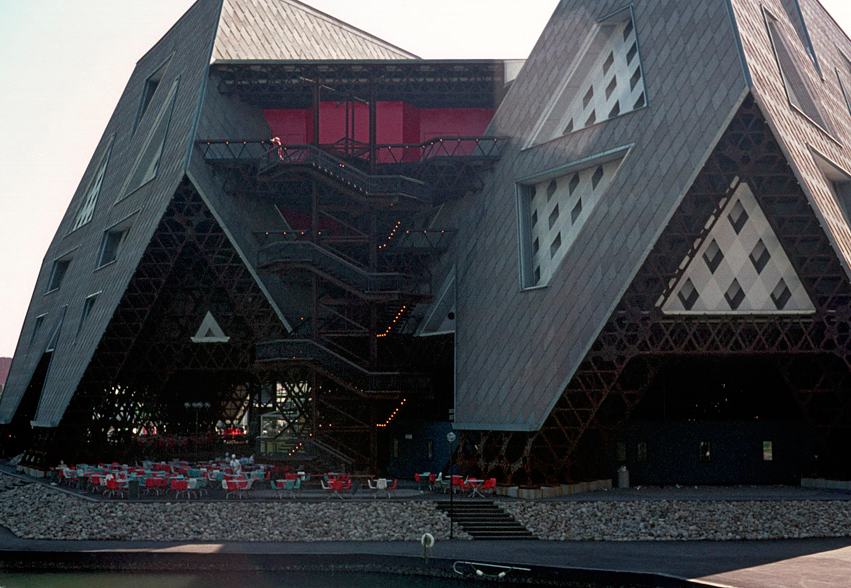
The initial idea was a good one, the designs and models of these buildings were elegant. Then, another problem arose: there weren't enough steel welders in Canada to weld the units together! Instead, they were bolted, which required heavy bracing to be solid. The result was an oppressive metal structure, which quickly rusted.

The end result was rather oppressive.

The Man the Explorer complex, with the U.S. pavilion in the background.

I have a love/hate relationship with these pavilions. I do find them rather ugly, but totally cool at the same time...

An aerial view of the Man the Producer complex on Île Notre Dame.

photos: (1) westland.net/expo67
(2) courtesy DC Hillier
(3) alamedainfo.com
(4) unknown source
(5) personal collection
(6) library and archives Canada

Friday, July 7, 2006

Spiderman '67

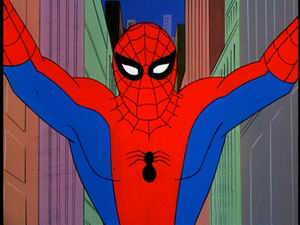
One of my favorite cartoons as a kid was the classic Spiderman.

It used to rerun around lunch time on CJOH. I ate many a TV dinner watching Spiderman save the world in true Spidey style!

This Saturday morning cartoon was created in 1967, lasting three seasons, until 1970. The first season stayed true to the actual comic book, with stories that focussed a lot on Peter Parker's day job/superhero juggle. J. Jonah Jameson was fun to hate, and how could you (or Peter Parker) resist the redheaded beauty of the Daily Bugle's secretary, Betty Brant?

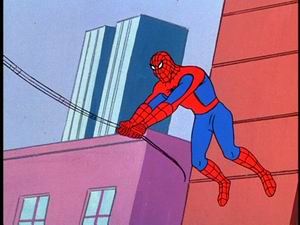
Budget cutting and a new producer brought changes to the second and third seasons: this was the era of extensive repeating of Spiderman's swinging scenes. During this time, the storylines became zanier, and the hand-painted backdrops became truly psychedelic.

Add to that the cheesy music, and you have a show with a particular mood that has never been rivaled...

As a kid, I didn't care if the animation repeated itself... I loved this show!

To see the 6-dvd boxed set (on Amazon.com), click here.

images: dvdork.com

Wednesday, July 5, 2006

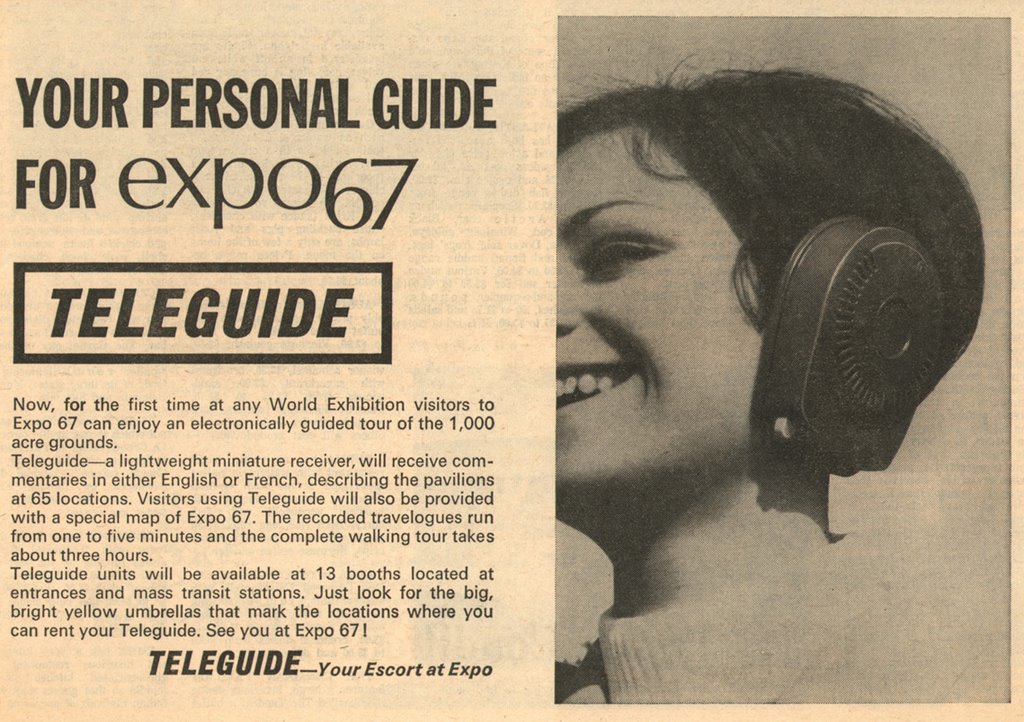
Expo 67 Ads

In the 10 years I've been collecting Expo 67 paraphernalia, I've amassed quite a large collection.

A few years ago, I acquired the Expo opening day editions of the Montreal Gazette and the now-defunct Montreal Star.

Each of these newspapers had published "special Expo editions" on April 27, 1967. The information and photos are amazing, the enthusiasm of the day was unmistakeable.

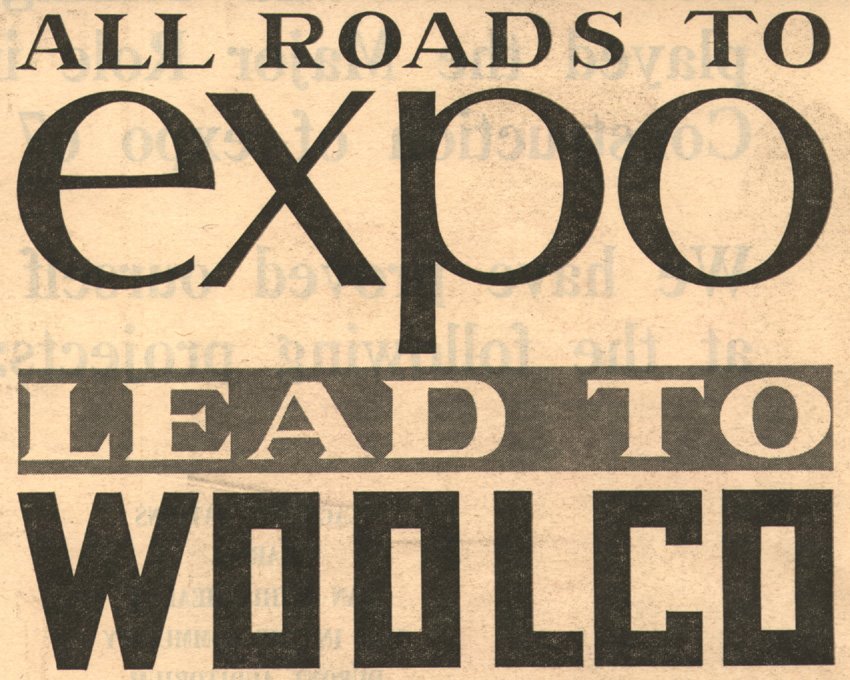
The best part of these documents are the ads. Expo 67 was a world class event that was to generate millions of tourist dollars. Every business in Montreal wanted to jump on the bandwagon, and they almost all did. Everything from camera shops to pet stores... There's even an ad for a strip club!

I've scanned a collection of these ads and uploaded them on Flickr.com. I also included the comics of the day, which all mention Expo. And, lastly, the Gazette's special Expo crossword puzzle (with solution, of course...).

Click here to view the whole set.
images: personal collection

Tuesday, July 4, 2006

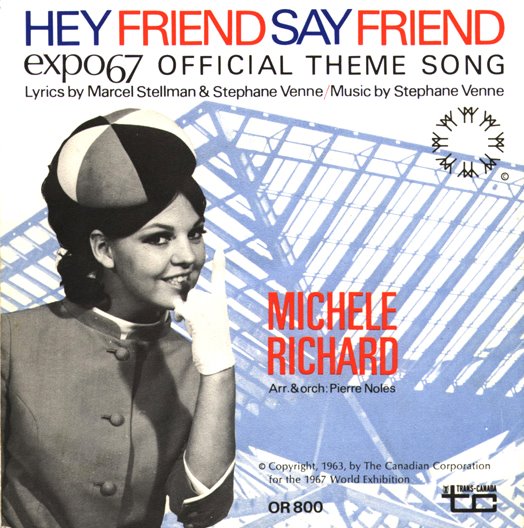
Hey Friend Say Friend

After years of searching, I have finally found the original cover art to the 45 single of the Expo 67 theme song, as done by Michèle Richard. Michèle is dressed in the official Expo hostess uniform.

Needless to say, it is very rare and ultra hard to find!

Side A is the original french version Un jour un jour while side B features the English version.

It is the ultimate piece in my collection, the one that bridges the gap between my two biggest passions: Expo 67 and Michèle Richard!

image: personal collection

Monday, July 3, 2006

Le Château

Le Château is a true Montreal institution.

The company was founded in 1959, by Mr. Herschel Segal. A pair of bell-bottoms bought on a trip to London, England inspired him. What if he could translate the Carnaby Street look to hip Montrealers looking for high fashion, without the hefty price tag?

The Le Château legacy was born.

The original store was a tiny location on Saint Catherine Street, that began with menswear only. The name "Le Chateau" was a bit tongue-in-cheek, given it's diminutive size. A ladies' collection was added in 1962.

The 1960's saw Le Château build itself a solid reputation by offering the latest groundbreaking styles to it's customers, including a succesful leather-goods line. Among some famous Le Château customers of that period, we can count the Beatles, who visited the store while in Canada, and famous artist Erte, who had costumes made for... you guessed it... Expo 67!

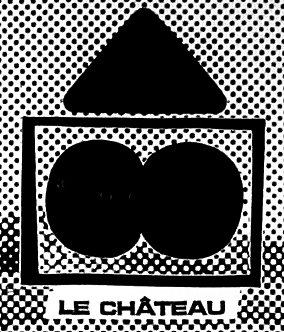
Montreal artist Vittorio Fiorucci (who is best known for the Just for Laughs cartoon mascot) is credited for having created Le Château's two circle and triangle logo in the early 70's. The design was revamped in the 1980's, to the trademark that we know today, which still appears on Le Château shopping bags.

Like any company, Le Château has had it's ups and downs over the years, but it remains today one of Canada's leading retailers.

images: special thanks to Cara Braude from Le Château's head office

Sunday, July 2, 2006

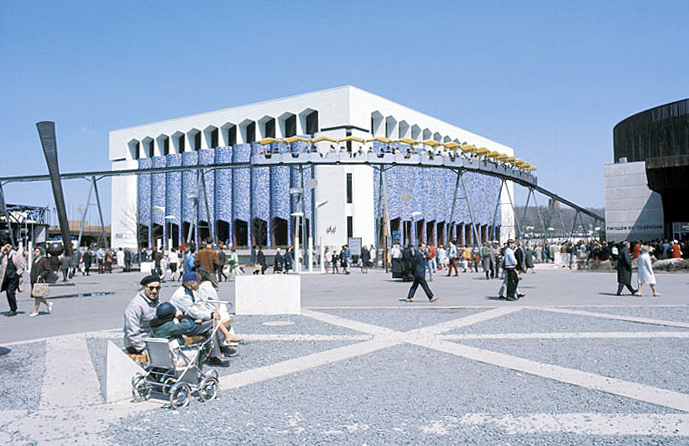
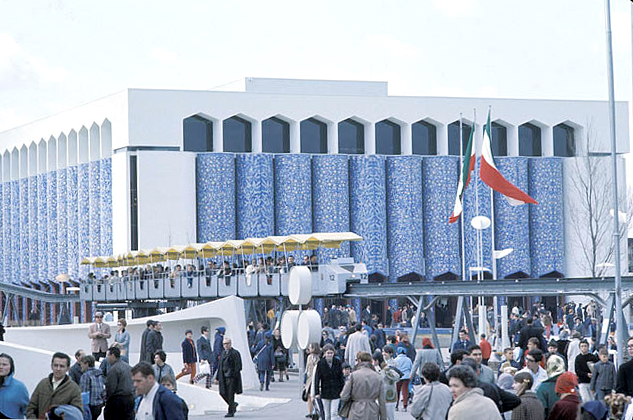
The Pavilion of Iran

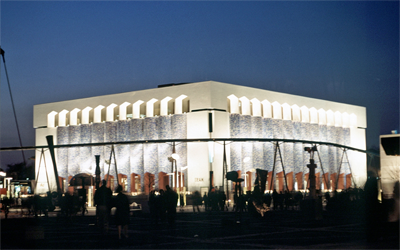
The Iranian participation at Expo 67 consisted of an exotic pavilion located on Île Sainte-Hélène.

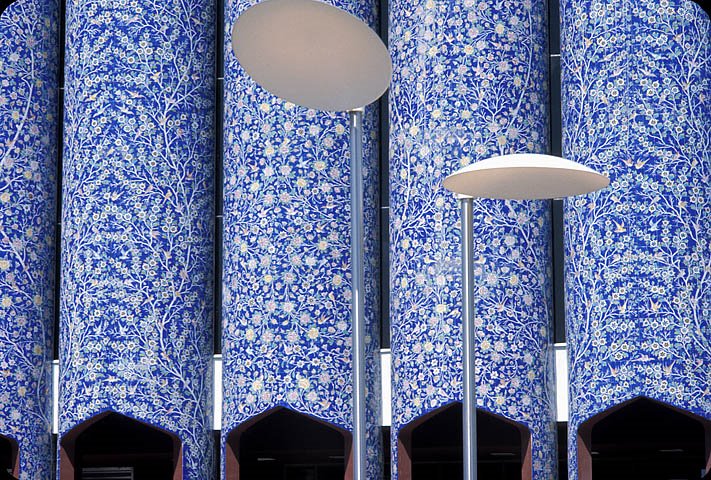
The architectual style of the pavilion was inspired by ancient Iran, with beautiful tile columns serving as an example of Iranian decorative art.

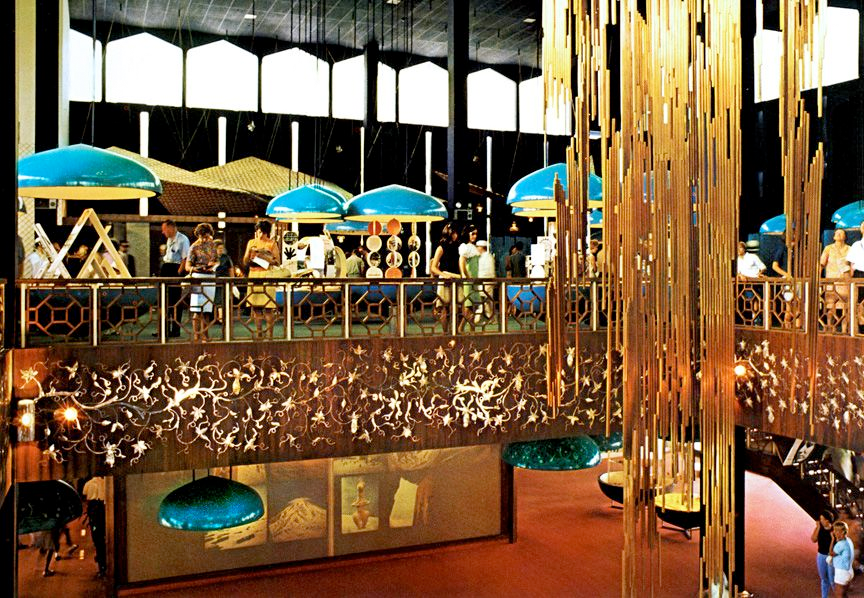
Inside, the pavilion's colors and lighting sought to create an atmosphere that represented the spirit of Iran. Rich persian carpets formed a constant backdrop throughout the pavilion.

The pavilion's theme, "A Thousand and One Faces of Iran", presented the nation's past, present and future, on two floors of exhibits.

A section devoted to "Tradition" displayed archaeological treasures such as 3000-year old golden vases, 12th and 13th century bronzes, and hand painted ceramics.

In another section of the pavilion, the ancient Persian empire could be discovered through sumptuous displays of gold and silver objects, dishes, mirrors, chandeliers and jewels.

The oil industry was the key element in the exhibit devoted to modern Iran. Photographs and models of oil wells and refineries, as well as gas pipelines and chemical plants, illustrated this.

An extensive exhibit of photographs in the central hall of the pavilion showed the progress that Iran had made in such fields as health care, education, the (gradual) emancipation of women, and electoral reform.

Iranian craftsmen could be observed, working at looms creating the world-renowned Persian carpets. Iranian vodka, caviar and other specialties could be sampled on the patio's bar.

I can't help but imagine the wide-eyed awe of the typical small-town, church-going Québecois visitor of Expo, upon seeing this pavilion!

imagess: (1) naid.sppsr.ucla.edu/expo67/
(2-3-4) library and archives Canada
(5) DC Hillier
(6) Bill Dutfield