Founded in 1921, the McCord Museum is a public research and teaching museum here in Montreal, dedicated to the preservation and appreciation of Canadian history.
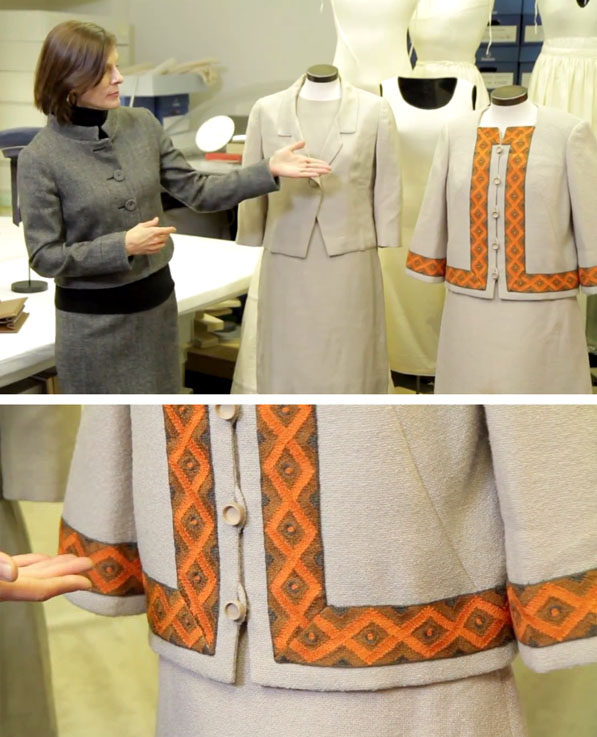
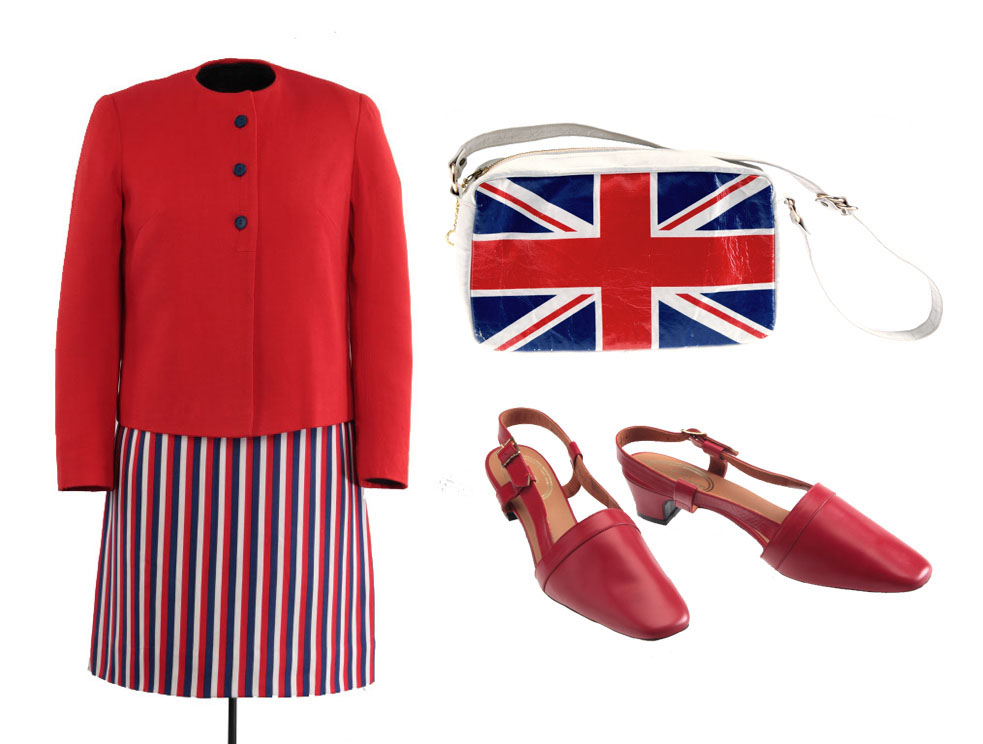
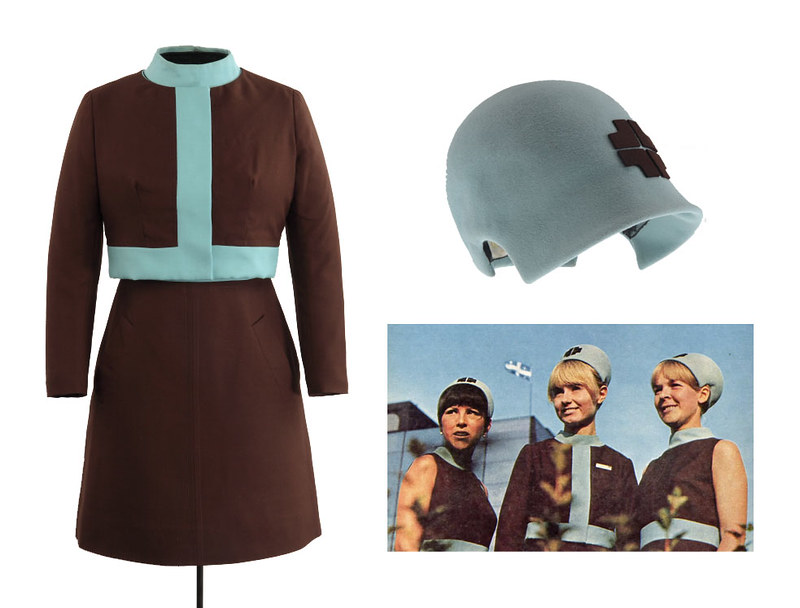
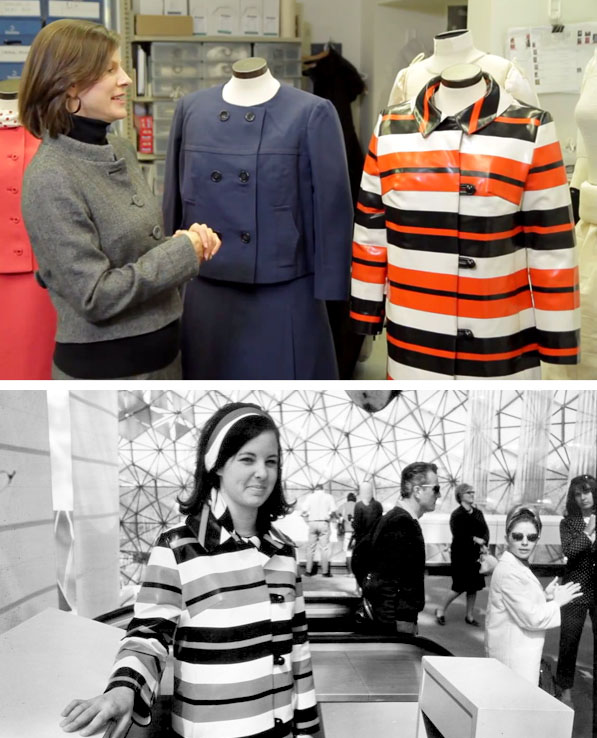
The museum is known for its extensive historical costume and textile collection, which includes over 18,000 clothing and accessory pieces, many of which were created by some of Montreal's most legendary fashion designers. Among the plethora of antique dresses, parasols, hats, fans and footwear, the museum also counts a collection of Expo 67 hostess uniforms.
The Montréal Fashion Bureau ("Mode Montréal") sat down with Cynthia Cooper, head of collections and research, and curator of costume and textiles for the McCord Museum. Herself dressed hostess-esque, Ms. Cooper gives us a look into our beloved Expo girls, "dressed for modernity"...
For spring 2012, Pier-Luk Bouthillier proposes a design that pays homage to one of my personal favorite symbols of Expo 67: the "Katimavik".
The Katimavik was the dominant element of the vast Canadian pavilion at Expo 67. At 109 feet high, visitors could climb to the top of the structure for breathtaking views of the Expo site.
The word "katimavik" means "meeting place" in Inuktitut, symbolizing Canada's role as host at Expo 67.
Interesting to note, "katimavik" can also mean "to take care of". This adds a deeper meaning to the design: "taking care of" our planet is one of PLB's core values...
Available in men's or ladies', in asphalt or black.
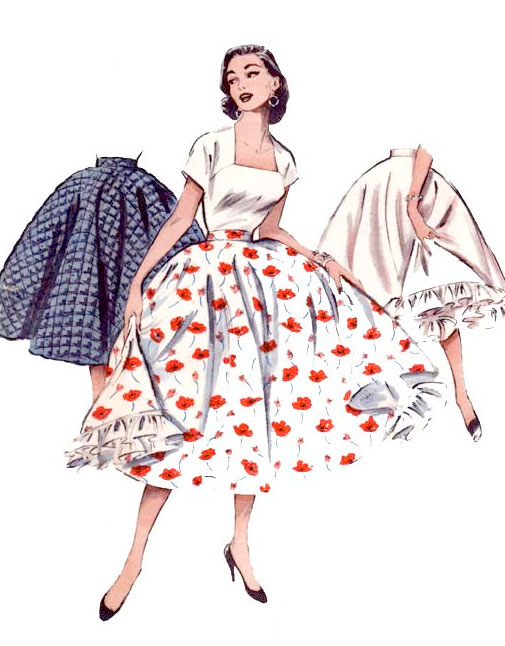
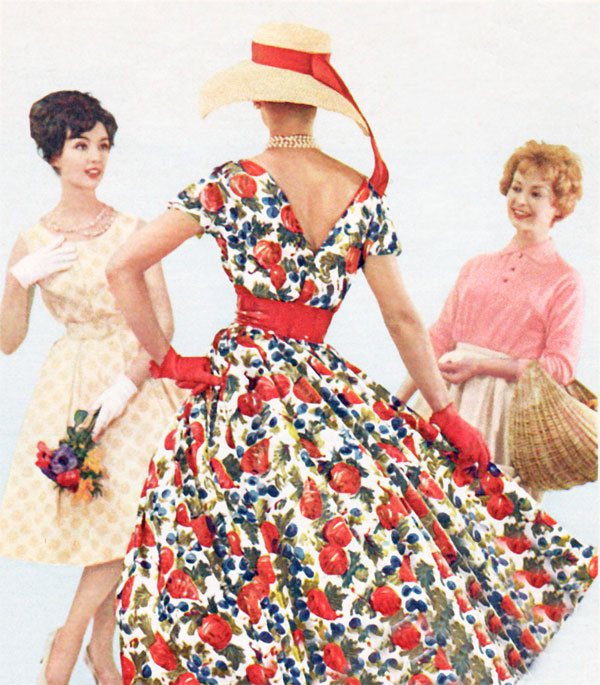
After the rationing and shortages of World War II, women were longing for frivolity.
Enter fashion designer Christian Dior in 1947. His debut collection was called "Corolle"... literally, the botanical term for a circlet of flower petals. "I have designed flower women," said Dior of his new silhouette that emphasized wasp waists and flared, petticoated skirts. Harper's Bazaar dubbed it the"New Look", and Dior's name in fashion history was made.
Dior's New Look dominated the fashion world for about 10 years, progressing from a gentle swish in the early 50's to a round ball like bouffant effect by the 1960's (think, Mad Men). Tiered, ruffled petticoats were extremely popular, especially with teenage girls, often worn 2 or 3 at a time. Each petticoat was stiffened in some way either by conventional starch or a strong sugar solution.
From Grandma's Vintage Recipes, a DIY concoction to add pouf to your petticoat and crunch to your crinoline:
3/4 cup cornstarch 2 tablespoons turpentine 2 tablespoons borax 1 quart cold water Stir up. Dip in & iron dry.
Born and raised in Vancouver, British Columbia, footwear designer John Fluevog began his career in the late 1960's at local shoe shop Sheppard's Shoes. In 1970, he formed a partnership with Peter Fox to design and sell stylish shoes under the name Fox and Fluevog.
After an amicable split in 1981, Fluevog went on to open his first independent store, John Fluevog Shoes, in 1985.
Fluevog's quirky and avant-garde designs garnered him a cult following with the creative, artistic and rebellious crowd. From ultra-pointy to overly-round toes, platform shoes, severely squared heels, handmade clogs; and adorned with art-deco designs, swirly, colorful patterns, peace signs, hearts, etc.
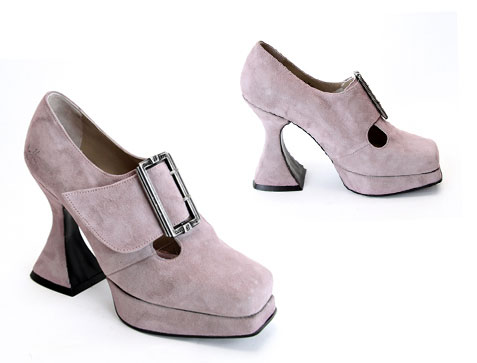
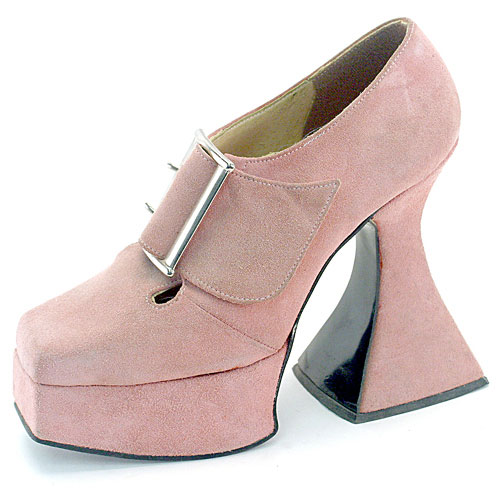
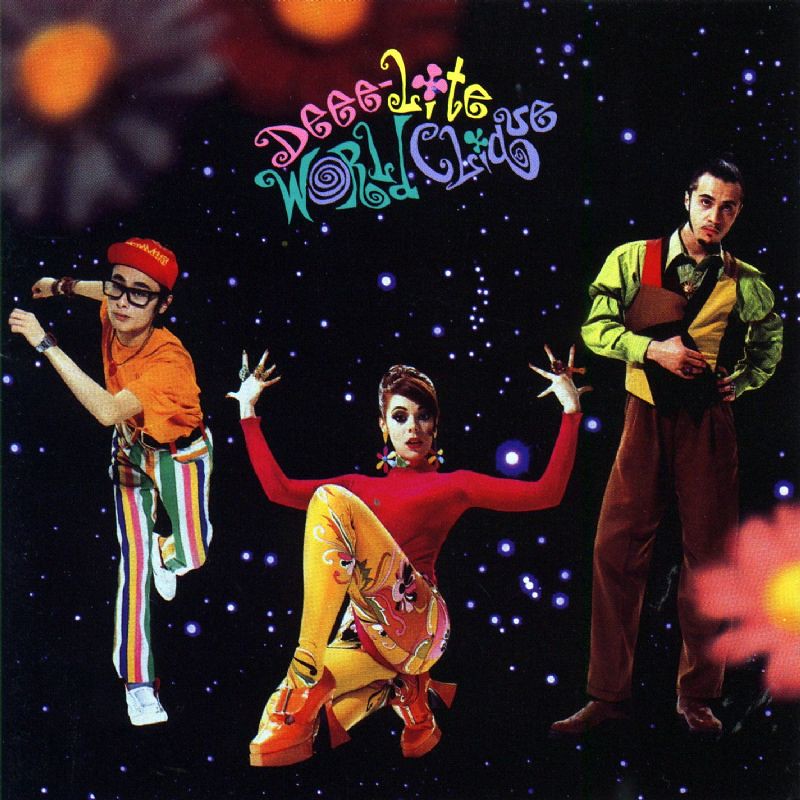
In 1990, Lady Miss Kier donned a pair of John Fluevog's Munster shoes on Deee-Lite's World Clique album cover, thus making the trumpet-heeled platforms an iconic symbol of the '90s House/Club underground DJ scene...
A limited-edition re-issue is available at the John Fluevog website.
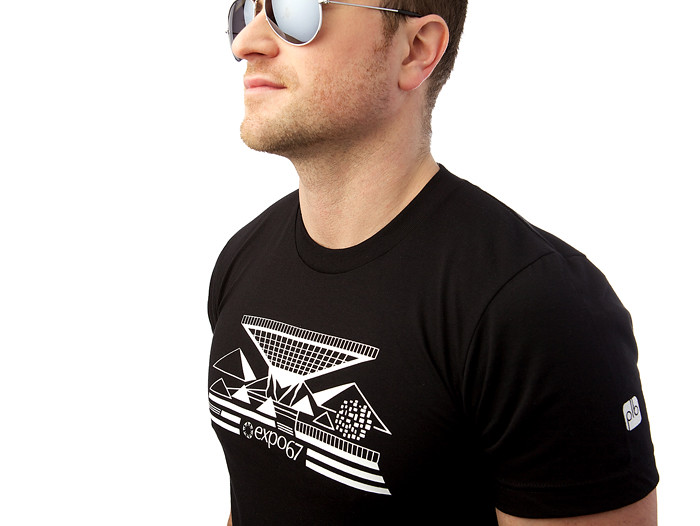
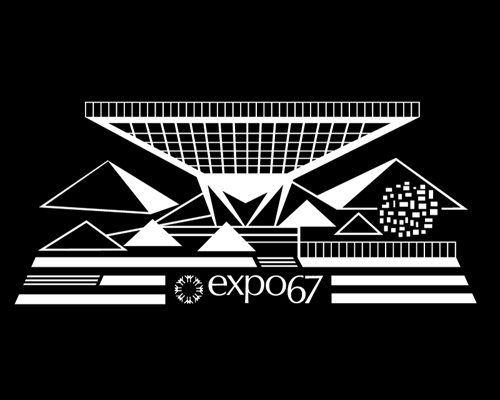
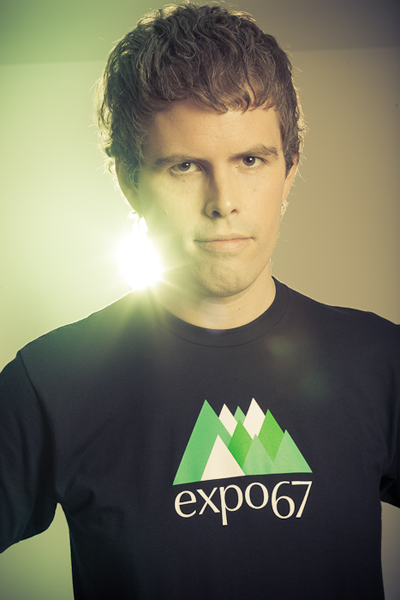
Hot on the heels of the fab Montréal t-shirt, designer Pier-Luk Bouthillier proposes another Montreal-themed design for PLB's fall 2010 collection.
This time, the inspiration is the ultimate symbol of 60's Montreal: Expo 67!
The t-shirt pays homage to the groovy Pulp and Paper pavilion at Expo 67 (above), a structure in the form of a stylized forest.
While 1967 saw trees as little more than raw material destined for consumption, hindsight has taught us the importance of healthy forests: trees are living, breathing plants which remove unwanted greenhouse gases from the air, replacing them with life-sustaining oxygen.
PLB's design taps into the optimism and design aesthetic of Expo 67, making it relevant today. Organic cotton and water based inks complete the message.
And who better to model an Expo 67 t-shirt than yours truly...?
PLB's spring 2010 collection features a totally retro, Montreal-centric design!
Using graphic representations of familiar urban landmarks (the Metro, Place Ville Marie, etc.), this t-shirt represents, to me, the very magic that makes Montreal cool... including our world-renowned Underground City.
And where better to photograph this design than in front of the Biosphere...? (originally built for Expo 67, of course!)
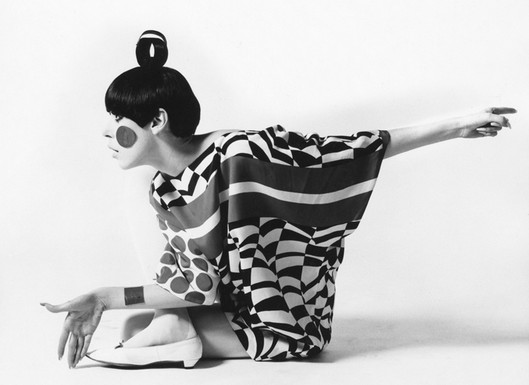
In 1967, the holy trinity of 1960's fashion collaborated on a short film.
Produced and directed by William Claxton, 'Basic Black' featured models Peggy Moffitt, Leon Bing and Ellen Harth working it in Rudi Gernreich's fabulous mod fashions.
Claxton wrote of the experience:
“In 1967 Peggy and I had just returned from 'swinging London' and Paris to work in New York. We were commissioned by a small commercial production company to come up with something which would serve as my 'reel' in order to get hired to direct TV commercials. While sitting on our bed at the Algonquin Hotel, we collaborated in writing a shooting script that would show fashion, makeup, and hair on three beautiful models wearing the fashion designs of avant-garde Rudi Gernreich’s collection for that fall. We shot the film on a weekend, had original music composed for the sound track and 'Basic Black' was born. It was very well received, won several awards and has been referred to as the first fashion video.”
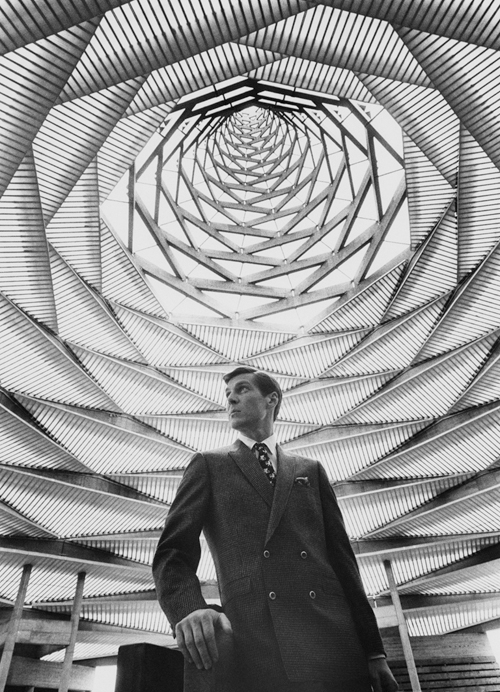
"A male model poses in the Man in the Community pavilion at Expo 67. He wears a four-buttoned DB houndstooth blazer by Hammonton Park with square shoulders, peak lapels, straight flap pockets, and deep side vents."
"Some of the most contemporary styles are those worn by visitors to the site, but for more formal fashion presentations, go inside a number of pavilions. One of the most interesting takes place in the USSR pavilion several times a day. The Russians are trying to break into the international fashion world market, and their hem-lines, faltering nervously above the knee, reflect a concession to decadent mini-skirts and western tastes.
Russian fashion exhibited at Expo 67, designed by Vyacheslav Zaitsev.
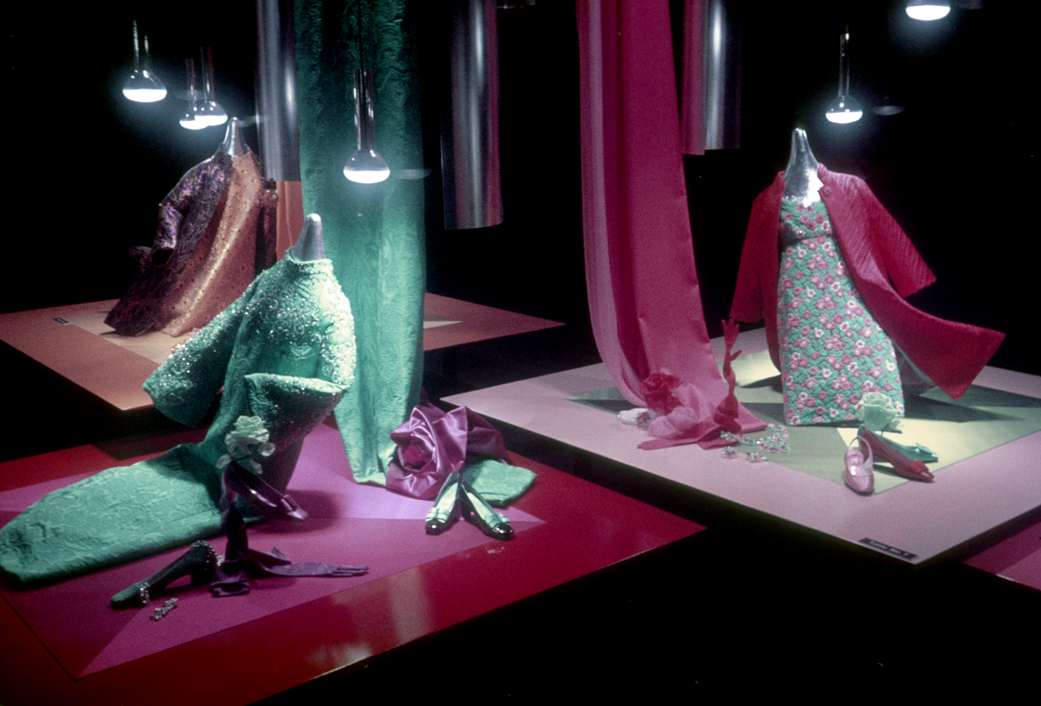
"The French put on a magnificent display of magnificent clothes from Balenciaga, Balmain, Chanel, Dior, Givenchy, St. Laurent - the list is endless. The ground floor is devoted to the City of Paris and its current modes; upstairs, selections from the fall collections of the greats are shown with typical Expo film flare. Some of the most spectacular jewelry in the world are shown here, too, at times manages to eclipse the fashions.
"You can see a fur fashion show and eat at the same time in the Scandanavian pavilion restaurant. A collection of native furs is modelled twice daily, at lunch and dinner-time, by assorted Canadian and Scandanavian beauties.
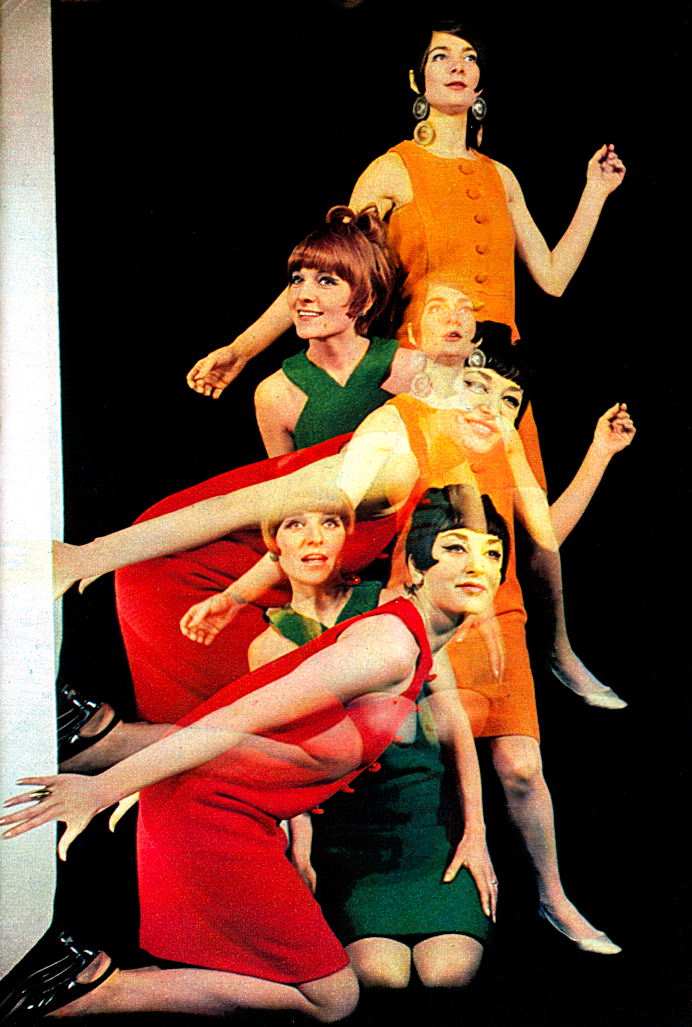
"Pucci, a favorite of Jacqueline Kennedy and the jet set in general (they're the only ones who can afford him), and the Fontana Sisters are featured in Italian fashion presentations. The Sisters also did the hostesses' bright red, swinging uniforms. They're nice to look at but the most dramatic uniform is, appropriately enough, worn by the French Pavilion hostesses who are done up in silver lamé packages.
Expo's hostesses were fashion plates in themselves.
"Fashion shows at the Canadian pavilion are held every Thursday afternoon in the outdoor theatre. Some of the clothes are appealing, but too often a nationalistic fervor to show every Canadian designer whether he's good, bad or just plain awful, prevails over good taste. Hostesses here, as in most other pavilions, are dressed in modified national costume - sedate, simple little dresses, nice but definitely unspectacular. For national dress, the African hostesses top the list.
A dress display in the Swiss pavilion.
"There are also fashion and jewelry displays at many of the other pavilions. The most important of these include Belgium, for diamonds; Czechoslovakia, for jewelry; India, for gorgeous materials; and Switzerland, with a display of exquisite watches."
images: (1) author's own (2) z3000.livejournal.com (3) Life magazine online archive (4) the Bill Cotter collection
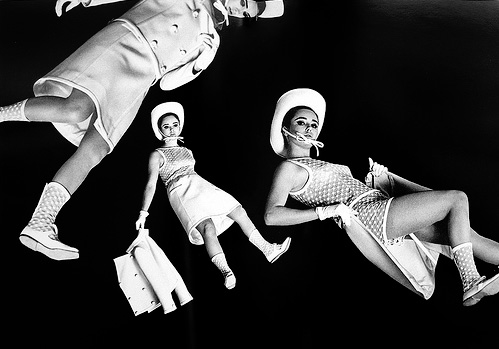
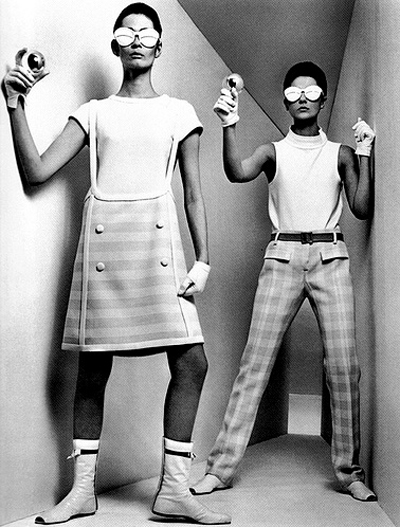
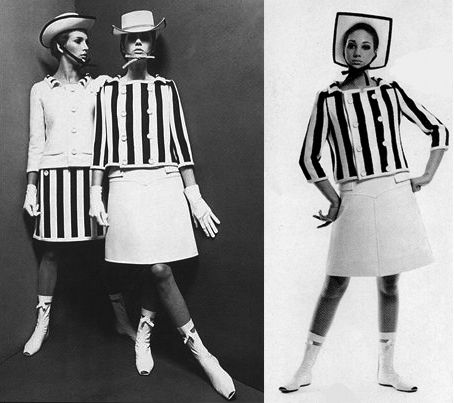
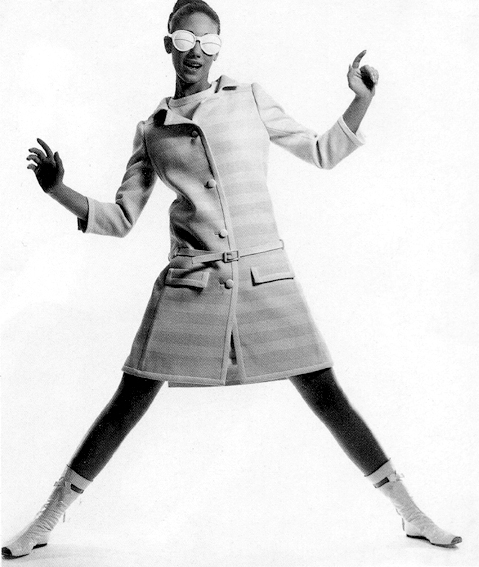
Courreges shot to couture stardom in the mid-1960's with his Moon Girl look. Revolutionary in their styling, his clothes were sharp, angular and subject to a highly disciplined design. This uncluttered aesthetic became Courreges' signature, and quickly spread throughout the fashion world.
André Courreges' designs included boldly-piped trapeze dresses, coats, and skinny pants, worn with chin-strapped bonnets or oversized sunglasses. Credited as one of the originators of the mini-skirt, his hemlines were the shortest in Paris. Colors included pink, white, ice-blue, pale turquoise, day-glow orange and lime green.
Arguably, Courreges' greatest contribution to the fashion world was his low-heeled, calf-high boots made of white plastic. These Go-Go boots moved quickly from catwalk to street and dance floor.
PLB Design was founded by Montreal graphic designer (and my boyfriend) Pier-Luk Bouthillier. Pier-Luk combines his passion for design with a concern for the environment, creating what I consider designs that are both retro-licious and eco-chic...
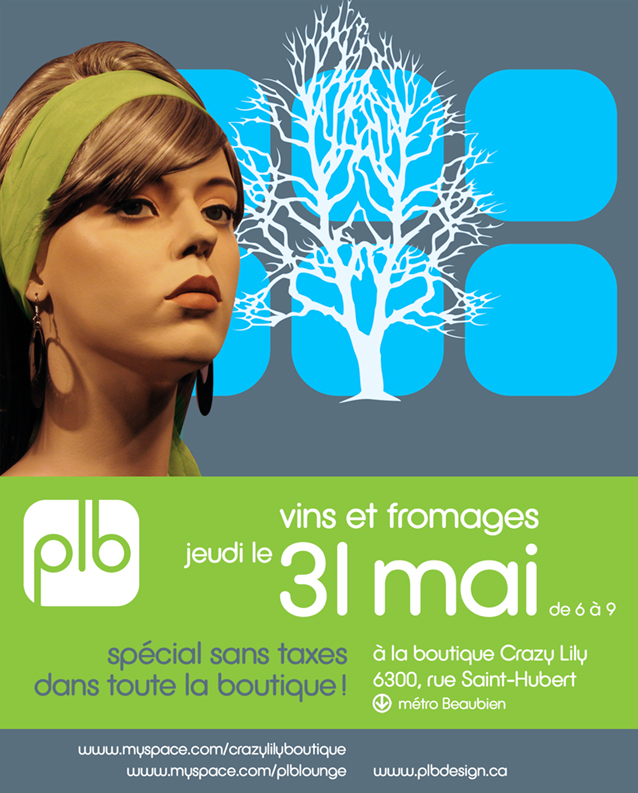
Tomorrow evening, a wine and cheese party will be held for a series of environmentally themed t-shirts he's created. The event will be held at Crazy Lily, 6300 Saint Hubert (as in Plaza Saint Hubert...), from 6 to 9pm.
Crazy Lily's entire inventory will be tax free for the event. See you there!
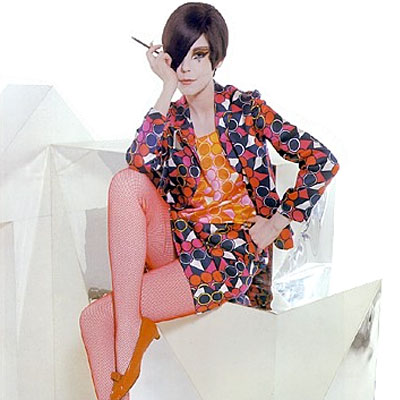
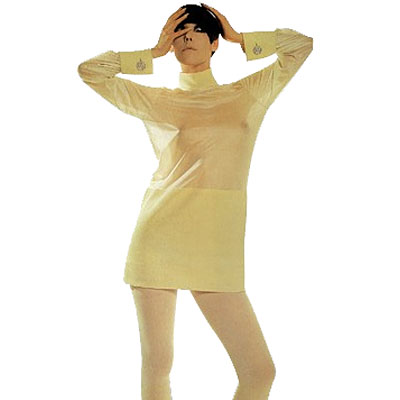
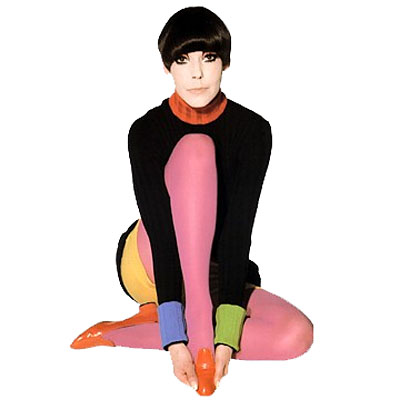
Photographer William Claxton began taking photographs for fashion designer Rudi Gernreich in the mid 1950's. Claxton began a romantic affair with a then-unknown Peggy Moffitt in 1958. In 1962, Peggy began to work as a model for Gernreich, becoming his muse and collaborator. By the late 1960's, Claxton was photographing Moffitt in Gernreich's designs.
The images that resulted from this dynamic trio remain some of the most iconic from that period...
Enjoy!
Little Boy suit with tank top, 1966.
Color blocking in wool knit, fall 1967.
See-through minidress in lacquered chiffon and wool crepe, fall 1967.
Beardsley group, fall 1968.
Long matte jersey dress with doorspring hardware, fall 1971.
Wool-knit tunic over shorts, fall 1971.
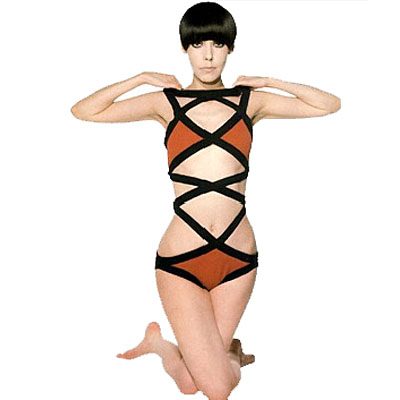
Roualt swimsuit, resort 1971.
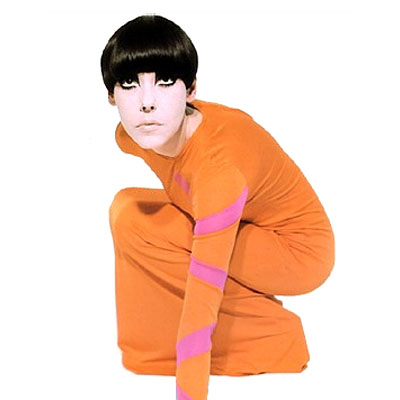
Long orange matte jersey t-shirt with hot pink insert, spring/summer 1972.
Emilio Pucci was born in 1914 in Florence, Italy. He shot to couture stardom in the 1950's, during which he developped his signature prints: bold, abstract patterns that swirled in a kaleidoscope of color.
Emilio Pucci's ultimate vision was to liberate women. While fashion of the 1950's and early 60's dictated the wearing of girdles and crinolines, Pucci's soft silhouettes would usher in a new era of comfort and freedom of movement; all the while remaining infinitely chic and elegant.
Emilio Pucci with a model wearing a summer dress, 1953.
The international fashion press of the 60's adored his creations, hailing Pucci "The Prince of Prints". Vogue declared that Pucci had “largely invented the look of the woman of the moment—one might almost say he has invented the woman herself.”
"How's my hair?" Space Bubbles designed to protect stewardesses' hairdos...
In 1964, the now-defunct Braniff Airlines called upon Emilio Pucci to help radically update their corporate look, part of their "End of the Plain Plane" campaign. His answer was a space age collection which consisted of uniforms with interchangeable parts (of coordinating colors) and clear plastic helmets to protect stewardesses hairstyles from airstrip elements!
Emilio Pucci designs for Braniff International Airlines:1965 (left), 1971 (right).
The "space bubble" was dropped after about a month, however: the helmets cracked easily, there was no place to store them onboard the aircraft, and new jetways at many airports made them unnecessary.
In 1954 and again in 1967, Pucci received the coveted Neiman-Marcus Fashion Award for "distinguished service in the field of fashion." In 1990, the Council of Fashion Designers of America (CFDA) honored him with an award for "renaissance of his design and color genius".
Today, the house of Pucci continues to be a status symbol and world renowned label. The timeless signature prints can be seen on everything from clothing, shoes and handbags, to furniture and housewares.
Modern-day Pucci designs still feature the signature psychedelic prints...
The following video was created for Emilio Pucci's 1990 CFDA award. It features the deee-lovely, deee-groovy Lady Miss Kier of Deee-Lite, with whom I will forever associate psychedelic Pucci-prints...