Saturday, December 9, 2006

Expo 67 Christmas Tree

Tinsel trees were very stylish in the 1950's and 60's. After a long search, I finally found one last year, from a window-dressing décor supplier.

This year, I decided to make the tree Expo 67 themed. With a series of cards produced by Molson Breweries in 1967, I created the pavilion ornaments: I had the cards plasticized, and I attached Martha Stewart ornament ribbons to them (I love Martha...).

The tree is lit with the same type of large, opaque Christmas lights my grandmother used to use on her Yuletide tree.

The result: my first ever Expo 67 Christmas tree!

photos: personal collection

Cucumber Music Lab

I stumbled upon this musical group from Avignon, France on MySpace.

Cyril Jean and Mike Intosh compose the keyboard and flute arrangements while Olee Vaillant provides the mood and groove bass.

Their music is pure retro pop, heavy on orchestral rhythm & blues and funk/soul. Equally impressive is their visual identity and cool website graphics. The overall mix of modern and retro totally appeals to me.

Click to check out their website, and listen to tunes on their MySpace page.

images from cucumbermusiclab.com and myspace.com

Monday, December 4, 2006

Montreal's Parisian Metro Portico

Mayor Jean Drapeau had always felt that Montreal had an affinity with the city of Paris.

Among his sillier plans was the idea of dismantling the Eiffel Tower (built for the 1889 Paris World Exhibition) and have it shipped off to Montreal to be rebuilt for the duration of it's own World Exhibition, Expo 67! [Small historical sidenote: it never happened...]

Engineers from the Parisian Metro system collaborated with the city of Montreal during the planning stages of it's subway system, in the early to mid 1960's.

On a trip to Paris for Metro-planning purposes, Mayor Drapeau noticed the dismantling of an Art Nouveau Metro portico and came up with an idea. He suggested that an entrance, designed by artist Hector Guimard in the late 1800's, be brought back to Montreal.

A little easier to ship than the Eiffel Tower, wouldn't you say...?

The idea was accepted and in 1967, the Regie Autonome des Transports Parisiens (RATP) donated an original Hector Guimard Metro entrance to the city of Montreal, in honor of their aforementioned collaboration.

The portico was installed at the Square-Victoria station, but Montreal building codes would not allow an entrance narrow enough to properly install it, thus making it impossible to put up the typical Metropolitain sign.

In 2003, with special permission to build a narrower stairwell, the Guimard entrance was completely restored to it's full Art Nouveau splendor.

Today, the Guimard entrance stands proudly at the St-Antoine exit of the Square-Victoria station. It is the jewel of the Montreal Metro art collection, and the centerpiece of the newly revitalized Quartier International.

To see the entire series of photos I took of it, click here.

photos: author's own

Saturday, December 2, 2006

The Quebec Industries Pavilion

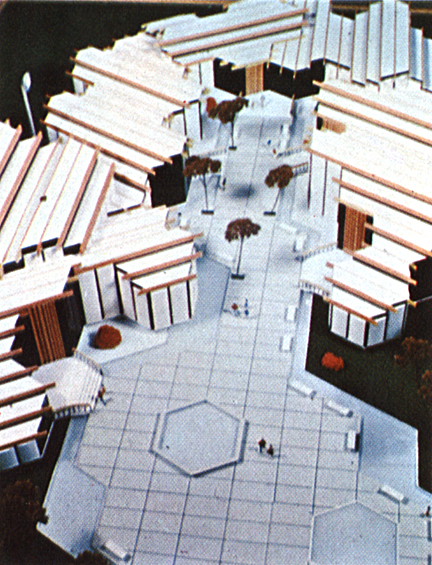
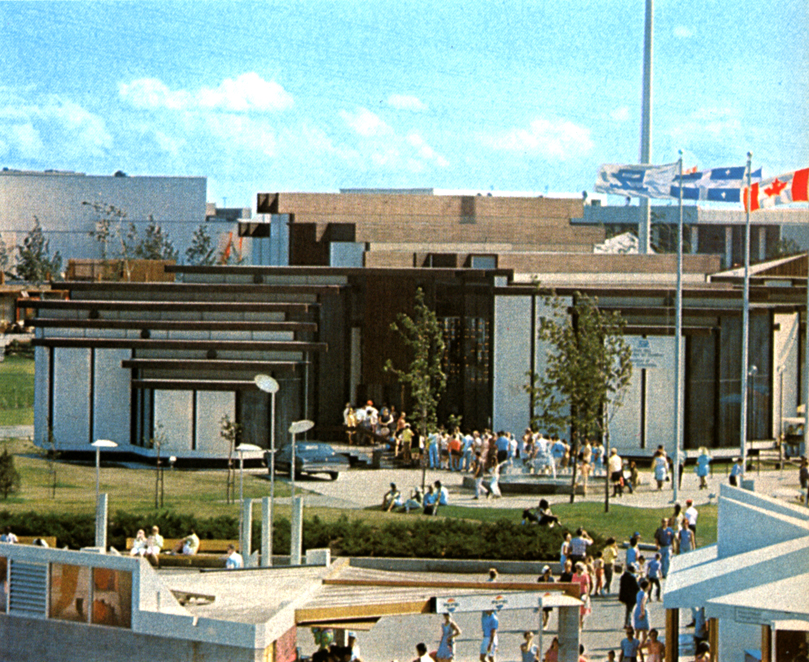
A notable element of the Quebec Industries pavilion was it's white roof and walls arranged in jagged steps and angles.

Located in the Cité du Havre sector of Expo 67, the pavilion stood on the edge of the St. Lawrence river, right near Expo's main entrance. More than 100 Quebec industries participated in this exhibit, which was a supplement to the the province's official pavilion, and the only industrial pavilion presented by a Canadian province at Expo.

The theme of the Quebec Industries pavilion was The St. Lawrence Industrial Basin, illustrating the past and present of the river as a center of Quebec's economic activity. The province's economic potential was presented, and the pavilion boasted Quebec's superiority in such industries as asbestos mining and textile production.
Hydro electric power was featured as one of the provinces most important industries. Every day from 9am to 10pm, visitors could watch the progress being made in the construction of Hydro-Quebec's Manicouagan dam. A 160 seat projection room showed live images on a 650 square-foot screen. In 1967, this was the longest closed circuit television system in the world; some 500 miles seperated subject and audience.
images: (top) ebay.com (2-3-4) personal collection
Saturday, November 25, 2006

Walt Disney's EPCOT Project

In the early 1960's, entertainment mogul Walt Disney was blessed with a loving family that included many grandchildren. Walt became concerned with the world in which these kids would grow up: modern cities were chaotic, dirty and crime ridden.

With the success of the Disneyland theme park in Anaheim, California, Walt began to dream of a far more ambitious project. What if the concepts of space and building design used in the Disneyland theme park could be used in the planning of communities, even entire cities? Walt began to devour books pertaining to urban planning, and anything else that could be usefull towards what he would later call his "prototype of the future"...
The Walt Disney company had purchased 27 400 acres of swampland near Orlando, Florida. Walt intended to use this land for his project, which was now being called the Experimental Prototype Community Of Tomorrow, or EPCOT for short.

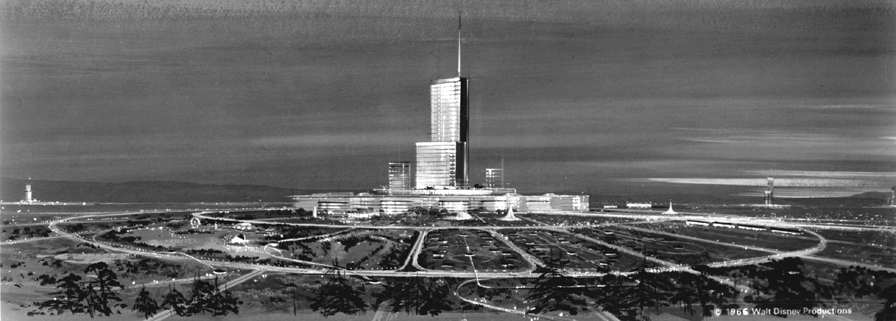
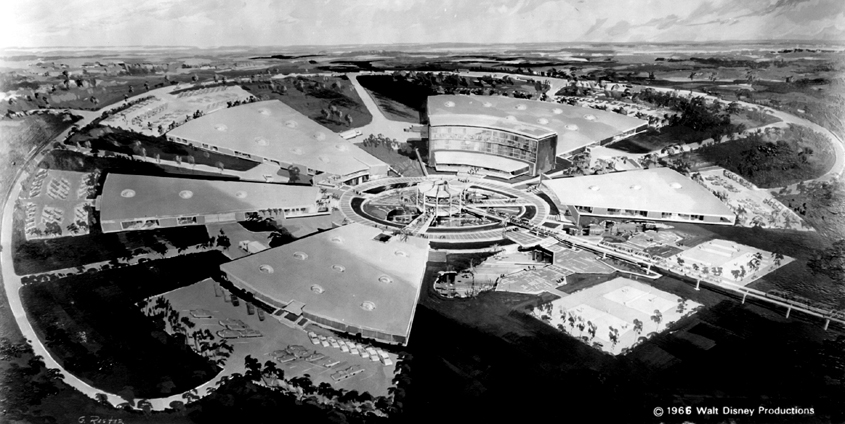
The original EPCOT plans used the radial (pie shaped) concept. It was to have 20 000 permanent residents, a Jet Airport of the Future, schools, stores, offices and theatres. EPCOT was to be completely enclosed, sheltered from the outside elements.
Cars and trucks would use underground passageways, while visitors and residents would rely on a monorail system to get around.An important element to Walt Disney's original plan was EPCOT's Industrial Park. Major American industries would use this facility to develop new technologies for use in the EPCOT city. Walt's idea was that visitors from across the world would be inspired by these new developments and want to implement them in their own countries.The following video is a 24-minute pitch reel from 1966, in which Walt describes the EPCOT project:

images: waltopia.com

Friday, November 24, 2006

Expo 67 Souvenirs

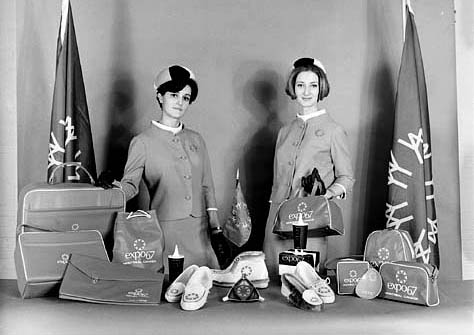
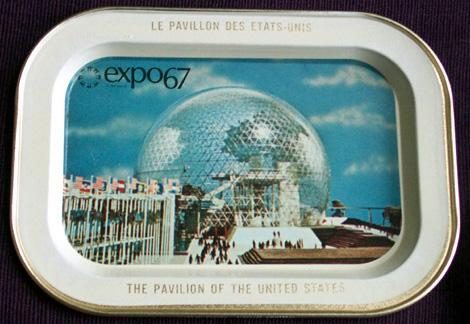
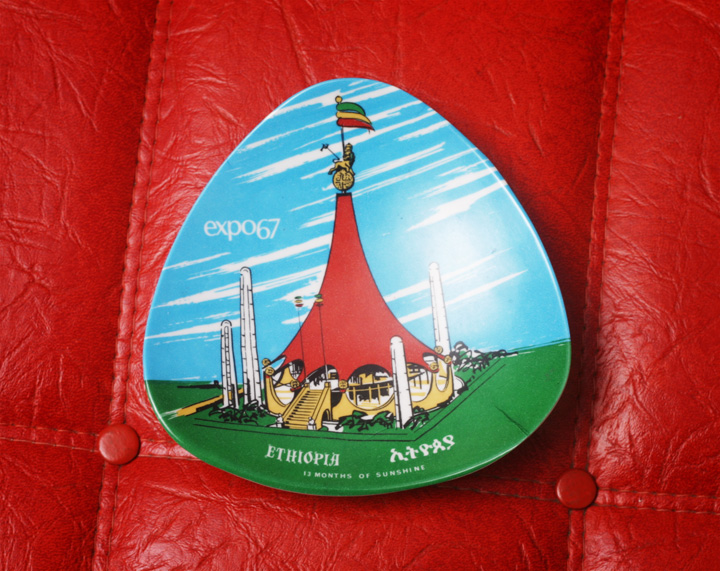
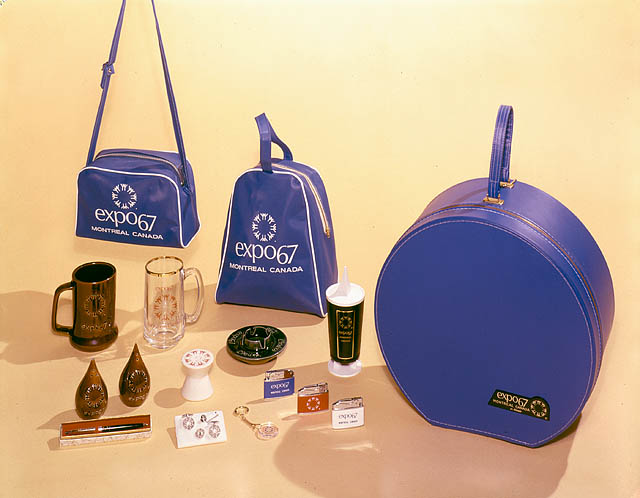
An event the size and scope of Expo 67 is sure to have it's share of trinkets and memorabilia for visitors to take home as souvenirs.

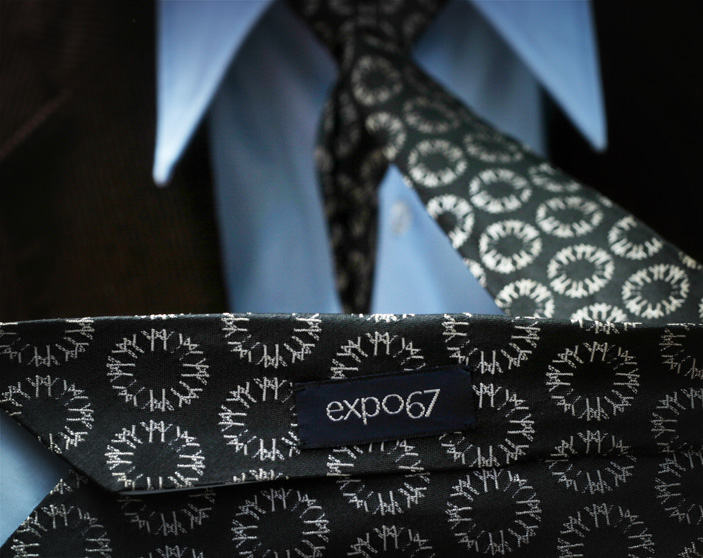
The amount (and diversity) of items produced for Expo 67 was mind boggling: postcards, coloring books, slide photography, 8mm movie reels, stamps, keychains, coffee cups, dishes, serving trays, drinking glasses, beer steins, t-shirts, neckties, flight bags, shoes, sunglasses, match sticks, cigarette lighters, etc., etc...

This does not include the plethora of jewels, handicrafts and products that each participating country sold at their pavilions!

images: (1 and 5) library and archives Canada
(2) expo67.ncf.ca
(3 and 4) Janicke Morissette (www.lebureauofficiel.com)/
Jean-François Brière (www.jfbriere.com)